


Mesembryanthemum cordifolium
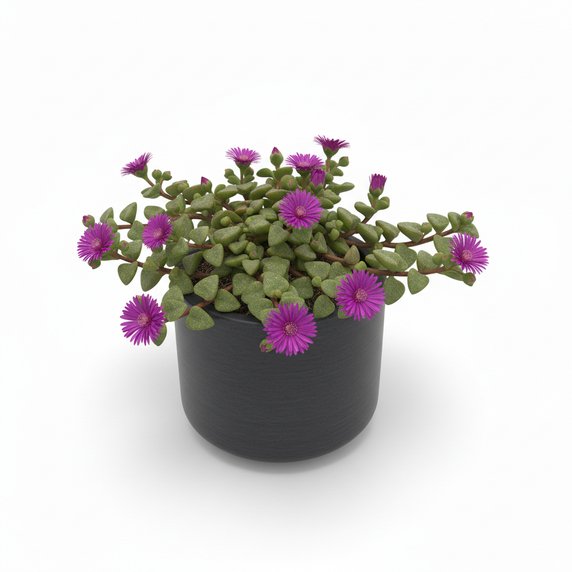
Instantly brighten your home or garden with the cheerful Baby Sun Rose! This easy-going succulent is a powerhouse of color, featuring lush, heart-shaped leaves and a stunning display of magenta flowers that sparkle in the sun. It's incredibly low-maintenance and drought-tolerant, making it the perfect choice for both beginners and seasoned plant lovers. Whether you let it trail from a hanging basket or spill over a sunny wall, the Baby Sun Rose delivers constant beauty with minimal effort. Add this resilient gem to your collection for a year-round touch of nature's charm!
1. Basic Identification
Common Name: Baby Sun Rose
Botanical Name: Aptenia cordifolia
Former Name: Mesembryanthemum cordifolium
Plant Type: Succulent Groundcover
Plant Code / SKU: PLT-1821
Alternative Names:
Heartleaf Ice Plant
Red Aptenia
Dew Plant
حلك السبع
2. Taxonomy & Classification
Order: Caryophyllales
Family: Aizoaceae
Genus: Aptenia
3. Origin & Distribution
Native to the coastal Eastern Cape of South Africa. It has been widely introduced and naturalized in many parts of the world, including Australia, parts of Europe, and the coastal regions of California and Oregon in the USA.
4. Visual Characteristics
Leaves: Small, fleshy, heart-shaped to lance-shaped leaves that are bright green and covered in fine, glistening papillae, giving them a slightly sparkly appearance.
Flowers: Abundant, small, daisy-like flowers, typically a vibrant magenta or reddish-purple color. The flowers open during the sunniest parts of the day and close at night or in overcast weather.
Stem: Fleshy, prostrate, and trailing stems that root at the nodes, allowing the plant to spread and form a dense mat.
Growth Habit: A low-growing, fast-spreading perennial that forms a dense groundcover or trails elegantly from containers and hanging baskets.
5. Size & Dimensions
Height: Typically grows to about 10–15 cm (4–6 inches) tall.
Spread / Width: Can spread indefinitely, often reaching 60 cm (2 feet) or more in width per plant.
6. Light Requirements
Prefers full sun for at least 6 hours a day. More sun encourages tighter growth and more prolific flowering. It can tolerate partial shade, but it will produce fewer flowers and may become leggy.
7. Watering Needs
Highly drought-tolerant once established. Water deeply but infrequently, allowing the soil to dry out completely between waterings. Overwatering is a common problem and can lead to root rot. Reduce watering significantly during the winter months.
8. Soil & Potting
Requires excellent drainage. A sandy, gritty soil mix is ideal. Standard cactus or succulent potting mix works well. It is tolerant of poor, infertile soils but cannot tolerate wet, heavy, or clay-like soil.
9. Temperature & Humidity
Temperature: Thrives in warm, dry climates. It is not frost-tolerant and can be damaged or killed by temperatures below freezing (0°C / 32°F). Suitable for outdoor growing in USDA hardiness zones 9-11.
Humidity: Tolerates low humidity very well, which is typical of its native coastal and arid environment.
10. Fertilization
Minimal fertilization is needed. If desired, apply a diluted, balanced, low-nitrogen fertilizer once in the spring to encourage growth. Over-fertilizing can lead to weak, leggy growth with fewer flowers.
11. Maintenance & Care Level
Easy / Low. This is a very low-maintenance plant. Pruning is not essential but can be done to control its spread, encourage bushier growth, or remove any dead or damaged stems.
12. Growth & Propagation
Growth Rate: Fast. It can quickly cover a large area under ideal conditions.
Propagation: Extremely easy to propagate from stem cuttings. Simply snip a piece of stem, allow the cut end to callus over for a day, and then plant it in well-draining soil. It will root readily.
13. Common Problems
Pests: Generally pest-resistant but can occasionally be affected by aphids and mealybugs, especially if stressed or grown in poor conditions.
Diseases: The most significant problem is root rot, caused by overwatering or poorly draining soil.
14. Benefits & Uses
Excellent as a flowering groundcover, especially for dry, sunny slopes where it can help with erosion control. It is also ideal for rock gardens, hanging baskets, containers, and spilling over retaining walls. Its bright flowers attract bees and other pollinators.
15. Toxicity & Safety
Considered non-toxic to humans, dogs, cats, and horses. The leaves are reportedly edible and can be used in salads, though they have a slightly sour taste.
```
Mesembryanthemum cordifolium
Instantly brighten your home or garden with the cheerful Baby Sun Rose! This easy-going succulent is a powerhouse of color, featuring lush, heart-shaped leaves and a stunning display of magenta flowers that sparkle in the sun. It's incredibly low-maintenance and drought-tolerant, making it the perfect choice for both beginners and seasoned plant lovers. Whether you let it trail from a hanging basket or spill over a sunny wall, the Baby Sun Rose delivers constant beauty with minimal effort. Add this resilient gem to your collection for a year-round touch of nature's charm!
1. Basic Identification
Common Name: Baby Sun Rose
Botanical Name: Aptenia cordifolia
Former Name: Mesembryanthemum cordifolium
Plant Type: Succulent Groundcover
Plant Code / SKU: PLT-1821
Alternative Names:
Heartleaf Ice Plant
Red Aptenia
Dew Plant
حلك السبع
2. Taxonomy & Classification
Order: Caryophyllales
Family: Aizoaceae
Genus: Aptenia
3. Origin & Distribution
Native to the coastal Eastern Cape of South Africa. It has been widely introduced and naturalized in many parts of the world, including Australia, parts of Europe, and the coastal regions of California and Oregon in the USA.
4. Visual Characteristics
Leaves: Small, fleshy, heart-shaped to lance-shaped leaves that are bright green and covered in fine, glistening papillae, giving them a slightly sparkly appearance.
Flowers: Abundant, small, daisy-like flowers, typically a vibrant magenta or reddish-purple color. The flowers open during the sunniest parts of the day and close at night or in overcast weather.
Stem: Fleshy, prostrate, and trailing stems that root at the nodes, allowing the plant to spread and form a dense mat.
Growth Habit: A low-growing, fast-spreading perennial that forms a dense groundcover or trails elegantly from containers and hanging baskets.
5. Size & Dimensions
Height: Typically grows to about 10–15 cm (4–6 inches) tall.
Spread / Width: Can spread indefinitely, often reaching 60 cm (2 feet) or more in width per plant.
6. Light Requirements
Prefers full sun for at least 6 hours a day. More sun encourages tighter growth and more prolific flowering. It can tolerate partial shade, but it will produce fewer flowers and may become leggy.
7. Watering Needs
Highly drought-tolerant once established. Water deeply but infrequently, allowing the soil to dry out completely between waterings. Overwatering is a common problem and can lead to root rot. Reduce watering significantly during the winter months.
8. Soil & Potting
Requires excellent drainage. A sandy, gritty soil mix is ideal. Standard cactus or succulent potting mix works well. It is tolerant of poor, infertile soils but cannot tolerate wet, heavy, or clay-like soil.
9. Temperature & Humidity
Temperature: Thrives in warm, dry climates. It is not frost-tolerant and can be damaged or killed by temperatures below freezing (0°C / 32°F). Suitable for outdoor growing in USDA hardiness zones 9-11.
Humidity: Tolerates low humidity very well, which is typical of its native coastal and arid environment.
10. Fertilization
Minimal fertilization is needed. If desired, apply a diluted, balanced, low-nitrogen fertilizer once in the spring to encourage growth. Over-fertilizing can lead to weak, leggy growth with fewer flowers.
11. Maintenance & Care Level
Easy / Low. This is a very low-maintenance plant. Pruning is not essential but can be done to control its spread, encourage bushier growth, or remove any dead or damaged stems.
12. Growth & Propagation
Growth Rate: Fast. It can quickly cover a large area under ideal conditions.
Propagation: Extremely easy to propagate from stem cuttings. Simply snip a piece of stem, allow the cut end to callus over for a day, and then plant it in well-draining soil. It will root readily.
13. Common Problems
Pests: Generally pest-resistant but can occasionally be affected by aphids and mealybugs, especially if stressed or grown in poor conditions.
Diseases: The most significant problem is root rot, caused by overwatering or poorly draining soil.
14. Benefits & Uses
Excellent as a flowering groundcover, especially for dry, sunny slopes where it can help with erosion control. It is also ideal for rock gardens, hanging baskets, containers, and spilling over retaining walls. Its bright flowers attract bees and other pollinators.
15. Toxicity & Safety
Considered non-toxic to humans, dogs, cats, and horses. The leaves are reportedly edible and can be used in salads, though they have a slightly sour taste.
```