


Polypodiaceae
Microsorum diversifolium
Bring home the sculptural greenery everyone asks about. Kangaroo Paw Fern delivers a dramatic, antler-like silhouette with surprisingly easy care—just bright filtered light, a well-draining mix, and steady moisture. A standout choice for modern interiors, reception areas, and anyone who wants a tropical statement plant that stays reliably beautiful.
1. Basic Identification
Common Name: Kangaroo Paw Fern
Botanical Name: Microsorum diversifolium
Arabic Name: قرن الغزال
Variant: Standard
Color: Natural
Origin Country: Netherlands
2. Taxonomy & Classification
Kingdom: Plantae
Clade: Tracheophytes
Class: Polypodiopsida
Order: Polypodiales
Family: Polypodiaceae
Genus: Microsorum
Species: M. diversifolium
3. Origin & Distribution
This fern is native to Australia and New Zealand, where it often grows as an epiphyte on trees or as a lithophyte on rocks in rainforest environments.
4. Visual Characteristics
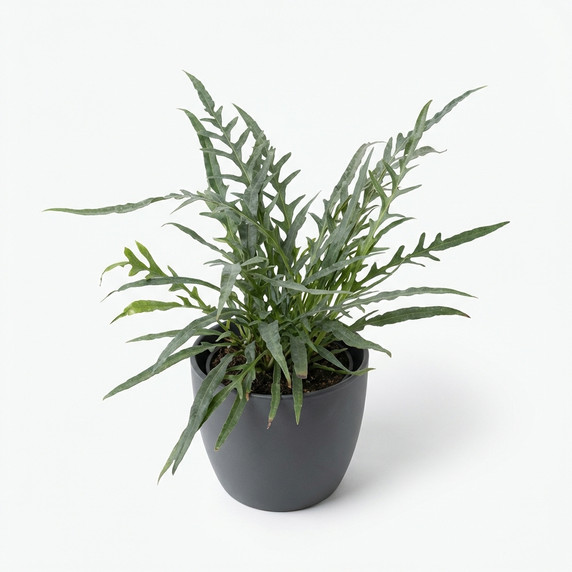
The Kangaroo Paw Fern is known for its leathery, glossy, dark green fronds that are highly variable in shape. Mature fronds are deeply lobed, resembling the shape of a kangaroo's foot or an antler. It features fuzzy, brown, creeping rhizomes that often grow over the edge of the pot.
5. Size & Dimensions
Fronds typically reach lengths of 6 to 12 inches (15–30 cm), though they can grow up to 2 feet in ideal conditions. The plant has a spreading growth habit due to its creeping rhizomes, making it excellent for medium-sized pots or hanging baskets.
6. Light Requirements
Prefers bright, indirect light. It can tolerate medium light conditions but should be kept away from direct afternoon sun, which can scorch the foliage.
7. Watering Needs
Requires consistent moisture. Water when the top inch of soil feels dry to the touch. It is important to maintain high humidity around the plant while ensuring the soil does not become waterlogged.
8. Soil & Potting
Thrives in a well-draining, airy potting mix. A combination of peat moss, perlite, and orchid bark is ideal to mimic its natural epiphytic growing conditions.
9. Temperature & Humidity
Ideally kept between 15°C and 27°C (60°F–80°F). It prefers high humidity levels (50% or higher), making it an excellent choice for bathrooms or kitchens.
10. Fertilization
Feed with a balanced, water-soluble fertilizer diluted to half-strength once a month during the active growing season (spring and summer). Do not fertilize in winter.
11. Maintenance & Care Level
Care Level: Easy. Maintenance involves removing any old or yellowing fronds at the base to keep the plant looking tidy and ensuring humidity remains stable.
12. Growth & Propagation
It is a moderate grower. Propagation is most easily achieved through rhizome division during the spring, ensuring each section has at least one or two fronds attached.
13. Common Problems
Watch for mealybugs or scale insects. Overwatering can lead to root or rhizome rot, while low humidity may cause the tips of the leaves to turn brown and crispy.
14. Benefits & Uses
An excellent air-purifying plant that adds a unique architectural texture to interior spaces. Its versatility makes it suitable for home décor, office desks, and humid environments like bathrooms.
15. Toxicity & Safety
The Kangaroo Paw Fern is non-toxic to humans, cats, and dogs, making it a safe choice for households with pets and children.
Microsorum diversifolium
Bring home the sculptural greenery everyone asks about. Kangaroo Paw Fern delivers a dramatic, antler-like silhouette with surprisingly easy care—just bright filtered light, a well-draining mix, and steady moisture. A standout choice for modern interiors, reception areas, and anyone who wants a tropical statement plant that stays reliably beautiful.
1. Basic Identification
Common Name: Kangaroo Paw Fern
Botanical Name: Microsorum diversifolium
Arabic Name: قرن الغزال
Variant: Standard
Color: Natural
Origin Country: Netherlands
2. Taxonomy & Classification
Kingdom: Plantae
Clade: Tracheophytes
Class: Polypodiopsida
Order: Polypodiales
Family: Polypodiaceae
Genus: Microsorum
Species: M. diversifolium
3. Origin & Distribution
This fern is native to Australia and New Zealand, where it often grows as an epiphyte on trees or as a lithophyte on rocks in rainforest environments.
4. Visual Characteristics
The Kangaroo Paw Fern is known for its leathery, glossy, dark green fronds that are highly variable in shape. Mature fronds are deeply lobed, resembling the shape of a kangaroo's foot or an antler. It features fuzzy, brown, creeping rhizomes that often grow over the edge of the pot.
5. Size & Dimensions
Fronds typically reach lengths of 6 to 12 inches (15–30 cm), though they can grow up to 2 feet in ideal conditions. The plant has a spreading growth habit due to its creeping rhizomes, making it excellent for medium-sized pots or hanging baskets.
6. Light Requirements
Prefers bright, indirect light. It can tolerate medium light conditions but should be kept away from direct afternoon sun, which can scorch the foliage.
7. Watering Needs
Requires consistent moisture. Water when the top inch of soil feels dry to the touch. It is important to maintain high humidity around the plant while ensuring the soil does not become waterlogged.
8. Soil & Potting
Thrives in a well-draining, airy potting mix. A combination of peat moss, perlite, and orchid bark is ideal to mimic its natural epiphytic growing conditions.
9. Temperature & Humidity
Ideally kept between 15°C and 27°C (60°F–80°F). It prefers high humidity levels (50% or higher), making it an excellent choice for bathrooms or kitchens.
10. Fertilization
Feed with a balanced, water-soluble fertilizer diluted to half-strength once a month during the active growing season (spring and summer). Do not fertilize in winter.
11. Maintenance & Care Level
Care Level: Easy. Maintenance involves removing any old or yellowing fronds at the base to keep the plant looking tidy and ensuring humidity remains stable.
12. Growth & Propagation
It is a moderate grower. Propagation is most easily achieved through rhizome division during the spring, ensuring each section has at least one or two fronds attached.
13. Common Problems
Watch for mealybugs or scale insects. Overwatering can lead to root or rhizome rot, while low humidity may cause the tips of the leaves to turn brown and crispy.
14. Benefits & Uses
An excellent air-purifying plant that adds a unique architectural texture to interior spaces. Its versatility makes it suitable for home décor, office desks, and humid environments like bathrooms.
15. Toxicity & Safety
The Kangaroo Paw Fern is non-toxic to humans, cats, and dogs, making it a safe choice for households with pets and children.