


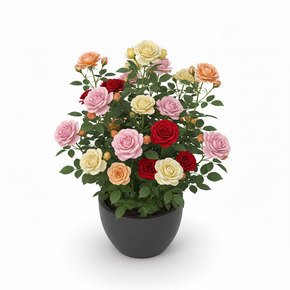



Experience the grand charm of a classic rose in a delightful size! Our Large Miniature Rose is the perfect statement piece, offering a profusion of stunning, elegant blooms that brighten any space. Unlike a fleeting bouquet, this living gift provides lasting beauty and joy. Ideal for a sunny desk, a welcoming entryway, or as a thoughtful present that keeps on giving. Order now to add a touch of floral sophistication to your life.
Common Name: Miniature Rose / Baby Rose (بيبي روز)
Botanical Name: Rosa chinensis 'Minima'
Variant: Miniature
Color: Natural
Country of Origin: Netherlands
Arabic Name: بيبي روز
Family: Rosaceae
The Miniature Rose belongs to the genus Rosa within the family Rosaceae. Specifically, most miniature cultivars are derived from Rosa chinensis 'Minima', a complex hybrid group within the Rosales order.
Miniature roses are primarily descended from the Chinese species Rosa chinensis. They were refined and popularized in Europe during the early 19th century and are now cultivated globally as ornamental houseplants and garden specimens.
These plants feature petite, perfectly formed flowers that mirror the appearance of full-sized roses. They possess small, dark green, serrated leaves and compact, woody stems that typically include small thorns or prickles. The blooms often appear in clusters.
Typically reaches a height and spread of 15 to 45 cm (6 to 18 inches). As a "Large" miniature variant, it stays within this compact range while exhibiting a fuller, bushier growth habit compared to micro-miniatures.
Requires high light levels to bloom successfully. It thrives in bright, indirect light or full sun. When kept indoors, it should be placed near a south or west-facing window to receive at least 6 hours of daily light.
Miniature roses prefer consistently moist soil but should never sit in water. Water when the top inch of soil feels dry to the touch. Avoid overhead watering to prevent leaf diseases.
Requires a rich, well-draining potting medium. A high-quality peat-based mix with added perlite or vermiculite for drainage is ideal. They prefer slightly acidic to neutral soil pH.
Prefers moderate temperatures between 15°C and 24°C (60-75°F). They enjoy high humidity; indoor plants benefit from being placed on a pebble tray with water or being kept in rooms with higher ambient moisture.
Feed every 2 to 4 weeks during the active growing and flowering season (spring through summer) with a balanced, water-soluble fertilizer specifically formulated for roses.
Moderate care level. Maintenance includes "deadheading" (removing faded blooms) to stimulate new flower production and occasional light pruning to maintain its shape and remove dead wood.
Miniature roses are moderate growers. They are most commonly propagated via softwood or semi-hardwood cuttings taken in the late spring or summer.
Indoors, they can be susceptible to spider mites and aphids if the air is too dry. They may also develop powdery mildew or black spot if air circulation is poor or if the foliage remains wet.
Ideal for home décor, office desks, and as a long-lasting alternative to cut flower bouquets. They serve as excellent gifts and help enhance mood and wellness through their aesthetic beauty.
Miniature roses are considered non-toxic to dogs, cats, and humans. However, care should be taken with the thorns, which can cause minor physical irritation or scratches to curious pets or children.
Experience the grand charm of a classic rose in a delightful size! Our Large Miniature Rose is the perfect statement piece, offering a profusion of stunning, elegant blooms that brighten any space. Unlike a fleeting bouquet, this living gift provides lasting beauty and joy. Ideal for a sunny desk, a welcoming entryway, or as a thoughtful present that keeps on giving. Order now to add a touch of floral sophistication to your life.
Common Name: Miniature Rose / Baby Rose (بيبي روز)
Botanical Name: Rosa chinensis 'Minima'
Variant: Miniature
Color: Natural
Country of Origin: Netherlands
Arabic Name: بيبي روز
Family: Rosaceae
The Miniature Rose belongs to the genus Rosa within the family Rosaceae. Specifically, most miniature cultivars are derived from Rosa chinensis 'Minima', a complex hybrid group within the Rosales order.
Miniature roses are primarily descended from the Chinese species Rosa chinensis. They were refined and popularized in Europe during the early 19th century and are now cultivated globally as ornamental houseplants and garden specimens.
These plants feature petite, perfectly formed flowers that mirror the appearance of full-sized roses. They possess small, dark green, serrated leaves and compact, woody stems that typically include small thorns or prickles. The blooms often appear in clusters.
Typically reaches a height and spread of 15 to 45 cm (6 to 18 inches). As a "Large" miniature variant, it stays within this compact range while exhibiting a fuller, bushier growth habit compared to micro-miniatures.
Requires high light levels to bloom successfully. It thrives in bright, indirect light or full sun. When kept indoors, it should be placed near a south or west-facing window to receive at least 6 hours of daily light.
Miniature roses prefer consistently moist soil but should never sit in water. Water when the top inch of soil feels dry to the touch. Avoid overhead watering to prevent leaf diseases.
Requires a rich, well-draining potting medium. A high-quality peat-based mix with added perlite or vermiculite for drainage is ideal. They prefer slightly acidic to neutral soil pH.
Prefers moderate temperatures between 15°C and 24°C (60-75°F). They enjoy high humidity; indoor plants benefit from being placed on a pebble tray with water or being kept in rooms with higher ambient moisture.
Feed every 2 to 4 weeks during the active growing and flowering season (spring through summer) with a balanced, water-soluble fertilizer specifically formulated for roses.
Moderate care level. Maintenance includes "deadheading" (removing faded blooms) to stimulate new flower production and occasional light pruning to maintain its shape and remove dead wood.
Miniature roses are moderate growers. They are most commonly propagated via softwood or semi-hardwood cuttings taken in the late spring or summer.
Indoors, they can be susceptible to spider mites and aphids if the air is too dry. They may also develop powdery mildew or black spot if air circulation is poor or if the foliage remains wet.
Ideal for home décor, office desks, and as a long-lasting alternative to cut flower bouquets. They serve as excellent gifts and help enhance mood and wellness through their aesthetic beauty.
Miniature roses are considered non-toxic to dogs, cats, and humans. However, care should be taken with the thorns, which can cause minor physical irritation or scratches to curious pets or children.
Take 20% off your first order
Enter the code below at checkout to get 20% off your first order

