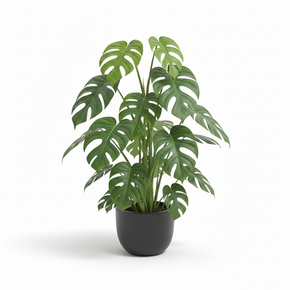
Bring instant tropical luxury to your space with Monstera deliciosa—famous for its dramatic split leaves and effortless modern style. Place it in bright, indirect light, water when the soil partly dries, and let it climb for bigger, bolder foliage. A perfect statement plant for living rooms, entrances, and contemporary offices.
Common Name: Swiss cheese plant
Botanical Name: Monstera deliciosa
Former Name: Dracontium pertusum
Plant Type: Foliage houseplant (Aroid)
Plant Code / SKU: PLT-0084
Alternative Names:
Swiss cheese vine
Mexican breadfruit
Fruit salad plant
مونستيرا
Order: Alismatales
Family: Araceae
Genus: Monstera
Species: M. deliciosa
Native to tropical rainforests of southern Mexico through Panama. Naturalized in parts of the Caribbean, Polynesia, and other tropical regions. Frequently grown worldwide as a houseplant.
Growth form: vining evergreen perennial
Leaves: large, glossy, heart-shaped with natural splits (fenestrations) and holes; mature leaves up to 90 cm long
Stems: climbing, produce aerial roots for support
Flowers: rare indoors; greenish spathe and spadix; may produce edible, pineapple-like fruit in warm climates
Indoors: typically 1.5–3 m (5–10 ft) height with support
Leaves: up to 90 cm (35 in) width
Pot size: medium to large (25–40 cm diameter)
Growth rate: moderate to fast under optimal conditions
Bright indirect light ideal; tolerates moderate shade; avoid direct midday sun to prevent leaf burn.
Keep soil evenly moist but not waterlogged; water when top 2–3 cm of soil is dry; reduce frequency in winter months.
Well-draining, aerated mix (peat moss, perlite, pine bark); pH 5.5–7.0; ensure pot has good drainage holes.
Temperature: 18–30 °C (65–85 °F); avoid below 10 °C (50 °F)
Humidity: prefers high humidity (60%+); tolerates down to 40% but may develop brown leaf edges.
Feed with balanced 20-20-20 or high-nitrogen houseplant fertilizer monthly during growing season; dilute to half strength to avoid root burn.
Easy to moderate; prune to control size and encourage bushiness; provide support (moss pole or trellis); wipe leaves occasionally to remove dust; repot every 1–2 years.
Propagation via stem cuttings with at least one node submerged in water or moist soil; roots form in 2–6 weeks; air layering also effective for larger plants.
Overwatering: root rot and yellowing leaves
Underwatering: drooping and brown leaf tips
Pests: spider mites, scale, mealybugs
Low humidity: brown leaf edges
Insufficient light: reduced fenestration and leggy growth.
Popular ornamental for contemporary interiors; enhances tropical aesthetic; can improve indoor air quality by filtering pollutants; adds humidity to the environment.
Contains insoluble calcium oxalate crystals; toxic if ingested by pets and humans; causes oral irritation, drooling, vomiting; keep out of reach of children and animals.
Bring instant tropical luxury to your space with Monstera deliciosa—famous for its dramatic split leaves and effortless modern style. Place it in bright, indirect light, water when the soil partly dries, and let it climb for bigger, bolder foliage. A perfect statement plant for living rooms, entrances, and contemporary offices.
Common Name: Swiss cheese plant
Botanical Name: Monstera deliciosa
Former Name: Dracontium pertusum
Plant Type: Foliage houseplant (Aroid)
Plant Code / SKU: PLT-0084
Alternative Names:
Swiss cheese vine
Mexican breadfruit
Fruit salad plant
مونستيرا
Order: Alismatales
Family: Araceae
Genus: Monstera
Species: M. deliciosa
Native to tropical rainforests of southern Mexico through Panama. Naturalized in parts of the Caribbean, Polynesia, and other tropical regions. Frequently grown worldwide as a houseplant.
Growth form: vining evergreen perennial
Leaves: large, glossy, heart-shaped with natural splits (fenestrations) and holes; mature leaves up to 90 cm long
Stems: climbing, produce aerial roots for support
Flowers: rare indoors; greenish spathe and spadix; may produce edible, pineapple-like fruit in warm climates
Indoors: typically 1.5–3 m (5–10 ft) height with support
Leaves: up to 90 cm (35 in) width
Pot size: medium to large (25–40 cm diameter)
Growth rate: moderate to fast under optimal conditions
Bright indirect light ideal; tolerates moderate shade; avoid direct midday sun to prevent leaf burn.
Keep soil evenly moist but not waterlogged; water when top 2–3 cm of soil is dry; reduce frequency in winter months.
Well-draining, aerated mix (peat moss, perlite, pine bark); pH 5.5–7.0; ensure pot has good drainage holes.
Temperature: 18–30 °C (65–85 °F); avoid below 10 °C (50 °F)
Humidity: prefers high humidity (60%+); tolerates down to 40% but may develop brown leaf edges.
Feed with balanced 20-20-20 or high-nitrogen houseplant fertilizer monthly during growing season; dilute to half strength to avoid root burn.
Easy to moderate; prune to control size and encourage bushiness; provide support (moss pole or trellis); wipe leaves occasionally to remove dust; repot every 1–2 years.
Propagation via stem cuttings with at least one node submerged in water or moist soil; roots form in 2–6 weeks; air layering also effective for larger plants.
Overwatering: root rot and yellowing leaves
Underwatering: drooping and brown leaf tips
Pests: spider mites, scale, mealybugs
Low humidity: brown leaf edges
Insufficient light: reduced fenestration and leggy growth.
Popular ornamental for contemporary interiors; enhances tropical aesthetic; can improve indoor air quality by filtering pollutants; adds humidity to the environment.
Contains insoluble calcium oxalate crystals; toxic if ingested by pets and humans; causes oral irritation, drooling, vomiting; keep out of reach of children and animals.