


Mugo Pine Bonsai 'Bonsai'
Own a symbol of resilience and natural artistry. Our Mugo Pine Bonsai is a masterfully cultivated living sculpture, perfect for bringing a sense of serenity and strength to your garden or patio. With its characteristic rugged bark and vibrant green needles, each tree is a unique masterpiece. Ideal for both seasoned bonsai enthusiasts and dedicated beginners, this is more than a plant—it's a journey in patience and beauty. A perfect, meaningful gift that will last for generations.
1. Basic Identification
Common Name: Mugo Pine Bonsai
Botanical Name: Pinus mugo
Plant Variant: Bonsai
Plant Color: Green
Plant Country: Japan
Arabic Name: بينوس
Family: Pinaceae
2. Taxonomy & Classification
Pinus mugo belongs to the genus Pinus within the family Pinaceae. It is classified as a coniferous evergreen, often categorized into various subspecies depending on its native elevation and growth habit, such as Pinus mugo subsp. mugo and Pinus mugo subsp. uncinata.
3. Origin & Distribution
Native to the high-elevation mountain regions of Central and Southern Europe, including the Alps, the Pyrenees, and the Carpathians. While its origin is European, it has been widely adopted in Japanese bonsai traditions due to its hardy nature and aesthetic potential.
4. Visual Characteristics
This bonsai features dense, dark green needles arranged in pairs (fascicles). Its most striking feature is its rugged, scaly, grayish-brown bark that develops a mature, ancient look even at a small scale. As it matures, it may produce small, decorative brown cones.
5. Size & Dimensions
As a bonsai, its size is carefully maintained through pruning, typically ranging from 12 to 30 inches in height. In its natural shrub form, it can reach several meters, but its containerized growth is restricted to remain a miniature tree.
6. Light Requirements
Requires full sun to thrive. It should be placed in a location where it receives at least 6 to 8 hours of direct sunlight daily to maintain needle health and promote tight, compact growth.
7. Watering Needs
Prefers consistent moisture but is sensitive to waterlogging. Water thoroughly when the top layer of soil feels slightly dry to the touch. In summer, it may require daily watering, while frequency should be reduced during the winter dormancy period.
8. Soil & Potting
Requires a very well-draining bonsai soil mix, typically composed of akadama, pumice, and lava rock. This ensures oxygen reaches the roots while retaining necessary moisture. Repotting is usually done every 2 to 3 years in early spring.
9. Temperature & Humidity
Extremely hardy and frost-tolerant. As an outdoor bonsai, it requires a period of cold winter dormancy to remain healthy. It can withstand freezing temperatures but the roots should be protected from extreme, sustained freezes in very small pots.
10. Fertilization
Feed with a balanced organic or slow-release fertilizer during the growing season from early spring through autumn. Avoid fertilizing during the peak of summer heat or during the winter dormancy.
11. Maintenance & Care Level
Intermediate to Advanced. Care involves specific bonsai techniques such as "candle pruning" (pinching new growth), needle plucking to allow light into the inner branches, and wiring to shape the trunk and limbs.
12. Growth & Propagation
A slow-growing species, which makes it ideal for bonsai as it holds its shape well. It is primarily propagated via seeds or through specialized grafting techniques. Cuttings are notoriously difficult to root.
13. Common Problems
Can be susceptible to aphids, scale insects, and spider mites. Overwatering or poor drainage can lead to root rot. Needle cast (fungal infection) can occur if there is poor air circulation or excessive moisture on the needles.
14. Benefits & Uses
Highly valued for its ornamental beauty and as a focal point in Zen gardens or on outdoor patios. It serves as an excellent air-purifier and provides a sense of mental well-being and stress relief through the meditative practice of bonsai care.
15. Toxicity & Safety
Pinus mugo is generally considered non-toxic to humans and pets. However, the sharp needles can cause minor physical irritation if handled roughly, and ingestion of the needles can cause mild digestive upset in animals.

Mugo Pine Bonsai 'Bonsai'
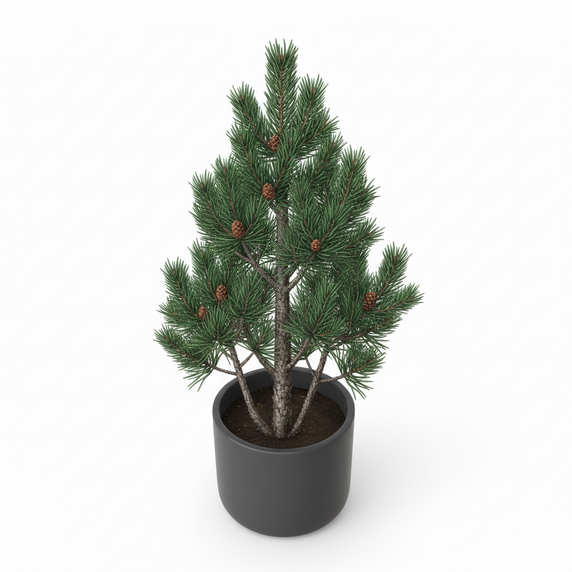
Own a symbol of resilience and natural artistry. Our Mugo Pine Bonsai is a masterfully cultivated living sculpture, perfect for bringing a sense of serenity and strength to your garden or patio. With its characteristic rugged bark and vibrant green needles, each tree is a unique masterpiece. Ideal for both seasoned bonsai enthusiasts and dedicated beginners, this is more than a plant—it's a journey in patience and beauty. A perfect, meaningful gift that will last for generations.
1. Basic Identification
Common Name: Mugo Pine Bonsai
Botanical Name: Pinus mugo
Plant Variant: Bonsai
Plant Color: Green
Plant Country: Japan
Arabic Name: بينوس
Family: Pinaceae
2. Taxonomy & Classification
Pinus mugo belongs to the genus Pinus within the family Pinaceae. It is classified as a coniferous evergreen, often categorized into various subspecies depending on its native elevation and growth habit, such as Pinus mugo subsp. mugo and Pinus mugo subsp. uncinata.
3. Origin & Distribution
Native to the high-elevation mountain regions of Central and Southern Europe, including the Alps, the Pyrenees, and the Carpathians. While its origin is European, it has been widely adopted in Japanese bonsai traditions due to its hardy nature and aesthetic potential.
4. Visual Characteristics
This bonsai features dense, dark green needles arranged in pairs (fascicles). Its most striking feature is its rugged, scaly, grayish-brown bark that develops a mature, ancient look even at a small scale. As it matures, it may produce small, decorative brown cones.
5. Size & Dimensions
As a bonsai, its size is carefully maintained through pruning, typically ranging from 12 to 30 inches in height. In its natural shrub form, it can reach several meters, but its containerized growth is restricted to remain a miniature tree.
6. Light Requirements
Requires full sun to thrive. It should be placed in a location where it receives at least 6 to 8 hours of direct sunlight daily to maintain needle health and promote tight, compact growth.
7. Watering Needs
Prefers consistent moisture but is sensitive to waterlogging. Water thoroughly when the top layer of soil feels slightly dry to the touch. In summer, it may require daily watering, while frequency should be reduced during the winter dormancy period.
8. Soil & Potting
Requires a very well-draining bonsai soil mix, typically composed of akadama, pumice, and lava rock. This ensures oxygen reaches the roots while retaining necessary moisture. Repotting is usually done every 2 to 3 years in early spring.
9. Temperature & Humidity
Extremely hardy and frost-tolerant. As an outdoor bonsai, it requires a period of cold winter dormancy to remain healthy. It can withstand freezing temperatures but the roots should be protected from extreme, sustained freezes in very small pots.
10. Fertilization
Feed with a balanced organic or slow-release fertilizer during the growing season from early spring through autumn. Avoid fertilizing during the peak of summer heat or during the winter dormancy.
11. Maintenance & Care Level
Intermediate to Advanced. Care involves specific bonsai techniques such as "candle pruning" (pinching new growth), needle plucking to allow light into the inner branches, and wiring to shape the trunk and limbs.
12. Growth & Propagation
A slow-growing species, which makes it ideal for bonsai as it holds its shape well. It is primarily propagated via seeds or through specialized grafting techniques. Cuttings are notoriously difficult to root.
13. Common Problems
Can be susceptible to aphids, scale insects, and spider mites. Overwatering or poor drainage can lead to root rot. Needle cast (fungal infection) can occur if there is poor air circulation or excessive moisture on the needles.
14. Benefits & Uses
Highly valued for its ornamental beauty and as a focal point in Zen gardens or on outdoor patios. It serves as an excellent air-purifier and provides a sense of mental well-being and stress relief through the meditative practice of bonsai care.
15. Toxicity & Safety
Pinus mugo is generally considered non-toxic to humans and pets. However, the sharp needles can cause minor physical irritation if handled roughly, and ingestion of the needles can cause mild digestive upset in animals.