


Rutaceae
Murraya paniculata
The Snake Plant (Sansevieria trifasciata) is an iconic, hardy houseplant celebrated for its striking vertical foliage and exceptional air-purifying capabilities. Ideal for both modern homes and office environments, this plant is remarkably low-maintenance, making it the perfect choice for beginners or those with busy lifestyles. Its structural, sword-like leaves add a touch of natural elegance to any space while actively improving indoor air quality by converting carbon dioxide into oxygen even at night.
1. Basic Identification
Common Name: Snake Plant, Mother-in-Law’s Tongue
Botanical Name: Sansevieria trifasciata (syn. Dracaena trifasciata)
Arabic Name: جلد النمر (Jald Al-Nimr)
Plant Variant: Standard Green/Variegated
Plant Color: Dark green with light gray-green horizontal banding
2. Taxonomy & Classification
Kingdom: Plantae
Clade: Tracheophytes
Order: Asparagales
Family: Asparagaceae
Genus: Dracaena
Species: D. trifasciata
3. Origin & Distribution
Native to tropical West Africa, specifically ranging from Nigeria east to the Congo. It has been naturalized in many tropical regions worldwide and is a staple in indoor horticulture globally.
4. Visual Characteristics
Features stiff, sword-like leaves that grow vertically from a basal rosette. The leaves are typically dark green with lighter cross-bands and can reach several feet in height. Some cultivars feature yellow or cream-colored margins.
5. Size & Dimensions
Height: Typically 70–90 cm (2.3–3 ft), though it can reach up to 120 cm (4 ft) in optimal conditions.
Width: Individual leaves are approximately 5–6 cm wide.
6. Light Requirements
Extremely versatile; thrives in bright indirect light but is famously tolerant of low light conditions. It can also adapt to direct sunlight if acclimated slowly.
7. Watering Needs
Low watering needs. Allow the soil to dry out completely between waterings. During winter, reduce watering to once every 4–6 weeks to prevent moisture buildup.
8. Soil & Potting
Requires well-draining soil, such as a cactus or succulent potting mix. It prefers being slightly root-bound and should be kept in pots with adequate drainage holes.
9. Temperature & Humidity
Prefers temperatures between 15°C and 30°C (60°F–85°F). It is tolerant of average household humidity but should be protected from cold drafts and temperatures below 10°C.
10. Fertilization
Requires minimal feeding. Use a balanced liquid houseplant fertilizer diluted to half strength once during the spring and once during the summer.
11. Maintenance & Care Level
Very Low Maintenance. It is often cited as one of the hardest plants to kill, requiring only occasional dusting of the leaves and careful avoidance of overwatering.
12. Growth & Propagation
Slow to moderate grower. Easily propagated through leaf cuttings or by dividing the rhizomes during repotting.
13. Common Problems
The most common issue is root rot caused by overwatering. It may also occasionally attract spider mites or mealybugs, though it is generally pest-resistant.
14. Benefits & Uses
An excellent air purifier that removes toxins such as benzene, formaldehyde, trichloroethylene, and xylene from the air. Uniquely, it performs Crassulacean Acid Metabolism (CAM), meaning it releases oxygen at night.
15. Toxicity & Safety
Mildly toxic to humans and pets (cats and dogs) if ingested. Consumption may cause nausea, vomiting, or swelling of the tongue and throat.
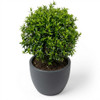
Murraya paniculata

The Snake Plant (Sansevieria trifasciata) is an iconic, hardy houseplant celebrated for its striking vertical foliage and exceptional air-purifying capabilities. Ideal for both modern homes and office environments, this plant is remarkably low-maintenance, making it the perfect choice for beginners or those with busy lifestyles. Its structural, sword-like leaves add a touch of natural elegance to any space while actively improving indoor air quality by converting carbon dioxide into oxygen even at night.
1. Basic Identification
Common Name: Snake Plant, Mother-in-Law’s Tongue
Botanical Name: Sansevieria trifasciata (syn. Dracaena trifasciata)
Arabic Name: جلد النمر (Jald Al-Nimr)
Plant Variant: Standard Green/Variegated
Plant Color: Dark green with light gray-green horizontal banding
2. Taxonomy & Classification
Kingdom: Plantae
Clade: Tracheophytes
Order: Asparagales
Family: Asparagaceae
Genus: Dracaena
Species: D. trifasciata
3. Origin & Distribution
Native to tropical West Africa, specifically ranging from Nigeria east to the Congo. It has been naturalized in many tropical regions worldwide and is a staple in indoor horticulture globally.
4. Visual Characteristics
Features stiff, sword-like leaves that grow vertically from a basal rosette. The leaves are typically dark green with lighter cross-bands and can reach several feet in height. Some cultivars feature yellow or cream-colored margins.
5. Size & Dimensions
Height: Typically 70–90 cm (2.3–3 ft), though it can reach up to 120 cm (4 ft) in optimal conditions.
Width: Individual leaves are approximately 5–6 cm wide.
6. Light Requirements
Extremely versatile; thrives in bright indirect light but is famously tolerant of low light conditions. It can also adapt to direct sunlight if acclimated slowly.
7. Watering Needs
Low watering needs. Allow the soil to dry out completely between waterings. During winter, reduce watering to once every 4–6 weeks to prevent moisture buildup.
8. Soil & Potting
Requires well-draining soil, such as a cactus or succulent potting mix. It prefers being slightly root-bound and should be kept in pots with adequate drainage holes.
9. Temperature & Humidity
Prefers temperatures between 15°C and 30°C (60°F–85°F). It is tolerant of average household humidity but should be protected from cold drafts and temperatures below 10°C.
10. Fertilization
Requires minimal feeding. Use a balanced liquid houseplant fertilizer diluted to half strength once during the spring and once during the summer.
11. Maintenance & Care Level
Very Low Maintenance. It is often cited as one of the hardest plants to kill, requiring only occasional dusting of the leaves and careful avoidance of overwatering.
12. Growth & Propagation
Slow to moderate grower. Easily propagated through leaf cuttings or by dividing the rhizomes during repotting.
13. Common Problems
The most common issue is root rot caused by overwatering. It may also occasionally attract spider mites or mealybugs, though it is generally pest-resistant.
14. Benefits & Uses
An excellent air purifier that removes toxins such as benzene, formaldehyde, trichloroethylene, and xylene from the air. Uniquely, it performs Crassulacean Acid Metabolism (CAM), meaning it releases oxygen at night.
15. Toxicity & Safety
Mildly toxic to humans and pets (cats and dogs) if ingested. Consumption may cause nausea, vomiting, or swelling of the tongue and throat.