

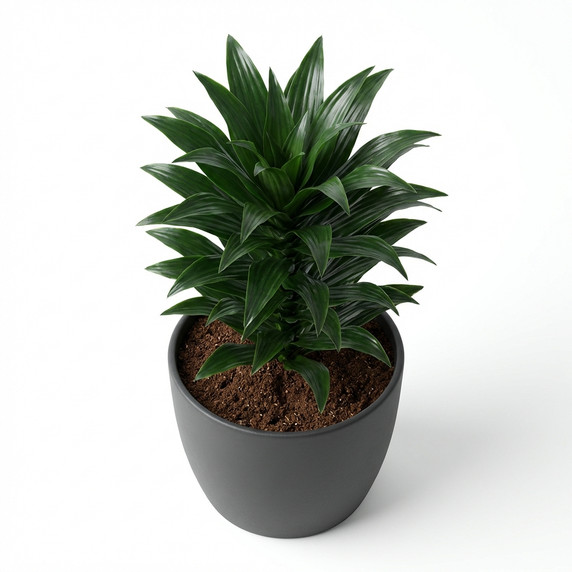
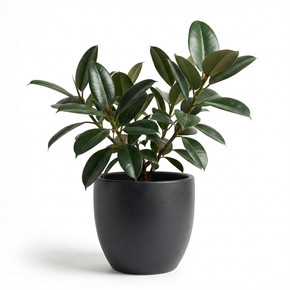


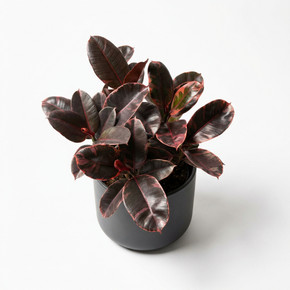
Bring a clean, modern look to any room with the Rubber Plant. Its deep green, high-shine leaves and upright form make it a premium statement piece for living rooms, receptions, and meeting spaces. Easy to maintain, forgiving, and quick to transform a corner into a lush focal point—just give it bright, indirect light and smart watering. A timeless best-seller for anyone who wants big impact with minimal effort.
Common Name: Rubber Plant
Botanical Name: Ficus elastica
Former Name: Not available
Plant Type: Houseplant (Indoor tree)
Plant Code / SKU: PLT-0348
Alternative Names:
فيكس مطاط
Order: Rosales
Family: Moraceae
Genus: Ficus
Species: F. elastica
Native to the eastern Himalayas in northeastern India, Nepal, Bhutan, Myanmar, southwestern China, Malaysia, and Indonesia. Widely cultivated and naturalized in tropical and subtropical regions worldwide as an ornamental and indoor plant.
Evergreen tree with a single upright trunk that may branch with maturity. Leaves are large, elliptical to ovate, glossy, leathery, 15–30 cm long, emerging reddish and maturing to deep green. Young shoots and leaf sheaths exude a milky latex when cut. Overall habit is upright and columnar indoors.
Indoors, typically reaches 1.5–3 m tall with a spread of 0.5–1.5 m. Outdoors in native range, can exceed 20 m in height. Growth rate is moderate under optimal conditions (approximately 30–60 cm per year).
Prefers bright, indirect light. Tolerates moderate light but will become leggy and produce smaller leaves. Avoid prolonged direct midday sun to prevent leaf scorch.
Keep soil consistently moist but not waterlogged. Water thoroughly when the top 2–3 cm of soil dries out. Reduce frequency in autumn and winter, allowing the medium to dry slightly between waterings.
Use a well-draining, aerated potting mix such as peat-based soil blended with perlite or coarse sand. Repot every 2–3 years in spring, choosing a pot only one size larger to avoid excess moisture retention.
Optimal temperature range is 18–25 °C (65–77 °F). Minimum tolerance around 10 °C (50 °F). Prefers moderate to high humidity; may develop brown leaf edges if air is too dry. Increase humidity with misting or a pebble tray.
Feed with a balanced, water-soluble houseplant fertilizer (e.g., 20-20-20) every 4–6 weeks during the active growing season (spring through summer). Suspend feeding in fall and winter.
Low to moderate care level. Periodic dusting of leaves helps maintain photosynthesis and appearance. Prune to control height and encourage branching. Wipe leaves with a damp cloth to remove dust and pests.
Propagated most reliably by stem cuttings or air layering. For cuttings, take 10–15 cm stem segments with at least two nodes, remove lower leaves, and root in water or moist medium under warm, humid conditions. Air layering yields larger, established plants more quickly.
Overwatering can lead to root rot and yellowing leaves. Underwatering causes leaf drop and browning edges. Pests include spider mites, mealybugs, scale insects, and aphids. Leaf spot diseases may occur in overly wet conditions.
Popular indoor ornamental for its architectural form and glossy foliage. Known to improve indoor air quality by removing VOCs such as formaldehyde. Provides a focal point in modern and tropical interior designs.
All parts contain milky latex sap (ficin) that can cause skin irritation and dermatitis. Toxic if ingested by pets (cats, dogs) and humans, causing oral irritation, vomiting, and diarrhea. Handle with gloves and keep out of reach of children and animals.
Bring a clean, modern look to any room with the Rubber Plant. Its deep green, high-shine leaves and upright form make it a premium statement piece for living rooms, receptions, and meeting spaces. Easy to maintain, forgiving, and quick to transform a corner into a lush focal point—just give it bright, indirect light and smart watering. A timeless best-seller for anyone who wants big impact with minimal effort.
Common Name: Rubber Plant
Botanical Name: Ficus elastica
Former Name: Not available
Plant Type: Houseplant (Indoor tree)
Plant Code / SKU: PLT-0348
Alternative Names:
فيكس مطاط
Order: Rosales
Family: Moraceae
Genus: Ficus
Species: F. elastica
Native to the eastern Himalayas in northeastern India, Nepal, Bhutan, Myanmar, southwestern China, Malaysia, and Indonesia. Widely cultivated and naturalized in tropical and subtropical regions worldwide as an ornamental and indoor plant.
Evergreen tree with a single upright trunk that may branch with maturity. Leaves are large, elliptical to ovate, glossy, leathery, 15–30 cm long, emerging reddish and maturing to deep green. Young shoots and leaf sheaths exude a milky latex when cut. Overall habit is upright and columnar indoors.
Indoors, typically reaches 1.5–3 m tall with a spread of 0.5–1.5 m. Outdoors in native range, can exceed 20 m in height. Growth rate is moderate under optimal conditions (approximately 30–60 cm per year).
Prefers bright, indirect light. Tolerates moderate light but will become leggy and produce smaller leaves. Avoid prolonged direct midday sun to prevent leaf scorch.
Keep soil consistently moist but not waterlogged. Water thoroughly when the top 2–3 cm of soil dries out. Reduce frequency in autumn and winter, allowing the medium to dry slightly between waterings.
Use a well-draining, aerated potting mix such as peat-based soil blended with perlite or coarse sand. Repot every 2–3 years in spring, choosing a pot only one size larger to avoid excess moisture retention.
Optimal temperature range is 18–25 °C (65–77 °F). Minimum tolerance around 10 °C (50 °F). Prefers moderate to high humidity; may develop brown leaf edges if air is too dry. Increase humidity with misting or a pebble tray.
Feed with a balanced, water-soluble houseplant fertilizer (e.g., 20-20-20) every 4–6 weeks during the active growing season (spring through summer). Suspend feeding in fall and winter.
Low to moderate care level. Periodic dusting of leaves helps maintain photosynthesis and appearance. Prune to control height and encourage branching. Wipe leaves with a damp cloth to remove dust and pests.
Propagated most reliably by stem cuttings or air layering. For cuttings, take 10–15 cm stem segments with at least two nodes, remove lower leaves, and root in water or moist medium under warm, humid conditions. Air layering yields larger, established plants more quickly.
Overwatering can lead to root rot and yellowing leaves. Underwatering causes leaf drop and browning edges. Pests include spider mites, mealybugs, scale insects, and aphids. Leaf spot diseases may occur in overly wet conditions.
Popular indoor ornamental for its architectural form and glossy foliage. Known to improve indoor air quality by removing VOCs such as formaldehyde. Provides a focal point in modern and tropical interior designs.
All parts contain milky latex sap (ficin) that can cause skin irritation and dermatitis. Toxic if ingested by pets (cats, dogs) and humans, causing oral irritation, vomiting, and diarrhea. Handle with gloves and keep out of reach of children and animals.







Take 20% off your first order
Enter the code below at checkout to get 20% off your first order