


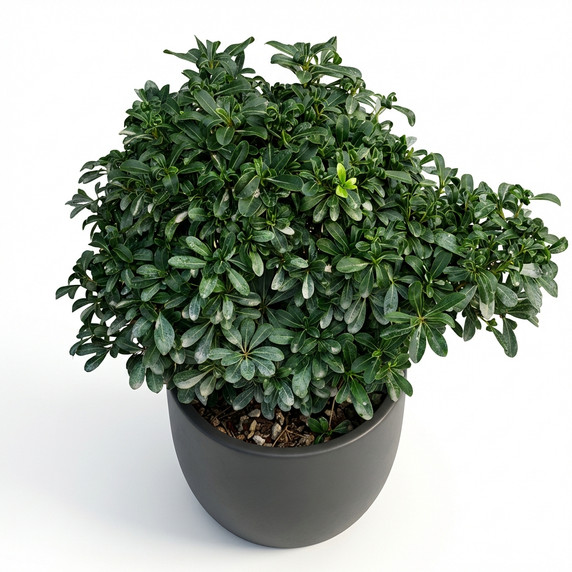


Bring instant volume and a polished, evergreen look to any space with عين البزون (Dwarf Umbrella Tree). Its compact, umbrella-like leaves create a full, designer shape that stays attractive with minimal effort. Place it in bright indirect light, water when the top soil dries, and enjoy a tough, forgiving plant that looks premium in homes, receptions, and meeting rooms.
Common Name: Dwarf Umbrella Tree
Botanical Name: Heptapleurum arboricola
Former Name: Schefflera arboricola
Plant Type: Foliage houseplant
Plant Code / SKU: PLT-0140
Alternative Names:
Schefflera arboricola
Umbrella Plant
Dwarf Schefflera
Arboricola
Order: Apiales
Family: Araliaceae
Genus: Heptapleurum
Species: H. arboricola
Native to subtropical forests of Taiwan and Hainan Island, China; widely cultivated as an ornamental houseplant worldwide.
Evergreen woody shrub with multiple slender stems; leaves are palmate with 7–16 glossy, elliptic leaflets radiating from a central point; new growth may show lighter coloration; stems erect and branching; foliage compact in dwarf varieties.
Indoor height: typically 1–2 m (3–6 ft); spread: 0.6–1 m (2–3 ft); individual leaflets 5–12 cm long; pot-grown specimens remain more compact.
Thrives in bright indirect light; tolerates medium light; avoid direct harsh sun which can scorch leaves; lower light reduces growth rate and may lead to leggy form.
Keep soil evenly moist but not waterlogged; water when the top 2–3 cm of soil is dry; reduce frequency in winter; avoid prolonged drought or standing water.
Use a rich, well-draining potting mix (loam-based or peat-based) amended with perlite or coarse sand; repot every 2–3 years or when root-bound to refresh medium.
Optimal temperature: 18–24 °C (65–75 °F); minimum: 15 °C (59 °F); sensitive to cold drafts; appreciates moderate to high humidity (50–70%); average household humidity generally sufficient.
Feed with balanced, water-soluble fertilizer (e.g., 20-20-20) at half-strength every 4–6 weeks during spring and summer; reduce feeding in fall and winter.
Easy to care for; low to medium maintenance; occasional pruning to maintain shape and remove spent growth; wipe leaves to remove dust.
Prune back leggy stems to encourage bushiness; propagate via semi-hardwood stem cuttings placed in water or directly into moist potting mix; root in 4–6 weeks under warm, humid conditions.
Pests: spider mites, aphids, scale insects; diseases: root rot from overwatering; symptoms: yellowing leaves indicate overwatering or low light; leggy growth from insufficient light.
Decorative accent in homes and offices; improves air quality by filtering pollutants; adds architectural interest with umbrella-like foliage.
All parts contain insoluble calcium oxalates; toxic if ingested by pets and humans causing oral irritation, drooling, vomiting; gloves recommended when handling if sensitive skin.
Bring instant volume and a polished, evergreen look to any space with عين البزون (Dwarf Umbrella Tree). Its compact, umbrella-like leaves create a full, designer shape that stays attractive with minimal effort. Place it in bright indirect light, water when the top soil dries, and enjoy a tough, forgiving plant that looks premium in homes, receptions, and meeting rooms.
Common Name: Dwarf Umbrella Tree
Botanical Name: Heptapleurum arboricola
Former Name: Schefflera arboricola
Plant Type: Foliage houseplant
Plant Code / SKU: PLT-0140
Alternative Names:
Schefflera arboricola
Umbrella Plant
Dwarf Schefflera
Arboricola
Order: Apiales
Family: Araliaceae
Genus: Heptapleurum
Species: H. arboricola
Native to subtropical forests of Taiwan and Hainan Island, China; widely cultivated as an ornamental houseplant worldwide.
Evergreen woody shrub with multiple slender stems; leaves are palmate with 7–16 glossy, elliptic leaflets radiating from a central point; new growth may show lighter coloration; stems erect and branching; foliage compact in dwarf varieties.
Indoor height: typically 1–2 m (3–6 ft); spread: 0.6–1 m (2–3 ft); individual leaflets 5–12 cm long; pot-grown specimens remain more compact.
Thrives in bright indirect light; tolerates medium light; avoid direct harsh sun which can scorch leaves; lower light reduces growth rate and may lead to leggy form.
Keep soil evenly moist but not waterlogged; water when the top 2–3 cm of soil is dry; reduce frequency in winter; avoid prolonged drought or standing water.
Use a rich, well-draining potting mix (loam-based or peat-based) amended with perlite or coarse sand; repot every 2–3 years or when root-bound to refresh medium.
Optimal temperature: 18–24 °C (65–75 °F); minimum: 15 °C (59 °F); sensitive to cold drafts; appreciates moderate to high humidity (50–70%); average household humidity generally sufficient.
Feed with balanced, water-soluble fertilizer (e.g., 20-20-20) at half-strength every 4–6 weeks during spring and summer; reduce feeding in fall and winter.
Easy to care for; low to medium maintenance; occasional pruning to maintain shape and remove spent growth; wipe leaves to remove dust.
Prune back leggy stems to encourage bushiness; propagate via semi-hardwood stem cuttings placed in water or directly into moist potting mix; root in 4–6 weeks under warm, humid conditions.
Pests: spider mites, aphids, scale insects; diseases: root rot from overwatering; symptoms: yellowing leaves indicate overwatering or low light; leggy growth from insufficient light.
Decorative accent in homes and offices; improves air quality by filtering pollutants; adds architectural interest with umbrella-like foliage.
All parts contain insoluble calcium oxalates; toxic if ingested by pets and humans causing oral irritation, drooling, vomiting; gloves recommended when handling if sensitive skin.


Take 20% off your first order
Enter the code below at checkout to get 20% off your first order