


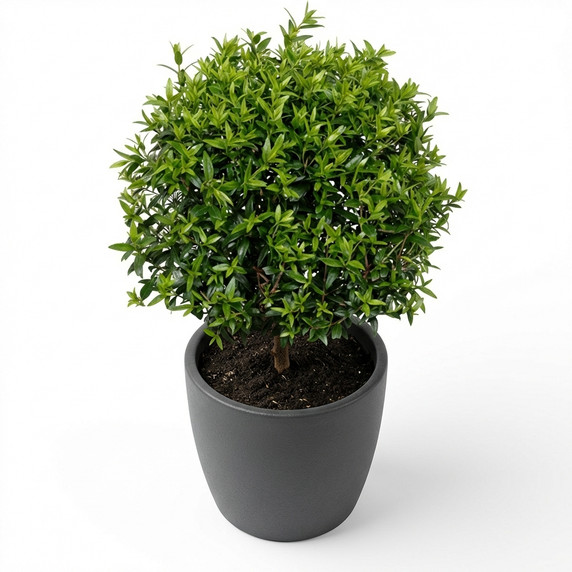
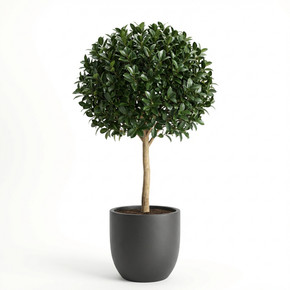


Bring home the iconic scent of Arabian Jasmine (Yas). This elegant, ball-shaped standard adds a luxury look to entrances and living spaces, while its white blooms perfume the air in the evening. Easy to maintain with bright light and consistent watering—perfect as a thoughtful gift or a statement plant for patios and reception areas.
Common Name: Arabian Jasmine
Botanical Name: Jasminum sambac
Plant Variant: Standard
Plant Color: Natural
Plant Country: Netherlands
SKU: PLT-0198
Arabic Name: ياس
Stems: Not available
Family: Oleaceae
Order: Lamiales
Family: Oleaceae
Genus: Jasminum
Species: J. sambac
Native to tropical Asia, particularly India, Bangladesh, Myanmar and Sri Lanka. Cultivated for centuries across Southeast Asia, China and the Arabian Peninsula. Today widely grown in tropical and subtropical regions worldwide and propagated in European nurseries (including the Netherlands) for export.
Evergreen shrub or small tree with glossy, dark green opposite leaves 2–4 cm long. Fragrant white flowers appear in clusters, each bloom 1.5–2 cm across with five thick petals, emitting a powerful sweet scent in the evening. Standard form features a single straight stem topped with a dense, globe-shaped canopy of foliage and blooms.
In landscape settings, can reach 1–2 m tall and wide. As a potted standard, typical height is 60–100 cm, with a canopy diameter of 30–40 cm. Leaf length 2–4 cm; flower clusters 3–5 cm across.
Prefers full sun to partial shade. At least 4–6 hours of direct morning sunlight daily. In hot climates, some afternoon shade helps prevent leaf scorch.
Maintain evenly moist but well-draining soil. Water thoroughly when the top 2 cm of soil feels dry. Reduce frequency slightly in cooler months but do not allow the plant to dry out completely.
Use a fertile, well-draining potting mix: equal parts loam, peat moss and perlite or coarse sand. Soil pH 6.0–7.0 ideal. Ensure pots have drainage holes to prevent waterlogging and root rot.
Optimal daytime temperatures 18–30 °C; night lows not below 13 °C. Thrives in moderate to high humidity (above 50%). In dry indoor environments, increase humidity with trays of water or humidifiers.
Feed with a balanced (e.g., 10-10-10 NPK) water-soluble fertilizer every 4–6 weeks during the active growing season (spring through early autumn). Apply a slow-release granular formula at potting or repotting.
Care Level: Medium. Requires regular pruning to maintain the standard form and remove spent blooms. Monitor for pests and ensure consistent moisture and light. Low tolerance for prolonged neglect.
Propagation is most commonly by semi-hardwood cuttings taken in late spring or early summer, rooted in mist or moist media. Layering and air-layering also effective. Seed propagation is possible but slower and less true-to-type for standards.
Pests: Aphids, whiteflies, scale insects, spider mites. Diseases: Root rot from poor drainage, sooty mold secondary to scale infestation, leaf spot in high humidity without air circulation. Bud drop may occur if water, light or temperature fluctuate abruptly.
Valued ornamentally for its fragrant blooms and elegant form. Used in perfumery, traditional garlands and teas. Enhances entryways, patios and reception areas with both visual appeal and evening fragrance.
Non-toxic to humans. Considered low risk for pets; ingestion may cause mild gastrointestinal upset. Flower oils may irritate skin in sensitive individuals—handle with care.
Bring home the iconic scent of Arabian Jasmine (Yas). This elegant, ball-shaped standard adds a luxury look to entrances and living spaces, while its white blooms perfume the air in the evening. Easy to maintain with bright light and consistent watering—perfect as a thoughtful gift or a statement plant for patios and reception areas.
Common Name: Arabian Jasmine
Botanical Name: Jasminum sambac
Plant Variant: Standard
Plant Color: Natural
Plant Country: Netherlands
SKU: PLT-0198
Arabic Name: ياس
Stems: Not available
Family: Oleaceae
Order: Lamiales
Family: Oleaceae
Genus: Jasminum
Species: J. sambac
Native to tropical Asia, particularly India, Bangladesh, Myanmar and Sri Lanka. Cultivated for centuries across Southeast Asia, China and the Arabian Peninsula. Today widely grown in tropical and subtropical regions worldwide and propagated in European nurseries (including the Netherlands) for export.
Evergreen shrub or small tree with glossy, dark green opposite leaves 2–4 cm long. Fragrant white flowers appear in clusters, each bloom 1.5–2 cm across with five thick petals, emitting a powerful sweet scent in the evening. Standard form features a single straight stem topped with a dense, globe-shaped canopy of foliage and blooms.
In landscape settings, can reach 1–2 m tall and wide. As a potted standard, typical height is 60–100 cm, with a canopy diameter of 30–40 cm. Leaf length 2–4 cm; flower clusters 3–5 cm across.
Prefers full sun to partial shade. At least 4–6 hours of direct morning sunlight daily. In hot climates, some afternoon shade helps prevent leaf scorch.
Maintain evenly moist but well-draining soil. Water thoroughly when the top 2 cm of soil feels dry. Reduce frequency slightly in cooler months but do not allow the plant to dry out completely.
Use a fertile, well-draining potting mix: equal parts loam, peat moss and perlite or coarse sand. Soil pH 6.0–7.0 ideal. Ensure pots have drainage holes to prevent waterlogging and root rot.
Optimal daytime temperatures 18–30 °C; night lows not below 13 °C. Thrives in moderate to high humidity (above 50%). In dry indoor environments, increase humidity with trays of water or humidifiers.
Feed with a balanced (e.g., 10-10-10 NPK) water-soluble fertilizer every 4–6 weeks during the active growing season (spring through early autumn). Apply a slow-release granular formula at potting or repotting.
Care Level: Medium. Requires regular pruning to maintain the standard form and remove spent blooms. Monitor for pests and ensure consistent moisture and light. Low tolerance for prolonged neglect.
Propagation is most commonly by semi-hardwood cuttings taken in late spring or early summer, rooted in mist or moist media. Layering and air-layering also effective. Seed propagation is possible but slower and less true-to-type for standards.
Pests: Aphids, whiteflies, scale insects, spider mites. Diseases: Root rot from poor drainage, sooty mold secondary to scale infestation, leaf spot in high humidity without air circulation. Bud drop may occur if water, light or temperature fluctuate abruptly.
Valued ornamentally for its fragrant blooms and elegant form. Used in perfumery, traditional garlands and teas. Enhances entryways, patios and reception areas with both visual appeal and evening fragrance.
Non-toxic to humans. Considered low risk for pets; ingestion may cause mild gastrointestinal upset. Flower oils may irritate skin in sensitive individuals—handle with care.

Take 20% off your first order
Enter the code below at checkout to get 20% off your first order