

New





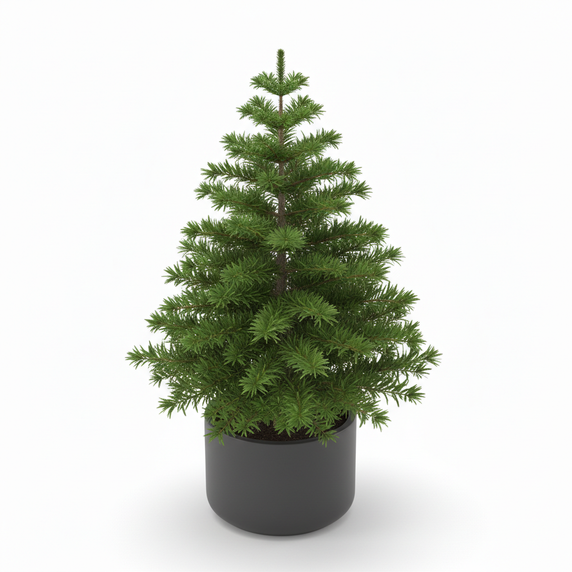
Bring timeless elegance indoors with the Norfolk Island Pine. Its perfectly layered branches and soft green needles create a stunning natural sculpture for your home or office. Easy to care for and beautiful year-round, it's the perfect statement plant to elevate your decor. Order now for a touch of living architecture!
Common Name: Norfolk Island Pine
Botanical Name: Araucaria heterophylla
Arabic Name: اروكاريا
Variant: Standard
Color: Green
Origin Country: Netherlands
Family: Araucariaceae
Stems: Not available
The Norfolk Island Pine belongs to the family Araucariaceae. Despite its common name, it is not a true pine (genus Pinus) but rather a member of an ancient lineage of conifers. It is the most well-known species in the genus Araucaria.
This species is endemic to Norfolk Island, a small territory in the Pacific Ocean located between Australia, New Zealand, and New Caledonia. In its native habitat, it grows into a massive tree, but it has become a popular ornamental plant globally.
The plant is characterized by its formal, symmetrical growth habit. It features tiered, horizontal branches that grow in distinct "whorls." The foliage consists of soft, bright green needle-like leaves that become darker and denser as the plant matures.
When grown as an indoor container plant, it typically reaches heights of 3 to 8 feet (1 to 2.4 meters). In the wild, however, it is a majestic giant that can tower up to 200 feet (60 meters) tall.
It thrives in bright, indirect light. While it can tolerate several hours of direct morning sun, harsh afternoon sunlight can scorch the needles. If the light is too low, the lower branches may droop or drop off.
The Norfolk Island Pine prefers consistently moist but well-drained soil. Water the plant when the top inch of soil feels dry to the touch. It is sensitive to both overwatering (which leads to root rot) and extreme drought (which causes needle drop).
A well-draining, slightly acidic potting mix is ideal. A mix containing peat moss, sand, and perlite works well to provide the necessary aeration and moisture retention. Ensure the pot has adequate drainage holes.
This plant prefers moderate temperatures between 18°C and 24°C (65°F - 75°F). It is native to a humid island environment, so it requires high humidity levels. Mist the foliage regularly or use a pebble tray to maintain moisture in the air.
During the active growing season (spring and summer), feed the plant with a balanced liquid fertilizer every 2 to 4 weeks. Reduce or stop fertilization during the dormant winter months.
The maintenance level is moderate. While it is relatively low maintenance once its light and humidity needs are met, it does not like being moved frequently and can be sensitive to environmental changes like cold drafts or dry indoor air.
Growth is relatively slow when kept indoors. Propagation is primarily done through seeds. While it can be grown from terminal stem cuttings, this is often difficult for home gardeners as it requires specific conditions to maintain the plant's vertical symmetry.
The most common issues include yellowing or browning needles due to low humidity or underwatering. It is also susceptible to pests like spider mites, mealybugs, and scale, particularly in dry indoor environments.
Apart from its architectural beauty, the Norfolk Island Pine is known for its air-purifying qualities. It is frequently used as a living Christmas tree during the holidays and serves as a sophisticated focal point in office lobbies and living rooms.
While generally considered safe for humans, the needles can be sharp and may cause mild gastrointestinal upset if ingested by pets. It is advisable to keep the plant out of reach of curious cats and dogs to avoid irritation.
Bring timeless elegance indoors with the Norfolk Island Pine. Its perfectly layered branches and soft green needles create a stunning natural sculpture for your home or office. Easy to care for and beautiful year-round, it's the perfect statement plant to elevate your decor. Order now for a touch of living architecture!
Common Name: Norfolk Island Pine
Botanical Name: Araucaria heterophylla
Arabic Name: اروكاريا
Variant: Standard
Color: Green
Origin Country: Netherlands
Family: Araucariaceae
Stems: Not available
The Norfolk Island Pine belongs to the family Araucariaceae. Despite its common name, it is not a true pine (genus Pinus) but rather a member of an ancient lineage of conifers. It is the most well-known species in the genus Araucaria.
This species is endemic to Norfolk Island, a small territory in the Pacific Ocean located between Australia, New Zealand, and New Caledonia. In its native habitat, it grows into a massive tree, but it has become a popular ornamental plant globally.
The plant is characterized by its formal, symmetrical growth habit. It features tiered, horizontal branches that grow in distinct "whorls." The foliage consists of soft, bright green needle-like leaves that become darker and denser as the plant matures.
When grown as an indoor container plant, it typically reaches heights of 3 to 8 feet (1 to 2.4 meters). In the wild, however, it is a majestic giant that can tower up to 200 feet (60 meters) tall.
It thrives in bright, indirect light. While it can tolerate several hours of direct morning sun, harsh afternoon sunlight can scorch the needles. If the light is too low, the lower branches may droop or drop off.
The Norfolk Island Pine prefers consistently moist but well-drained soil. Water the plant when the top inch of soil feels dry to the touch. It is sensitive to both overwatering (which leads to root rot) and extreme drought (which causes needle drop).
A well-draining, slightly acidic potting mix is ideal. A mix containing peat moss, sand, and perlite works well to provide the necessary aeration and moisture retention. Ensure the pot has adequate drainage holes.
This plant prefers moderate temperatures between 18°C and 24°C (65°F - 75°F). It is native to a humid island environment, so it requires high humidity levels. Mist the foliage regularly or use a pebble tray to maintain moisture in the air.
During the active growing season (spring and summer), feed the plant with a balanced liquid fertilizer every 2 to 4 weeks. Reduce or stop fertilization during the dormant winter months.
The maintenance level is moderate. While it is relatively low maintenance once its light and humidity needs are met, it does not like being moved frequently and can be sensitive to environmental changes like cold drafts or dry indoor air.
Growth is relatively slow when kept indoors. Propagation is primarily done through seeds. While it can be grown from terminal stem cuttings, this is often difficult for home gardeners as it requires specific conditions to maintain the plant's vertical symmetry.
The most common issues include yellowing or browning needles due to low humidity or underwatering. It is also susceptible to pests like spider mites, mealybugs, and scale, particularly in dry indoor environments.
Apart from its architectural beauty, the Norfolk Island Pine is known for its air-purifying qualities. It is frequently used as a living Christmas tree during the holidays and serves as a sophisticated focal point in office lobbies and living rooms.
While generally considered safe for humans, the needles can be sharp and may cause mild gastrointestinal upset if ingested by pets. It is advisable to keep the plant out of reach of curious cats and dogs to avoid irritation.



Take 20% off your first order
Enter the code below at checkout to get 20% off your first order