


Not Visable
Sellum is a foliage houseplant that features large, glossy, deeply lobed leaves that can reach up to 3 feet long. It's also known for its air-purifying properties and can thrive in various indoor environments.
1. Basic Identification
Common Name: Sellum, Tree Philodendron, Lace Tree Philodendron
Botanical Name: Thaumatophyllum bipinnatifidum
Arabic Name: سيلوم (Sellum)
Plant Variant: Sellum
Color: Green
2. Taxonomy & Classification
Kingdom: Plantae
Order: Alismatales
Family: Araceae
Genus: Thaumatophyllum
Species: T. bipinnatifidum
3. Origin & Distribution
Native to tropical regions of South America, including Brazil, Bolivia, Argentina, and Paraguay. It has been naturalized in many other warm, humid climates worldwide.
4. Visual Characteristics
Features dramatic, deeply lobed, heart-shaped leaves that are glossy and dark green. As the plant matures, it develops a sturdy, woody trunk marked with distinctive eye-shaped leaf scars left by fallen foliage.
5. Size & Dimensions
This is a large-scale plant. Indoors, it typically grows 5 to 8 feet tall and wide. Individual leaves can grow between 2 to 3 feet in length under optimal conditions.
6. Light Requirements
Prefers bright, indirect light. It can tolerate moderate light levels, but growth will be slower. Avoid direct afternoon sunlight, which can cause leaf scorch.
7. Watering Needs
Water thoroughly when the top 1–2 inches of soil feel dry. It prefers consistent moisture but is sensitive to overwatering. Ensure the pot has drainage holes to prevent root rot.
8. Soil & Potting
Requires a rich, well-draining potting mix. A combination of standard potting soil, perlite, and peat moss or orchid bark works well to maintain moisture while allowing aeration.
9. Temperature & Humidity
Thrives in temperatures between 65°F and 85°F (18°C–29°C). It prefers high humidity; use a pebble tray, mist the leaves, or use a humidifier if the indoor air is very dry.
10. Fertilization
Feed monthly during the growing season (spring and summer) with a balanced liquid fertilizer diluted to half strength. No fertilization is needed during the dormant winter months.
11. Maintenance & Care Level
Maintenance Level: Low to Moderate. Wipe the large leaves with a damp cloth periodically to remove dust. Prune away older, yellowing leaves at the base of the stem to keep the plant looking tidy.
12. Growth & Propagation
A relatively fast grower when provided with ample light and warmth. Propagation is most commonly achieved through stem cuttings with nodes or by harvesting seeds from its spadix.
13. Common Problems
Watch for pests like spider mites and mealybugs. Yellowing leaves may indicate overwatering or poor drainage, while brown, crispy edges usually suggest low humidity or underwatering.
14. Benefits & Uses
Excellent air purifier that filters toxins like formaldehyde from the air. Due to its size, it is a perfect statement plant for large living rooms, office lobbies, and bright entryways.
15. Toxicity & Safety
Contains calcium oxalate crystals. It is toxic to both humans and pets (cats and dogs) if ingested, causing irritation of the mouth, throat, and digestive tract.

Not Visable
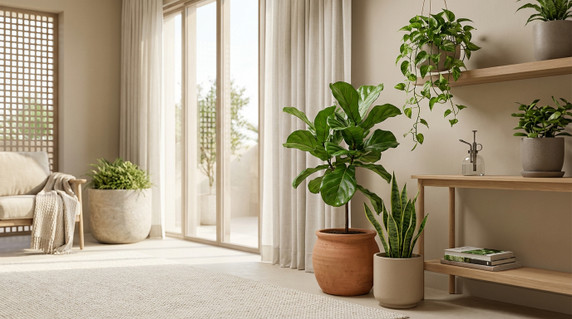
Sellum is a foliage houseplant that features large, glossy, deeply lobed leaves that can reach up to 3 feet long. It's also known for its air-purifying properties and can thrive in various indoor environments.
1. Basic Identification
Common Name: Sellum, Tree Philodendron, Lace Tree Philodendron
Botanical Name: Thaumatophyllum bipinnatifidum
Arabic Name: سيلوم (Sellum)
Plant Variant: Sellum
Color: Green
2. Taxonomy & Classification
Kingdom: Plantae
Order: Alismatales
Family: Araceae
Genus: Thaumatophyllum
Species: T. bipinnatifidum
3. Origin & Distribution
Native to tropical regions of South America, including Brazil, Bolivia, Argentina, and Paraguay. It has been naturalized in many other warm, humid climates worldwide.
4. Visual Characteristics
Features dramatic, deeply lobed, heart-shaped leaves that are glossy and dark green. As the plant matures, it develops a sturdy, woody trunk marked with distinctive eye-shaped leaf scars left by fallen foliage.
5. Size & Dimensions
This is a large-scale plant. Indoors, it typically grows 5 to 8 feet tall and wide. Individual leaves can grow between 2 to 3 feet in length under optimal conditions.
6. Light Requirements
Prefers bright, indirect light. It can tolerate moderate light levels, but growth will be slower. Avoid direct afternoon sunlight, which can cause leaf scorch.
7. Watering Needs
Water thoroughly when the top 1–2 inches of soil feel dry. It prefers consistent moisture but is sensitive to overwatering. Ensure the pot has drainage holes to prevent root rot.
8. Soil & Potting
Requires a rich, well-draining potting mix. A combination of standard potting soil, perlite, and peat moss or orchid bark works well to maintain moisture while allowing aeration.
9. Temperature & Humidity
Thrives in temperatures between 65°F and 85°F (18°C–29°C). It prefers high humidity; use a pebble tray, mist the leaves, or use a humidifier if the indoor air is very dry.
10. Fertilization
Feed monthly during the growing season (spring and summer) with a balanced liquid fertilizer diluted to half strength. No fertilization is needed during the dormant winter months.
11. Maintenance & Care Level
Maintenance Level: Low to Moderate. Wipe the large leaves with a damp cloth periodically to remove dust. Prune away older, yellowing leaves at the base of the stem to keep the plant looking tidy.
12. Growth & Propagation
A relatively fast grower when provided with ample light and warmth. Propagation is most commonly achieved through stem cuttings with nodes or by harvesting seeds from its spadix.
13. Common Problems
Watch for pests like spider mites and mealybugs. Yellowing leaves may indicate overwatering or poor drainage, while brown, crispy edges usually suggest low humidity or underwatering.
14. Benefits & Uses
Excellent air purifier that filters toxins like formaldehyde from the air. Due to its size, it is a perfect statement plant for large living rooms, office lobbies, and bright entryways.
15. Toxicity & Safety
Contains calcium oxalate crystals. It is toxic to both humans and pets (cats and dogs) if ingested, causing irritation of the mouth, throat, and digestive tract.