


Lamiaceae
Origanum majorana
Bring restaurant-level flavor to your home with Sweet Marjoram. This compact, fragrant herb thrives in pots, looks great on a sunny shelf, and rewards you with continuous harvests when you pinch and trim regularly. Perfect for kitchens, balconies, and small workspaces—fresh leaves, beautiful greenery, and a calming aroma in one plant.
1. Basic Identification
Common Name: Sweet Marjoram
Botanical Name: Origanum majorana
Former Name: Not available
Plant Type: Herb
Plant Code / SKU: PLT-0405
Alternative Names:
مردقوش
2. Taxonomy & Classification
Order: Lamiales
Family: Lamiaceae
Genus: Origanum
3. Origin & Distribution
Native to the Mediterranean basin (including Cyprus, Turkey, Lebanon, and Morocco). Widely cultivated in temperate regions worldwide and naturalized in parts of Europe and North America.
4. Visual Characteristics
Foliage: Small, oval to obovate, gray-green leaves with a soft, downy texture.
Flowers: Clusters of tiny, tubular white to pale pink blooms appearing in summer to early autumn.
Habit: Compact, bushy perennial forming low mounds.
5. Size & Dimensions
Height: 20–40 cm (8–16 in).
Spread: 30–60 cm (12–24 in), depending on pruning.
6. Light Requirements
Full sun (at least 6 hours of direct sunlight daily); tolerates light afternoon shade in hot climates.
7. Watering Needs
Moderate. Allow the top 1–2 cm of soil to dry out between waterings. Avoid waterlogging to prevent root rot.
8. Soil & Potting
Well-draining, sandy-loam soil with a neutral to slightly alkaline pH (6.0–8.0). In containers, use a general-purpose potting mix amended with perlite or coarse sand for drainage.
9. Temperature & Humidity
Optimal temperature range: 15–24 °C (59–75 °F). Tolerates down to 10 °C (50 °F) but not frost. Prefers low to average humidity; good air circulation is beneficial.
10. Fertilization
Feed with a balanced liquid fertilizer (e.g., 10-10-10 NPK) at half strength every 4–6 weeks during the active growing season (spring through early fall).
11. Maintenance & Care Level
Easy. Regular pinching of new growth promotes bushiness and delays flowering. Remove flower spikes to maintain leaf production. Prune back by up to one-third in early spring.
12. Growth & Propagation
Propagation: From softwood stem cuttings in spring or from seed.
Seed sowing: Surface-sow and lightly press into moist seed mix; germination in 7–14 days at 20–22 °C.
Cuttings: Root 5–7 cm (2–3 in) cuttings in moist, well-draining mix; roots form in 2–4 weeks.
13. Common Problems
Overwatering can cause root rot. Powdery mildew may develop in high humidity. Pests include aphids, spider mites, and whiteflies. Ensure good air flow and avoid wet foliage.
14. Benefits & Uses
Culinary: Seasoning for soups, sauces, meats, and salads.
Medicinal: Traditional digestive aid, anti-inflammatory, and mild sedative.
Aromatic: Fresh or dried leaves impart a sweet, floral aroma in sachets and potpourri.
15. Toxicity & Safety
Non-toxic to humans when used in culinary amounts. Generally safe for pets; excessive ingestion may cause mild gastrointestinal upset.
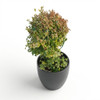
Origanum majorana

Bring restaurant-level flavor to your home with Sweet Marjoram. This compact, fragrant herb thrives in pots, looks great on a sunny shelf, and rewards you with continuous harvests when you pinch and trim regularly. Perfect for kitchens, balconies, and small workspaces—fresh leaves, beautiful greenery, and a calming aroma in one plant.
1. Basic Identification
Common Name: Sweet Marjoram
Botanical Name: Origanum majorana
Former Name: Not available
Plant Type: Herb
Plant Code / SKU: PLT-0405
Alternative Names:
مردقوش
2. Taxonomy & Classification
Order: Lamiales
Family: Lamiaceae
Genus: Origanum
3. Origin & Distribution
Native to the Mediterranean basin (including Cyprus, Turkey, Lebanon, and Morocco). Widely cultivated in temperate regions worldwide and naturalized in parts of Europe and North America.
4. Visual Characteristics
Foliage: Small, oval to obovate, gray-green leaves with a soft, downy texture.
Flowers: Clusters of tiny, tubular white to pale pink blooms appearing in summer to early autumn.
Habit: Compact, bushy perennial forming low mounds.
5. Size & Dimensions
Height: 20–40 cm (8–16 in).
Spread: 30–60 cm (12–24 in), depending on pruning.
6. Light Requirements
Full sun (at least 6 hours of direct sunlight daily); tolerates light afternoon shade in hot climates.
7. Watering Needs
Moderate. Allow the top 1–2 cm of soil to dry out between waterings. Avoid waterlogging to prevent root rot.
8. Soil & Potting
Well-draining, sandy-loam soil with a neutral to slightly alkaline pH (6.0–8.0). In containers, use a general-purpose potting mix amended with perlite or coarse sand for drainage.
9. Temperature & Humidity
Optimal temperature range: 15–24 °C (59–75 °F). Tolerates down to 10 °C (50 °F) but not frost. Prefers low to average humidity; good air circulation is beneficial.
10. Fertilization
Feed with a balanced liquid fertilizer (e.g., 10-10-10 NPK) at half strength every 4–6 weeks during the active growing season (spring through early fall).
11. Maintenance & Care Level
Easy. Regular pinching of new growth promotes bushiness and delays flowering. Remove flower spikes to maintain leaf production. Prune back by up to one-third in early spring.
12. Growth & Propagation
Propagation: From softwood stem cuttings in spring or from seed.
Seed sowing: Surface-sow and lightly press into moist seed mix; germination in 7–14 days at 20–22 °C.
Cuttings: Root 5–7 cm (2–3 in) cuttings in moist, well-draining mix; roots form in 2–4 weeks.
13. Common Problems
Overwatering can cause root rot. Powdery mildew may develop in high humidity. Pests include aphids, spider mites, and whiteflies. Ensure good air flow and avoid wet foliage.
14. Benefits & Uses
Culinary: Seasoning for soups, sauces, meats, and salads.
Medicinal: Traditional digestive aid, anti-inflammatory, and mild sedative.
Aromatic: Fresh or dried leaves impart a sweet, floral aroma in sachets and potpourri.
15. Toxicity & Safety
Non-toxic to humans when used in culinary amounts. Generally safe for pets; excessive ingestion may cause mild gastrointestinal upset.