


Ornamental Kale
Tired of a drab winter garden? Inject spectacular color with our Ornamental Kale! These are not your average garden greens; they are living sculptures with ruffled leaves that blush into brilliant shades of deep magenta, royal purple, and crisp white as the weather cools. Perfect for pots, borders, and entryways, Ornamental Kale is the ultimate low-maintenance solution for a high-impact landscape that defies the cold. Be the envy of your neighborhood with a garden that stays vibrant all season long. Order yours today and watch the magic unfold after the first frost!
1. Basic Identification
Common Name: Ornamental Kale, Ornamental Cabbage, Flowering Kale
Botanical Name: Brassica oleracea var. acephala
Arabic Name: خس زينه
Plant Variant: Standard
Color: Multicolor
Country of Origin: Netherlands
2. Taxonomy & Classification
Kingdom: Plantae
Order: Brassicales
Family: Brassicaceae
Genus: Brassica
Species: B. oleracea
3. Origin & Distribution
Ornamental Kale is native to the coastal regions of Southern and Western Europe. It has been extensively cultivated and hybridized, particularly in Japan and Europe, to enhance its vibrant colors and leaf textures for ornamental use in temperate climates worldwide.
4. Visual Characteristics
This plant features large, open rosettes of ruffled, fringed, or feathery leaves. While the outer leaves remain a deep green or blue-green, the central leaves transform into striking shades of purple, pink, rose, or creamy white as temperatures drop.
5. Size & Dimensions
Typically grows to a height of 12 to 18 inches (30–45 cm) and spreads approximately 12 to 18 inches wide, forming a dense, mounding habit.
6. Light Requirements
Ornamental Kale performs best in full sun, requiring at least 6 to 8 hours of direct light daily to maintain its compact shape and intense coloration. It can tolerate partial shade, but colors may be less vibrant.
7. Watering Needs
Requires consistent moisture. The soil should be kept evenly moist but not waterlogged. Watering at the base of the plant is recommended to avoid moisture trapped in the rosettes, which can lead to rot.
8. Soil & Potting
Thrives in rich, loamy, and well-drained soil with a slightly acidic to neutral pH (5.8 to 6.5). If planting in containers, use a high-quality potting mix with good drainage properties.
9. Temperature & Humidity
Extremely cold-hardy. The most brilliant colors are triggered by cold weather, specifically when temperatures drop below 50°F (10°C). It can survive frost and light snow, making it a staple for autumn and winter gardens.
10. Fertilization
Apply a balanced, water-soluble fertilizer at the time of planting. Avoid over-fertilizing with high nitrogen in late autumn, as this can inhibit the development of the decorative colors.
11. Maintenance & Care Level
Low maintenance. Care involves removing yellowing or damaged lower leaves to maintain a clean appearance and monitoring for pests. It does not require pruning or deadheading.
12. Growth & Propagation
Usually grown as a biennial but treated as an annual. It is primarily propagated by seeds sown in mid-to-late summer for autumn color. It grows relatively quickly once established in cool weather.
13. Common Problems
Susceptible to typical cabbage family pests including cabbage loopers, aphids, and flea beetles. Downy mildew or root rot can occur if the soil is kept too wet or if there is poor air circulation.
14. Benefits & Uses
Primarily used for seasonal ornamental displays in garden beds, borders, and patio containers. While technically edible (though more bitter than culinary kale), it is best used as a visual "living sculpture" to provide winter interest when other plants are dormant.
15. Toxicity & Safety
Non-toxic to humans, dogs, and cats. It is considered safe for placement in households with pets and children.
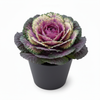
Ornamental Kale

Tired of a drab winter garden? Inject spectacular color with our Ornamental Kale! These are not your average garden greens; they are living sculptures with ruffled leaves that blush into brilliant shades of deep magenta, royal purple, and crisp white as the weather cools. Perfect for pots, borders, and entryways, Ornamental Kale is the ultimate low-maintenance solution for a high-impact landscape that defies the cold. Be the envy of your neighborhood with a garden that stays vibrant all season long. Order yours today and watch the magic unfold after the first frost!
1. Basic Identification
Common Name: Ornamental Kale, Ornamental Cabbage, Flowering Kale
Botanical Name: Brassica oleracea var. acephala
Arabic Name: خس زينه
Plant Variant: Standard
Color: Multicolor
Country of Origin: Netherlands
2. Taxonomy & Classification
Kingdom: Plantae
Order: Brassicales
Family: Brassicaceae
Genus: Brassica
Species: B. oleracea
3. Origin & Distribution
Ornamental Kale is native to the coastal regions of Southern and Western Europe. It has been extensively cultivated and hybridized, particularly in Japan and Europe, to enhance its vibrant colors and leaf textures for ornamental use in temperate climates worldwide.
4. Visual Characteristics
This plant features large, open rosettes of ruffled, fringed, or feathery leaves. While the outer leaves remain a deep green or blue-green, the central leaves transform into striking shades of purple, pink, rose, or creamy white as temperatures drop.
5. Size & Dimensions
Typically grows to a height of 12 to 18 inches (30–45 cm) and spreads approximately 12 to 18 inches wide, forming a dense, mounding habit.
6. Light Requirements
Ornamental Kale performs best in full sun, requiring at least 6 to 8 hours of direct light daily to maintain its compact shape and intense coloration. It can tolerate partial shade, but colors may be less vibrant.
7. Watering Needs
Requires consistent moisture. The soil should be kept evenly moist but not waterlogged. Watering at the base of the plant is recommended to avoid moisture trapped in the rosettes, which can lead to rot.
8. Soil & Potting
Thrives in rich, loamy, and well-drained soil with a slightly acidic to neutral pH (5.8 to 6.5). If planting in containers, use a high-quality potting mix with good drainage properties.
9. Temperature & Humidity
Extremely cold-hardy. The most brilliant colors are triggered by cold weather, specifically when temperatures drop below 50°F (10°C). It can survive frost and light snow, making it a staple for autumn and winter gardens.
10. Fertilization
Apply a balanced, water-soluble fertilizer at the time of planting. Avoid over-fertilizing with high nitrogen in late autumn, as this can inhibit the development of the decorative colors.
11. Maintenance & Care Level
Low maintenance. Care involves removing yellowing or damaged lower leaves to maintain a clean appearance and monitoring for pests. It does not require pruning or deadheading.
12. Growth & Propagation
Usually grown as a biennial but treated as an annual. It is primarily propagated by seeds sown in mid-to-late summer for autumn color. It grows relatively quickly once established in cool weather.
13. Common Problems
Susceptible to typical cabbage family pests including cabbage loopers, aphids, and flea beetles. Downy mildew or root rot can occur if the soil is kept too wet or if there is poor air circulation.
14. Benefits & Uses
Primarily used for seasonal ornamental displays in garden beds, borders, and patio containers. While technically edible (though more bitter than culinary kale), it is best used as a visual "living sculpture" to provide winter interest when other plants are dormant.
15. Toxicity & Safety
Non-toxic to humans, dogs, and cats. It is considered safe for placement in households with pets and children.