


Fabaceae
Parkinsonia aculeata
Create a striking, low-water outdoor statement with Jerusalem Thorn. Its delicate, feathery canopy adds texture without heavy shade, while its toughness makes it a reliable choice for sunny entrances, courtyards, and heat-exposed gardens. Perfect for customers who want an attractive landscape plant that doesn’t demand constant watering—just give it sun, drainage, and occasional deep irrigation.
1. Basic Identification
Common Name: Jerusalem Thorn, Mexican Palo Verde, Jelly Bean Tree
Botanical Name: Parkinsonia aculeata
Arabic Name: زعروز
Plant Variant: Standard
Plant Color: Natural
Plant Country: Turkey
2. Taxonomy & Classification
Kingdom: Plantae
Order: Fabales
Family: Fabaceae
Genus: Parkinsonia
Species: Parkinsonia aculeata
3. Origin & Distribution
Native to the Southwestern United States, Mexico, the Caribbean, and Central and South America. It has been widely naturalized in tropical and subtropical regions across the globe, including Africa and Australia.
4. Visual Characteristics
A fast-growing tree with distinctive lime-green bark that is capable of photosynthesis. It features pendulous, feathery branches with long, flattened leaf stalks and tiny leaflets. In spring and summer, it produces showy, fragrant yellow flowers with five petals, one of which often has orange spots.
5. Size & Dimensions
Typically reaches a height and spread of 15 to 30 feet (4.5 to 9 meters). It possesses a low-branching, spreading habit that creates an airy, light-filtering canopy.
6. Light Requirements
Full sun is essential. This plant thrives in bright, direct sunlight and requires at least 6 to 8 hours of sun daily to maintain its health and produce flowers.
7. Watering Needs
Very low once established. It is exceptionally drought-tolerant. During the first growing season, water weekly; thereafter, occasional deep irrigation during long dry spells is sufficient. Overwatering or poor drainage can lead to root rot.
8. Soil & Potting
Highly adaptable to various soil conditions, including poor, sandy, or rocky soils. It prefers well-drained soil with a neutral to alkaline pH. While best grown in the ground, young specimens can be kept in large, well-draining pots.
9. Temperature & Humidity
Thrives in hot, arid, and semi-arid climates. It is hardy to temperatures as low as 15°F to 20°F (-7°C to -9°C) and is highly tolerant of intense desert heat.
10. Fertilization
Generally does not require regular fertilization. If growth appears stunted, a balanced, slow-release fertilizer can be applied in early spring, but the tree typically draws sufficient nutrients from native soils.
11. Maintenance & Care Level
Low maintenance. Periodic pruning may be necessary to remove lower branches or sharp thorns, especially if planted near walkways. Its "self-mulching" habit (dropping leaflets) may require occasional cleanup.
12. Growth & Propagation
Fast-growing tree. Propagation is primarily done through seeds, which require scarification (nicking the seed coat) due to their hardness, or by semi-hardwood cuttings.
13. Common Problems
Generally resistant to most pests and diseases. The most common issue is root rot caused by poorly draining soil. It may occasionally attract scale insects or borers if the tree is significantly stressed.
14. Benefits & Uses
Highly valued in xeriscaping and desert landscaping for its drought resistance. It provides light shade, beautiful ornamental flowers, and is useful for erosion control. It also serves as a habitat and nectar source for bees and birds.
15. Toxicity & Safety
Not known to be toxic to humans or pets. However, the plant possesses sharp thorns at the base of the leaves which can cause physical injury; care should be taken when pruning or planting in high-traffic areas.
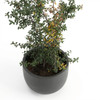
Parkinsonia aculeata

Create a striking, low-water outdoor statement with Jerusalem Thorn. Its delicate, feathery canopy adds texture without heavy shade, while its toughness makes it a reliable choice for sunny entrances, courtyards, and heat-exposed gardens. Perfect for customers who want an attractive landscape plant that doesn’t demand constant watering—just give it sun, drainage, and occasional deep irrigation.
1. Basic Identification
Common Name: Jerusalem Thorn, Mexican Palo Verde, Jelly Bean Tree
Botanical Name: Parkinsonia aculeata
Arabic Name: زعروز
Plant Variant: Standard
Plant Color: Natural
Plant Country: Turkey
2. Taxonomy & Classification
Kingdom: Plantae
Order: Fabales
Family: Fabaceae
Genus: Parkinsonia
Species: Parkinsonia aculeata
3. Origin & Distribution
Native to the Southwestern United States, Mexico, the Caribbean, and Central and South America. It has been widely naturalized in tropical and subtropical regions across the globe, including Africa and Australia.
4. Visual Characteristics
A fast-growing tree with distinctive lime-green bark that is capable of photosynthesis. It features pendulous, feathery branches with long, flattened leaf stalks and tiny leaflets. In spring and summer, it produces showy, fragrant yellow flowers with five petals, one of which often has orange spots.
5. Size & Dimensions
Typically reaches a height and spread of 15 to 30 feet (4.5 to 9 meters). It possesses a low-branching, spreading habit that creates an airy, light-filtering canopy.
6. Light Requirements
Full sun is essential. This plant thrives in bright, direct sunlight and requires at least 6 to 8 hours of sun daily to maintain its health and produce flowers.
7. Watering Needs
Very low once established. It is exceptionally drought-tolerant. During the first growing season, water weekly; thereafter, occasional deep irrigation during long dry spells is sufficient. Overwatering or poor drainage can lead to root rot.
8. Soil & Potting
Highly adaptable to various soil conditions, including poor, sandy, or rocky soils. It prefers well-drained soil with a neutral to alkaline pH. While best grown in the ground, young specimens can be kept in large, well-draining pots.
9. Temperature & Humidity
Thrives in hot, arid, and semi-arid climates. It is hardy to temperatures as low as 15°F to 20°F (-7°C to -9°C) and is highly tolerant of intense desert heat.
10. Fertilization
Generally does not require regular fertilization. If growth appears stunted, a balanced, slow-release fertilizer can be applied in early spring, but the tree typically draws sufficient nutrients from native soils.
11. Maintenance & Care Level
Low maintenance. Periodic pruning may be necessary to remove lower branches or sharp thorns, especially if planted near walkways. Its "self-mulching" habit (dropping leaflets) may require occasional cleanup.
12. Growth & Propagation
Fast-growing tree. Propagation is primarily done through seeds, which require scarification (nicking the seed coat) due to their hardness, or by semi-hardwood cuttings.
13. Common Problems
Generally resistant to most pests and diseases. The most common issue is root rot caused by poorly draining soil. It may occasionally attract scale insects or borers if the tree is significantly stressed.
14. Benefits & Uses
Highly valued in xeriscaping and desert landscaping for its drought resistance. It provides light shade, beautiful ornamental flowers, and is useful for erosion control. It also serves as a habitat and nectar source for bees and birds.
15. Toxicity & Safety
Not known to be toxic to humans or pets. However, the plant possesses sharp thorns at the base of the leaves which can cause physical injury; care should be taken when pruning or planting in high-traffic areas.