

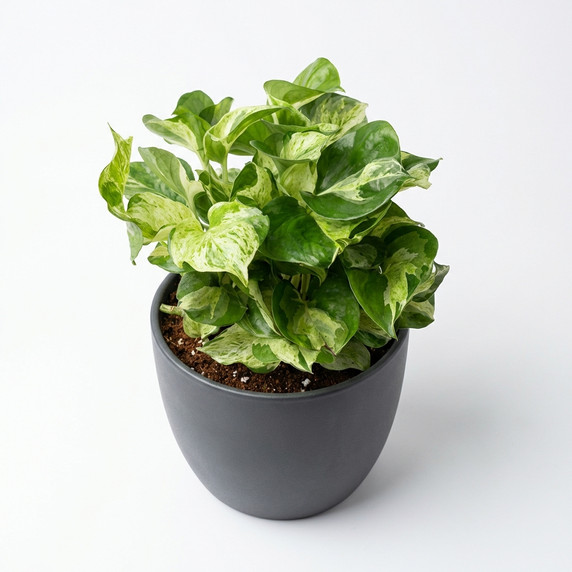


Bring instant jungle vibes to any room with Golden Pothos—one of the easiest, most reliable indoor plants. Let it trail for a lush waterfall of leaves or train it up a moss pole for a bold vertical statement. It’s forgiving if you miss a watering, thrives in typical indoor light, and looks fantastic in homes, cafés, and offices. A true bestseller for effortless greenery.
Common Name: Golden Pothos
Botanical Name: Epipremnum aureum
Former Name: Not available
Plant Type: Foliage houseplant (Aroid)
Plant Code / SKU: PLT-0365
Alternative Names:
Devil’s Ivy
Ceylon Creeper
Hunter’s Robe
Silver Vine
بوتس
Order: Alismatales
Family: Araceae
Genus: Epipremnum
Species: Epipremnum aureum
Native to the island of Moorea in French Polynesia.
Widely naturalized throughout tropical and subtropical regions worldwide.
Commonly cultivated indoors across North America, Europe, Asia, and beyond.
Leaves: Glossy, heart-shaped leaves with marbled yellow or white variegation on green.
Stems: Slender, creeping or climbing stems with aerial roots that cling to supports.
Juvenile Form: Smaller leaves without extensive variegation; mature indoor plants maintain similar form but larger.
Vine Length: Indoors typically 1–6 m (3–20 ft) when supported; 1–2 m when allowed to trail.
Leaf Size: 8–30 cm (3–12 in) long, 5–20 cm (2–8 in) wide.
Growth Rate: Moderate to rapid under optimal conditions.
Prefers bright, indirect light for best variegation and growth.
Tolerates low light but may become leggy and lose variegation.
Avoid direct midday sun to prevent leaf burn.
Allow the top 2–3 cm (1 in) of soil to dry out between waterings.
Water thoroughly until excess drains; discard any standing water.
Reduce frequency during cooler months when growth slows.
Use a well-draining, aerated potting mix (peat-based with perlite or coarse sand).
Ideal pH: Slightly acidic to neutral (6.1–6.5).
Repot every 1–2 years or when root-bound, preferably in spring.
Temperature: Optimal 18–29 °C (65–85 °F); should not fall below 10–13 °C (50–55 °F).
Humidity: Prefers moderate to high (40–80%); tolerates average indoor levels.
Benefits from occasional misting or placement on a humidity tray.
Feed with a balanced liquid fertilizer (e.g., 20-20-20) at half strength.
Fertilize every 4–6 weeks during spring and summer active growth.
Cease feeding in autumn and winter when growth slows.
Low maintenance; well suited for beginners.
Prune vines to control length, encourage bushier growth, and remove yellowing leaves.
Wipe leaves occasionally to remove dust and improve photosynthesis.
Propagation: Stem cuttings with at least one leaf node root easily in water or moist soil.
Rooting Time: 2–4 weeks for visible root development.
Training: Use moss poles, trellises, or allow to cascade from hanging baskets.
Yellow Leaves: Often due to overwatering or poor drainage.
Brown Leaf Tips: Caused by underwatering, low humidity, or salt buildup.
Pests: Can attract mealybugs, spider mites, and scale insects.
Diseases: Prone to root rot if left in soggy soil; leaf spot in overly humid, stagnant conditions.
Air Purification: Removes indoor pollutants such as formaldehyde, benzene, and xylene.
Decorative: Ideal for hanging baskets, shelves, desks, and living walls.
Well-being: Enhances indoor ambiance, reduces stress, and boosts mood.
Contains insoluble calcium oxalate crystals; toxic if ingested by pets or humans.
Ingestion may cause oral irritation, drooling, vomiting, and difficulty swallowing.
Keep out of reach of children and animals; wear gloves when handling if sensitive.
Bring instant jungle vibes to any room with Golden Pothos—one of the easiest, most reliable indoor plants. Let it trail for a lush waterfall of leaves or train it up a moss pole for a bold vertical statement. It’s forgiving if you miss a watering, thrives in typical indoor light, and looks fantastic in homes, cafés, and offices. A true bestseller for effortless greenery.
Common Name: Golden Pothos
Botanical Name: Epipremnum aureum
Former Name: Not available
Plant Type: Foliage houseplant (Aroid)
Plant Code / SKU: PLT-0365
Alternative Names:
Devil’s Ivy
Ceylon Creeper
Hunter’s Robe
Silver Vine
بوتس
Order: Alismatales
Family: Araceae
Genus: Epipremnum
Species: Epipremnum aureum
Native to the island of Moorea in French Polynesia.
Widely naturalized throughout tropical and subtropical regions worldwide.
Commonly cultivated indoors across North America, Europe, Asia, and beyond.
Leaves: Glossy, heart-shaped leaves with marbled yellow or white variegation on green.
Stems: Slender, creeping or climbing stems with aerial roots that cling to supports.
Juvenile Form: Smaller leaves without extensive variegation; mature indoor plants maintain similar form but larger.
Vine Length: Indoors typically 1–6 m (3–20 ft) when supported; 1–2 m when allowed to trail.
Leaf Size: 8–30 cm (3–12 in) long, 5–20 cm (2–8 in) wide.
Growth Rate: Moderate to rapid under optimal conditions.
Prefers bright, indirect light for best variegation and growth.
Tolerates low light but may become leggy and lose variegation.
Avoid direct midday sun to prevent leaf burn.
Allow the top 2–3 cm (1 in) of soil to dry out between waterings.
Water thoroughly until excess drains; discard any standing water.
Reduce frequency during cooler months when growth slows.
Use a well-draining, aerated potting mix (peat-based with perlite or coarse sand).
Ideal pH: Slightly acidic to neutral (6.1–6.5).
Repot every 1–2 years or when root-bound, preferably in spring.
Temperature: Optimal 18–29 °C (65–85 °F); should not fall below 10–13 °C (50–55 °F).
Humidity: Prefers moderate to high (40–80%); tolerates average indoor levels.
Benefits from occasional misting or placement on a humidity tray.
Feed with a balanced liquid fertilizer (e.g., 20-20-20) at half strength.
Fertilize every 4–6 weeks during spring and summer active growth.
Cease feeding in autumn and winter when growth slows.
Low maintenance; well suited for beginners.
Prune vines to control length, encourage bushier growth, and remove yellowing leaves.
Wipe leaves occasionally to remove dust and improve photosynthesis.
Propagation: Stem cuttings with at least one leaf node root easily in water or moist soil.
Rooting Time: 2–4 weeks for visible root development.
Training: Use moss poles, trellises, or allow to cascade from hanging baskets.
Yellow Leaves: Often due to overwatering or poor drainage.
Brown Leaf Tips: Caused by underwatering, low humidity, or salt buildup.
Pests: Can attract mealybugs, spider mites, and scale insects.
Diseases: Prone to root rot if left in soggy soil; leaf spot in overly humid, stagnant conditions.
Air Purification: Removes indoor pollutants such as formaldehyde, benzene, and xylene.
Decorative: Ideal for hanging baskets, shelves, desks, and living walls.
Well-being: Enhances indoor ambiance, reduces stress, and boosts mood.
Contains insoluble calcium oxalate crystals; toxic if ingested by pets or humans.
Ingestion may cause oral irritation, drooling, vomiting, and difficulty swallowing.
Keep out of reach of children and animals; wear gloves when handling if sensitive.

Take 20% off your first order
Enter the code below at checkout to get 20% off your first order