


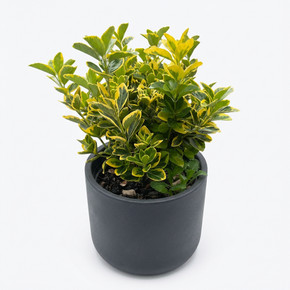
Upgrade any entrance or patio instantly with Golden Euonymus—an evergreen, variegated shrub that stays crisp, colorful, and easy to maintain. Its glossy yellow-and-green foliage brightens landscapes and large planters, while its natural tolerance for pruning lets you keep a clean, professional shape year-round. Ideal for homes, offices, and commercial frontages where neat structure and reliable color matter.
Common Name: Golden Euonymus
Botanical Name: Euonymus japonicus
Former Name: Not available
Plant Type: Evergreen shrub
Plant Code / SKU: PLT-0134
Alternative Names:
شمشار
Japanese spindle
Japanese Euonymus
Golden variegated (aureomarginatus type)
Order: Celastrales
Family: Celastraceae
Genus: Euonymus
Species: japonicus
Native to Japan, Korea, and eastern China. Widely cultivated in temperate regions worldwide, including Turkey, as an ornamental hedge and foundation planting. USDA hardiness zones 7–9.
Evergreen shrub with glossy, elliptic leaves edged in bright golden-yellow margins; leaf length 3–7 cm. Small, greenish-white flowers appear in spring, followed by showy red capsules revealing orange seeds in autumn.
Typical mature height 2–3 m; spread 1–2 m. Responds well to pruning; can be maintained at 1 m for hedges or trained as a small tree.
Thrives in full sun to part shade. Best leaf variegation under 4–6 hours of direct sunlight. In deep shade, foliage may revert to more green with reduced margin color.
Moderate water needs. Keep soil evenly moist, especially during establishment and dry periods. Tolerates short droughts once established but avoid prolonged dryness or waterlogging.
Prefers well-draining, fertile soils with pH 6.0–7.5. Adaptable to clay, loam, or sandy soils if amended with organic matter. In containers, use a quality potting mix with good drainage.
Hardy to –12 °C (USDA zone 7). Performs well in moderate humidity. Protect from extreme winter winds and summer heat extremes to prevent leaf scorch.
Apply a balanced slow-release fertilizer in early spring. A light supplemental feeding in mid-summer supports continued growth and foliar vigor.
Easy to maintain. Prune anytime to shape, best after flowering to avoid cutting off next season’s blooms. Remove dead or crossing branches to maintain airflow.
Moderate growth rate, 30–45 cm per year. Propagate by semi‐hardwood cuttings in summer with rooting hormone, by layering in spring, or from seed (seed requires stratification and has variable results).
Pests: scale insects, aphids, spider mites. Diseases: powdery mildew, leaf spot. Ensure good air circulation, apply horticultural oil or insecticidal soap for pests, and avoid overhead watering.
Ideal for hedging, topiary, foundation plantings, and container displays. Provides year-round color and structure. Tolerant of pruning for formal shapes and screens.
Berries and foliage are mildly toxic if ingested, causing gastrointestinal upset in humans and pets. Wear gloves when pruning to avoid skin irritation.
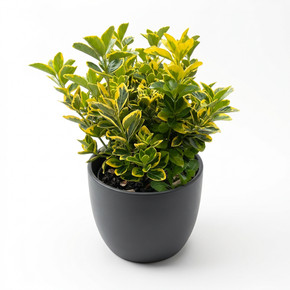
Upgrade any entrance or patio instantly with Golden Euonymus—an evergreen, variegated shrub that stays crisp, colorful, and easy to maintain. Its glossy yellow-and-green foliage brightens landscapes and large planters, while its natural tolerance for pruning lets you keep a clean, professional shape year-round. Ideal for homes, offices, and commercial frontages where neat structure and reliable color matter.
Common Name: Golden Euonymus
Botanical Name: Euonymus japonicus
Former Name: Not available
Plant Type: Evergreen shrub
Plant Code / SKU: PLT-0134
Alternative Names:
شمشار
Japanese spindle
Japanese Euonymus
Golden variegated (aureomarginatus type)
Order: Celastrales
Family: Celastraceae
Genus: Euonymus
Species: japonicus
Native to Japan, Korea, and eastern China. Widely cultivated in temperate regions worldwide, including Turkey, as an ornamental hedge and foundation planting. USDA hardiness zones 7–9.
Evergreen shrub with glossy, elliptic leaves edged in bright golden-yellow margins; leaf length 3–7 cm. Small, greenish-white flowers appear in spring, followed by showy red capsules revealing orange seeds in autumn.
Typical mature height 2–3 m; spread 1–2 m. Responds well to pruning; can be maintained at 1 m for hedges or trained as a small tree.
Thrives in full sun to part shade. Best leaf variegation under 4–6 hours of direct sunlight. In deep shade, foliage may revert to more green with reduced margin color.
Moderate water needs. Keep soil evenly moist, especially during establishment and dry periods. Tolerates short droughts once established but avoid prolonged dryness or waterlogging.
Prefers well-draining, fertile soils with pH 6.0–7.5. Adaptable to clay, loam, or sandy soils if amended with organic matter. In containers, use a quality potting mix with good drainage.
Hardy to –12 °C (USDA zone 7). Performs well in moderate humidity. Protect from extreme winter winds and summer heat extremes to prevent leaf scorch.
Apply a balanced slow-release fertilizer in early spring. A light supplemental feeding in mid-summer supports continued growth and foliar vigor.
Easy to maintain. Prune anytime to shape, best after flowering to avoid cutting off next season’s blooms. Remove dead or crossing branches to maintain airflow.
Moderate growth rate, 30–45 cm per year. Propagate by semi‐hardwood cuttings in summer with rooting hormone, by layering in spring, or from seed (seed requires stratification and has variable results).
Pests: scale insects, aphids, spider mites. Diseases: powdery mildew, leaf spot. Ensure good air circulation, apply horticultural oil or insecticidal soap for pests, and avoid overhead watering.
Ideal for hedging, topiary, foundation plantings, and container displays. Provides year-round color and structure. Tolerant of pruning for formal shapes and screens.
Berries and foliage are mildly toxic if ingested, causing gastrointestinal upset in humans and pets. Wear gloves when pruning to avoid skin irritation.



Take 20% off your first order
Enter the code below at checkout to get 20% off your first order