



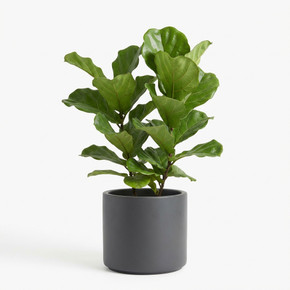


Turn any corner into a high-impact green feature with the Fiddle-leaf Fig. Its oversized, sculptural leaves and clean upright form elevate interiors instantly—perfect for reception areas, living rooms, and meeting spaces. With bright filtered light and a consistent watering routine, it rewards you with steady growth and a lush canopy that looks professionally styled all year.
Common Name: Fiddle-leaf Fig
Botanical Name: Ficus lyrata
Former Name: Not available
Plant Type: Indoor tree / Houseplant
Plant Code / SKU: PLT-0035
Alternative Names:
Banjo Fig
Fiddleleaf Fig
Violin Fig
Arabic: مطاط
Order: Rosales
Family: Moraceae
Genus: Ficus
Species: F. lyrata
Native to the tropical rainforests of West Africa, particularly in regions from Sierra Leone to Cameroon. Widely cultivated worldwide as an ornamental indoor plant.
Upright growth with a single slender trunk; large, glossy, violin- or lyre-shaped leaves up to 45 cm long; dark green with prominent veins; smooth texture.
Indoors: Typically 1.5–3 m tall at maturity with similar spread; outdoors in ideal conditions can reach 12–15 m. Leaf length 30–45 cm; leaf width 20–30 cm.
Bright, indirect light; tolerates some morning or late afternoon sun; avoid direct midday sun to prevent leaf burn; can adapt to lower light but with slower growth.
Water thoroughly when the top 2–3 cm of soil is dry; ensure excess water drains freely; avoid waterlogging; reduce frequency in winter.
Well-draining potting mix rich in organic matter; mix peat moss, pine bark, and perlite or coarse sand; repot every 1–2 years to refresh soil and allow root growth.
Optimal temperature 60–75 °F (16–24 °C); minimum 55 °F (13 °C); high humidity preferred (50–60% or higher); mist leaves or use humidifier; avoid cold drafts and rapid temperature changes.
Apply a balanced (20-20-20) liquid fertilizer every 4–6 weeks during spring and summer; reduce feeding in fall and winter.
Moderate; requires regular dusting of leaves, pruning of dead foliage, and monitoring of moisture; sensitive to overwatering.
Propagation via air layering or stem cuttings; select healthy 10–15 cm stem cutting with at least two nodes; root in water or moist soil under high humidity; air layering for larger specimens.
Pests: spider mites, mealybugs, scale insects; diseases: root rot from overwatering; leaf drop due to low humidity or drafts; brown leaf edges from inconsistent watering.
Highly ornamental with architectural form; improves indoor air quality by removing volatile organic compounds; adds biophilic design to interiors.
All parts contain latex and ficin which can cause skin irritation; toxic if ingested by pets or humans, causing oral irritation, vomiting, and diarrhea; keep out of reach of children and animals.
Turn any corner into a high-impact green feature with the Fiddle-leaf Fig. Its oversized, sculptural leaves and clean upright form elevate interiors instantly—perfect for reception areas, living rooms, and meeting spaces. With bright filtered light and a consistent watering routine, it rewards you with steady growth and a lush canopy that looks professionally styled all year.
Common Name: Fiddle-leaf Fig
Botanical Name: Ficus lyrata
Former Name: Not available
Plant Type: Indoor tree / Houseplant
Plant Code / SKU: PLT-0035
Alternative Names:
Banjo Fig
Fiddleleaf Fig
Violin Fig
Arabic: مطاط
Order: Rosales
Family: Moraceae
Genus: Ficus
Species: F. lyrata
Native to the tropical rainforests of West Africa, particularly in regions from Sierra Leone to Cameroon. Widely cultivated worldwide as an ornamental indoor plant.
Upright growth with a single slender trunk; large, glossy, violin- or lyre-shaped leaves up to 45 cm long; dark green with prominent veins; smooth texture.
Indoors: Typically 1.5–3 m tall at maturity with similar spread; outdoors in ideal conditions can reach 12–15 m. Leaf length 30–45 cm; leaf width 20–30 cm.
Bright, indirect light; tolerates some morning or late afternoon sun; avoid direct midday sun to prevent leaf burn; can adapt to lower light but with slower growth.
Water thoroughly when the top 2–3 cm of soil is dry; ensure excess water drains freely; avoid waterlogging; reduce frequency in winter.
Well-draining potting mix rich in organic matter; mix peat moss, pine bark, and perlite or coarse sand; repot every 1–2 years to refresh soil and allow root growth.
Optimal temperature 60–75 °F (16–24 °C); minimum 55 °F (13 °C); high humidity preferred (50–60% or higher); mist leaves or use humidifier; avoid cold drafts and rapid temperature changes.
Apply a balanced (20-20-20) liquid fertilizer every 4–6 weeks during spring and summer; reduce feeding in fall and winter.
Moderate; requires regular dusting of leaves, pruning of dead foliage, and monitoring of moisture; sensitive to overwatering.
Propagation via air layering or stem cuttings; select healthy 10–15 cm stem cutting with at least two nodes; root in water or moist soil under high humidity; air layering for larger specimens.
Pests: spider mites, mealybugs, scale insects; diseases: root rot from overwatering; leaf drop due to low humidity or drafts; brown leaf edges from inconsistent watering.
Highly ornamental with architectural form; improves indoor air quality by removing volatile organic compounds; adds biophilic design to interiors.
All parts contain latex and ficin which can cause skin irritation; toxic if ingested by pets or humans, causing oral irritation, vomiting, and diarrhea; keep out of reach of children and animals.




Take 20% off your first order
Enter the code below at checkout to get 20% off your first order