




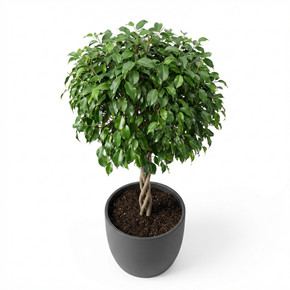
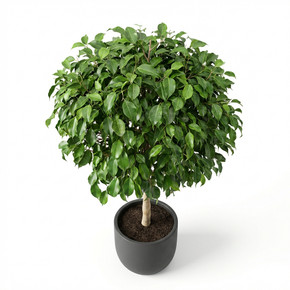
Add instant structure and luxury to any space with a Ficus microcarpa topiary. Its dense, glossy crown and clean single stem deliver a formal designer look with surprisingly easy care—just bright light, sensible watering, and occasional trimming. Ideal for reception areas, entrances, patios, and modern interiors where you want a bold, evergreen statement that stays beautifully shaped.
Common Name: Indian Laurel Fig Topiary
Botanical Name: Ficus microcarpa
Former Name: Not available
Plant Type: Topiary foliage tree
Plant Code / SKU: PLT-0125
Alternative Names:
Chinese Banyan
Indian Laurel Fig
Malayan Banyan
Curtain Fig
Order: Rosales
Family: Moraceae
Genus: Ficus
Species: Ficus microcarpa
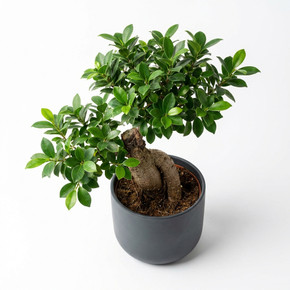
Native to South and Southeast Asia, including southern China, India, Malaysia, and northern Australia. Widely cultivated and naturalized in tropical and subtropical regions worldwide as an ornamental and bonsai plant.
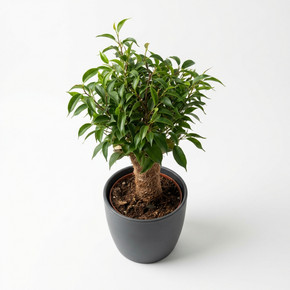
Single, smooth gray trunk supporting a dense, rounded crown. Leaves are small, leathery, elliptic to ovate, 5–10 cm long, glossy dark green. Topiary is trained into formal shapes by regular pruning.
Height: 1.2–1.8 m (including container) for standard indoor topiary
Spread: 0.5–1 m
Bright, indirect light; tolerates some morning or late afternoon sun. Avoid prolonged direct midday sun and deep shade.
Keep soil evenly moist but not waterlogged. Allow top 2–3 cm to dry between waterings. Reduce frequency in winter; avoid letting soil dry out completely.
Use a well‐draining potting mix rich in organic matter. Preferably loam‐based or peat‐perlite blend. Repot every 2–3 years, increasing pot diameter by 2–5 cm.
Optimal temperature 15–29 °C (60–85 °F). Minimum 13 °C (55 °F). Prefers moderate to high humidity; mist leaves occasionally or use a humidity tray if air is dry.
Feed with a balanced water‐soluble fertilizer (e.g., 10‐10‐10) every 4–6 weeks during the growing season (spring and summer). Do not fertilize in winter.
Moderate care. Regular pruning and shaping required to maintain form. Clean leaves to remove dust. Monitor for pests and adjust watering as needed.
Moderate growth rate. Propagate by air‐layering or semi‐ripe stem cuttings. Cuttings root in 4–6 weeks when kept warm and humid; use rooting hormone for best results.
Issues include root rot from overwatering, leaf drop from low humidity or temperature stress, and pests like scale, spider mites, and mealybugs. Yellowing leaves may indicate nutrient deficiency or overwatering.
Ornamental topiary for homes, offices, reception areas, and patios; enhances modern interior design with evergreen structure. Known for air‐purifying qualities. Popular in Feng Shui for promoting balance.
Leaves and sap contain ficin, which can cause skin irritation. Toxic to pets (cats and dogs) if ingested, causing gastrointestinal upset and vomiting.
Add instant structure and luxury to any space with a Ficus microcarpa topiary. Its dense, glossy crown and clean single stem deliver a formal designer look with surprisingly easy care—just bright light, sensible watering, and occasional trimming. Ideal for reception areas, entrances, patios, and modern interiors where you want a bold, evergreen statement that stays beautifully shaped.
Common Name: Indian Laurel Fig Topiary
Botanical Name: Ficus microcarpa
Former Name: Not available
Plant Type: Topiary foliage tree
Plant Code / SKU: PLT-0125
Alternative Names:
Chinese Banyan
Indian Laurel Fig
Malayan Banyan
Curtain Fig
Order: Rosales
Family: Moraceae
Genus: Ficus
Species: Ficus microcarpa
Native to South and Southeast Asia, including southern China, India, Malaysia, and northern Australia. Widely cultivated and naturalized in tropical and subtropical regions worldwide as an ornamental and bonsai plant.
Single, smooth gray trunk supporting a dense, rounded crown. Leaves are small, leathery, elliptic to ovate, 5–10 cm long, glossy dark green. Topiary is trained into formal shapes by regular pruning.
Height: 1.2–1.8 m (including container) for standard indoor topiary
Spread: 0.5–1 m
Bright, indirect light; tolerates some morning or late afternoon sun. Avoid prolonged direct midday sun and deep shade.
Keep soil evenly moist but not waterlogged. Allow top 2–3 cm to dry between waterings. Reduce frequency in winter; avoid letting soil dry out completely.
Use a well‐draining potting mix rich in organic matter. Preferably loam‐based or peat‐perlite blend. Repot every 2–3 years, increasing pot diameter by 2–5 cm.
Optimal temperature 15–29 °C (60–85 °F). Minimum 13 °C (55 °F). Prefers moderate to high humidity; mist leaves occasionally or use a humidity tray if air is dry.
Feed with a balanced water‐soluble fertilizer (e.g., 10‐10‐10) every 4–6 weeks during the growing season (spring and summer). Do not fertilize in winter.
Moderate care. Regular pruning and shaping required to maintain form. Clean leaves to remove dust. Monitor for pests and adjust watering as needed.
Moderate growth rate. Propagate by air‐layering or semi‐ripe stem cuttings. Cuttings root in 4–6 weeks when kept warm and humid; use rooting hormone for best results.
Issues include root rot from overwatering, leaf drop from low humidity or temperature stress, and pests like scale, spider mites, and mealybugs. Yellowing leaves may indicate nutrient deficiency or overwatering.
Ornamental topiary for homes, offices, reception areas, and patios; enhances modern interior design with evergreen structure. Known for air‐purifying qualities. Popular in Feng Shui for promoting balance.
Leaves and sap contain ficin, which can cause skin irritation. Toxic to pets (cats and dogs) if ingested, causing gastrointestinal upset and vomiting.



Take 20% off your first order
Enter the code below at checkout to get 20% off your first order