


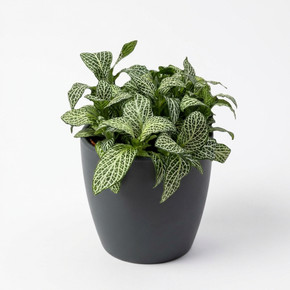


Bring a splash of living pattern to your space with Fittonia albivenis. Its striking veined leaves instantly elevate desks, shelves, and terrariums, while its compact form stays neat and giftable. Give it gentle light, steady moisture, and a little humidity—and enjoy a standout foliage plant that looks premium in any modern interior.
Common Name: Nerve Plant
Botanical Name: Fittonia albivenis
Former Name: Not available
Plant Type: Foliage houseplant (Herbaceous perennial)
Plant Code / SKU: PLT-0371
Alternative Names:
Silver nerve plant
Mosaic plant
Veined nerve plant
Order: Lamiales
Family: Acanthaceae
Genus: Fittonia
Native to the rainforest floors of tropical Central and South America, primarily in Peru and Colombia. Cultivated worldwide as an ornamental houseplant.
Evergreen perennial with low-growing, creeping stems. Leaves are ovate to elliptic, 2–6 cm long, featuring distinctive white, pink, or red veins contrasting against green foliage. Stems are slender and may trail over pot edges.
Height: 10–20 cm (4–8 inches)
Spread: up to 30 cm (12 inches)
Leaf size: 2–6 cm in length
Bright, indirect light. Tolerates low light but colour and growth may diminish. Avoid direct sun to prevent leaf scorch.
Keep soil consistently moist but not waterlogged. Water when the top 1–2 cm of soil begins to dry. Do not allow the plant to dry out completely to prevent leaf curl.
Use a well-draining, peat-based potting mix enriched with perlite or orchid bark to improve aeration. Repot annually in spring to refresh soil and manage root growth.
Optimal temperature range: 18–26 °C (65–80 °F). Sensitive to temperatures below 15 °C (59 °F). Requires high humidity (60 % or higher); ideal for terrariums or use of humidity trays and regular misting.
Feed with a balanced, water-soluble fertilizer at half strength every 4 weeks during the active growing season (spring and summer). Reduce feeding in fall and winter.
Moderate care: monitor moisture and humidity levels, prune leggy or damaged stems regularly to encourage bushy growth. Remove spent foliage to maintain appearance.
Propagates readily via stem cuttings. Take 5–7 cm cuttings with at least two leaf nodes; root in water or moist potting mix. Plants spread by runners to form dense mats.
Root rot from overwatering, leaf curling from underwatering, brown leaf tips from low humidity. Susceptible to spider mites, aphids, and mealybugs.
Popular for terrariums, tabletops, and decorative planters due to compact habit and striking foliage. Helps purify indoor air by filtering pollutants.
Non-toxic to humans and pets, making it safe for households with children and animals.
Bring a splash of living pattern to your space with Fittonia albivenis. Its striking veined leaves instantly elevate desks, shelves, and terrariums, while its compact form stays neat and giftable. Give it gentle light, steady moisture, and a little humidity—and enjoy a standout foliage plant that looks premium in any modern interior.
Common Name: Nerve Plant
Botanical Name: Fittonia albivenis
Former Name: Not available
Plant Type: Foliage houseplant (Herbaceous perennial)
Plant Code / SKU: PLT-0371
Alternative Names:
Silver nerve plant
Mosaic plant
Veined nerve plant
Order: Lamiales
Family: Acanthaceae
Genus: Fittonia
Native to the rainforest floors of tropical Central and South America, primarily in Peru and Colombia. Cultivated worldwide as an ornamental houseplant.
Evergreen perennial with low-growing, creeping stems. Leaves are ovate to elliptic, 2–6 cm long, featuring distinctive white, pink, or red veins contrasting against green foliage. Stems are slender and may trail over pot edges.
Height: 10–20 cm (4–8 inches)
Spread: up to 30 cm (12 inches)
Leaf size: 2–6 cm in length
Bright, indirect light. Tolerates low light but colour and growth may diminish. Avoid direct sun to prevent leaf scorch.
Keep soil consistently moist but not waterlogged. Water when the top 1–2 cm of soil begins to dry. Do not allow the plant to dry out completely to prevent leaf curl.
Use a well-draining, peat-based potting mix enriched with perlite or orchid bark to improve aeration. Repot annually in spring to refresh soil and manage root growth.
Optimal temperature range: 18–26 °C (65–80 °F). Sensitive to temperatures below 15 °C (59 °F). Requires high humidity (60 % or higher); ideal for terrariums or use of humidity trays and regular misting.
Feed with a balanced, water-soluble fertilizer at half strength every 4 weeks during the active growing season (spring and summer). Reduce feeding in fall and winter.
Moderate care: monitor moisture and humidity levels, prune leggy or damaged stems regularly to encourage bushy growth. Remove spent foliage to maintain appearance.
Propagates readily via stem cuttings. Take 5–7 cm cuttings with at least two leaf nodes; root in water or moist potting mix. Plants spread by runners to form dense mats.
Root rot from overwatering, leaf curling from underwatering, brown leaf tips from low humidity. Susceptible to spider mites, aphids, and mealybugs.
Popular for terrariums, tabletops, and decorative planters due to compact habit and striking foliage. Helps purify indoor air by filtering pollutants.
Non-toxic to humans and pets, making it safe for households with children and animals.

Take 20% off your first order
Enter the code below at checkout to get 20% off your first order