


Orchidaceae
Phalaenopsis amabilis
Add instant luxury to any space with a Phalaenopsis Moth Orchid. Its graceful flower spike and long-lasting blooms make it the perfect gift and a standout décor piece for homes, receptions, and offices. With simple bright-light care and weekly watering, you’ll enjoy weeks of color and a clean, modern look—effortlessly.
1. Basic Identification
Common Name: Moth Orchid
Botanical Name: Phalaenopsis amabilis
Arabic Name: فيكس بنجامينا
Variant: Standard
Color: Natural
Country of Origin: Not mentioned
Stems: 3
Family: Orchidaceae
2. Taxonomy & Classification
The Phalaenopsis amabilis, commonly known as the Moth Orchid, belongs to the family Orchidaceae. It is part of the genus Phalaenopsis, which includes approximately 60 to 70 species of orchids. The name "Phalaenopsis" is derived from the Greek words 'phalaina' (moth) and 'opsis' (appearance), referring to the flower's resemblance to a moth in flight.
3. Origin & Distribution
Moth Orchids are native to the tropical rainforests of Southeast Asia, including the Philippines, Indonesia, Malaysia, and parts of northern Australia. In their natural habitat, they are epiphytic, meaning they grow on the branches of trees rather than in soil, drawing moisture and nutrients from the air and rain.
4. Visual Characteristics
This orchid features broad, leathery, oval leaves with a dark green, slightly glossy finish. The plant produces one or more arching flower spikes (racemes) that bear large, flat, moth-shaped flowers. While Phalaenopsis amabilis is naturally white with a yellow-tinted lip, cultivated varieties come in a wide range of colors and patterns.
5. Size & Dimensions
The plant itself typically reaches a height of 12 to 24 inches when in bloom. The leaves can grow between 8 to 12 inches in length. The individual flowers usually measure 2 to 4 inches in diameter, depending on the specific cultivar and maturity of the plant.
6. Light Requirements
Moth Orchids thrive in bright, indirect light. An east-facing window is ideal. They should be protected from direct midday sun, which can scorch the fleshy leaves. If the leaves turn very dark green, the plant may need more light; if they turn yellowish or red-tinted, it may be receiving too much light.
7. Watering Needs
Water approximately once a week, or when the potting medium feels nearly dry. It is best to water the plant in the morning using lukewarm water. Avoid getting water into the "crown" (the center where leaves meet), as this can cause rot. Ensure the pot has excellent drainage so the roots never sit in standing water.
8. Soil & Potting
As epiphytes, these orchids cannot grow in standard potting soil. They require a specialized orchid mix consisting of chunky fir bark, sphagnum moss, perlite, or charcoal. This allows for maximum airflow to the roots. Re-potting is generally required every 1–2 years when the bark begins to decompose.
9. Temperature & Humidity
They prefer temperatures between 65°F and 80°F (18°C–27°C) during the day and a slight drop at night to encourage blooming. High humidity (50–70%) is preferred. In dry indoor environments, placing the pot on a pebble tray with water can help increase local humidity.
10. Fertilization
Feed with a balanced orchid fertilizer (such as 20-20-20) at half strength every two weeks or monthly during the growing season. It is often recommended to follow the "weakly, weekly" rule. Reduce fertilization during the winter months when growth slows down.
11. Maintenance & Care Level
Moth Orchids are considered low-to-medium maintenance and are the best orchids for beginners. After the flowers fade, you can cut the spike back to the base or to just above a "node" to encourage a second flush of blooms. Wipe leaves occasionally with a damp cloth to remove dust.
12. Growth & Propagation
Growth is relatively slow, typically producing one or two new leaves per year. Propagation is primarily done through "keikis"—baby plantlets that occasionally grow from the nodes of the flower spike. Once the keiki has several roots of its own, it can be removed and potted separately.
13. Common Problems
Overwatering is the most common cause of failure, leading to root rot. Pests like mealybugs, scale, and spider mites can occasionally affect the plant. Leaf spotting or crown rot can occur if water remains trapped between the leaves in low-airflow environments.
14. Benefits & Uses
Orchids are prized for their aesthetic beauty and extremely long-lasting blooms, which can stay fresh for 2–3 months. They are popular for interior design, corporate gifting, and as desktop plants. While not rated as top-tier air purifiers like some foliage plants, they contribute to indoor humidity and psychological well-being.
15. Toxicity & Safety
Phalaenopsis orchids are considered non-toxic to humans, cats, and dogs. They are a safe choice for households with curious pets or small children.

Phalaenopsis amabilis
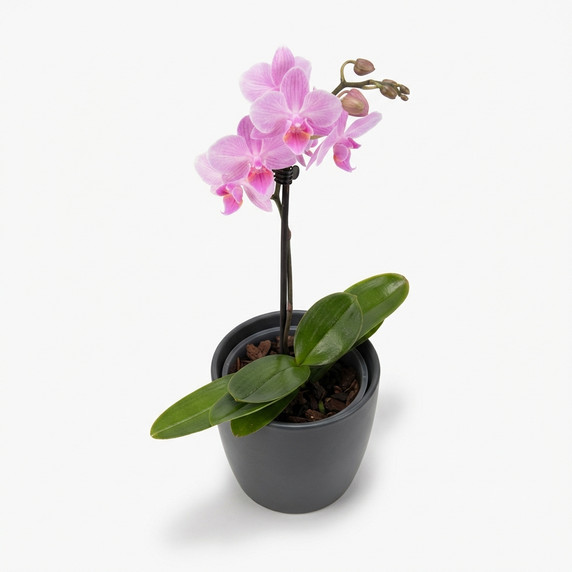
Add instant luxury to any space with a Phalaenopsis Moth Orchid. Its graceful flower spike and long-lasting blooms make it the perfect gift and a standout décor piece for homes, receptions, and offices. With simple bright-light care and weekly watering, you’ll enjoy weeks of color and a clean, modern look—effortlessly.
1. Basic Identification
Common Name: Moth Orchid
Botanical Name: Phalaenopsis amabilis
Arabic Name: فيكس بنجامينا
Variant: Standard
Color: Natural
Country of Origin: Not mentioned
Stems: 3
Family: Orchidaceae
2. Taxonomy & Classification
The Phalaenopsis amabilis, commonly known as the Moth Orchid, belongs to the family Orchidaceae. It is part of the genus Phalaenopsis, which includes approximately 60 to 70 species of orchids. The name "Phalaenopsis" is derived from the Greek words 'phalaina' (moth) and 'opsis' (appearance), referring to the flower's resemblance to a moth in flight.
3. Origin & Distribution
Moth Orchids are native to the tropical rainforests of Southeast Asia, including the Philippines, Indonesia, Malaysia, and parts of northern Australia. In their natural habitat, they are epiphytic, meaning they grow on the branches of trees rather than in soil, drawing moisture and nutrients from the air and rain.
4. Visual Characteristics
This orchid features broad, leathery, oval leaves with a dark green, slightly glossy finish. The plant produces one or more arching flower spikes (racemes) that bear large, flat, moth-shaped flowers. While Phalaenopsis amabilis is naturally white with a yellow-tinted lip, cultivated varieties come in a wide range of colors and patterns.
5. Size & Dimensions
The plant itself typically reaches a height of 12 to 24 inches when in bloom. The leaves can grow between 8 to 12 inches in length. The individual flowers usually measure 2 to 4 inches in diameter, depending on the specific cultivar and maturity of the plant.
6. Light Requirements
Moth Orchids thrive in bright, indirect light. An east-facing window is ideal. They should be protected from direct midday sun, which can scorch the fleshy leaves. If the leaves turn very dark green, the plant may need more light; if they turn yellowish or red-tinted, it may be receiving too much light.
7. Watering Needs
Water approximately once a week, or when the potting medium feels nearly dry. It is best to water the plant in the morning using lukewarm water. Avoid getting water into the "crown" (the center where leaves meet), as this can cause rot. Ensure the pot has excellent drainage so the roots never sit in standing water.
8. Soil & Potting
As epiphytes, these orchids cannot grow in standard potting soil. They require a specialized orchid mix consisting of chunky fir bark, sphagnum moss, perlite, or charcoal. This allows for maximum airflow to the roots. Re-potting is generally required every 1–2 years when the bark begins to decompose.
9. Temperature & Humidity
They prefer temperatures between 65°F and 80°F (18°C–27°C) during the day and a slight drop at night to encourage blooming. High humidity (50–70%) is preferred. In dry indoor environments, placing the pot on a pebble tray with water can help increase local humidity.
10. Fertilization
Feed with a balanced orchid fertilizer (such as 20-20-20) at half strength every two weeks or monthly during the growing season. It is often recommended to follow the "weakly, weekly" rule. Reduce fertilization during the winter months when growth slows down.
11. Maintenance & Care Level
Moth Orchids are considered low-to-medium maintenance and are the best orchids for beginners. After the flowers fade, you can cut the spike back to the base or to just above a "node" to encourage a second flush of blooms. Wipe leaves occasionally with a damp cloth to remove dust.
12. Growth & Propagation
Growth is relatively slow, typically producing one or two new leaves per year. Propagation is primarily done through "keikis"—baby plantlets that occasionally grow from the nodes of the flower spike. Once the keiki has several roots of its own, it can be removed and potted separately.
13. Common Problems
Overwatering is the most common cause of failure, leading to root rot. Pests like mealybugs, scale, and spider mites can occasionally affect the plant. Leaf spotting or crown rot can occur if water remains trapped between the leaves in low-airflow environments.
14. Benefits & Uses
Orchids are prized for their aesthetic beauty and extremely long-lasting blooms, which can stay fresh for 2–3 months. They are popular for interior design, corporate gifting, and as desktop plants. While not rated as top-tier air purifiers like some foliage plants, they contribute to indoor humidity and psychological well-being.
15. Toxicity & Safety
Phalaenopsis orchids are considered non-toxic to humans, cats, and dogs. They are a safe choice for households with curious pets or small children.