


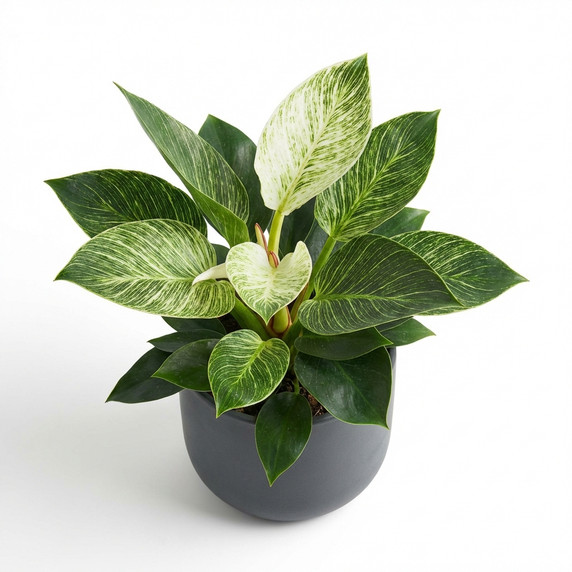




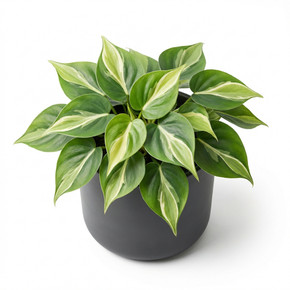
Bring designer-level foliage to your space with Philodendron 'Birkin'. Its crisp cream pinstripes and glossy green leaves elevate desks, shelves, and reception counters instantly. Easy-going and compact, it thrives in bright, indirect light with simple weekly watering—perfect for gifting or upgrading your interior with a premium, collector-loved plant.
Common Name: Philodendron Birkin, Birkin Plant
Botanical Name: Philodendron 'Birkin'
Arabic Name: فيلودندرون
Plant Variant: Birkin
Plant Color: Multicolor (Dark green with white/cream pinstripes)
Kingdom: Plantae
Order: Alismatales
Family: Araceae
Genus: Philodendron
Species: Philodendron tatei (Cultivar: Birkin)
The Philodendron 'Birkin' is a rare designer plant that does not exist in the wild. It is a chimeric mutation of the Philodendron 'Rojo Congo'. Its lineage traces back to the tropical rainforests of Brazil and Paraguay, where its parent plants originate.
This plant is famous for its striking variegation. It features glossy, heart-shaped leaves that are dark green but decorated with thin, creamy white or pale yellow pinstripes. As the plant matures, the variegation becomes more pronounced, and new leaves may even emerge almost entirely white before developing green stripes.
Philodendron Birkin is a relatively compact, slow-growing plant. Indoors, it typically reaches a height and width of 1 to 3 feet (30-90 cm). Unlike many other Philodendrons, it is a self-heading plant, meaning it grows upright on a thick stem rather than trailing or climbing.
Thrives in bright, indirect light. Bright light is essential for maintaining its unique pinstripe variegation. Avoid direct sunlight, which can scorch the leaves, while very low light may cause the new leaves to revert to a solid green color.
Water when the top 50% to 75% of the soil has dried out. This typically equates to a weekly watering schedule, depending on the environment. It is sensitive to overwatering, which can lead to root rot, so ensure the pot has proper drainage.
Requires a well-aerated, loose potting mix that retains some moisture but drains quickly. A mixture of indoor potting soil, perlite, and orchid bark is highly recommended to provide the chunky texture this epiphyte prefers.
Prefers warm temperatures between 65°F and 85°F (18°C - 29°C). As a tropical plant, it enjoys higher humidity levels (above 50%), but it is remarkably adaptable and can thrive in standard household humidity.
Feed monthly during the active growing season (spring and summer) using a balanced liquid fertilizer diluted to half strength. Reduce or stop fertilization during the winter months.
Maintenance Level: Easy. It is a hardy plant that is forgiving of occasional neglect. Regular maintenance involves wiping the leaves with a damp cloth to remove dust and checking for moisture levels before watering.
Growth is upright and non-vining. Propagation is most successful through stem cuttings or by separating offshoots (pups) that grow from the base of the main stem, though it is slower to propagate than trailing Philodendrons.
Common issues include yellowing leaves (often a sign of overwatering), brown crispy tips (indicating low humidity or underwatering), and loss of variegation (due to insufficient light). It can occasionally be bothered by spider mites or mealybugs.
Highly effective as an air-purifying plant, removing common household toxins from the air. Due to its stunning visual appeal and compact size, it is a favorite for interior styling, office desks, and as a "collector" piece for plant enthusiasts.
Philodendron 'Birkin' is toxic to both humans and pets (cats and dogs) if ingested. It contains calcium oxalate crystals, which can cause swelling of the mouth, tongue, and throat, as well as digestive upset.
Bring designer-level foliage to your space with Philodendron 'Birkin'. Its crisp cream pinstripes and glossy green leaves elevate desks, shelves, and reception counters instantly. Easy-going and compact, it thrives in bright, indirect light with simple weekly watering—perfect for gifting or upgrading your interior with a premium, collector-loved plant.
Common Name: Philodendron Birkin, Birkin Plant
Botanical Name: Philodendron 'Birkin'
Arabic Name: فيلودندرون
Plant Variant: Birkin
Plant Color: Multicolor (Dark green with white/cream pinstripes)
Kingdom: Plantae
Order: Alismatales
Family: Araceae
Genus: Philodendron
Species: Philodendron tatei (Cultivar: Birkin)
The Philodendron 'Birkin' is a rare designer plant that does not exist in the wild. It is a chimeric mutation of the Philodendron 'Rojo Congo'. Its lineage traces back to the tropical rainforests of Brazil and Paraguay, where its parent plants originate.
This plant is famous for its striking variegation. It features glossy, heart-shaped leaves that are dark green but decorated with thin, creamy white or pale yellow pinstripes. As the plant matures, the variegation becomes more pronounced, and new leaves may even emerge almost entirely white before developing green stripes.
Philodendron Birkin is a relatively compact, slow-growing plant. Indoors, it typically reaches a height and width of 1 to 3 feet (30-90 cm). Unlike many other Philodendrons, it is a self-heading plant, meaning it grows upright on a thick stem rather than trailing or climbing.
Thrives in bright, indirect light. Bright light is essential for maintaining its unique pinstripe variegation. Avoid direct sunlight, which can scorch the leaves, while very low light may cause the new leaves to revert to a solid green color.
Water when the top 50% to 75% of the soil has dried out. This typically equates to a weekly watering schedule, depending on the environment. It is sensitive to overwatering, which can lead to root rot, so ensure the pot has proper drainage.
Requires a well-aerated, loose potting mix that retains some moisture but drains quickly. A mixture of indoor potting soil, perlite, and orchid bark is highly recommended to provide the chunky texture this epiphyte prefers.
Prefers warm temperatures between 65°F and 85°F (18°C - 29°C). As a tropical plant, it enjoys higher humidity levels (above 50%), but it is remarkably adaptable and can thrive in standard household humidity.
Feed monthly during the active growing season (spring and summer) using a balanced liquid fertilizer diluted to half strength. Reduce or stop fertilization during the winter months.
Maintenance Level: Easy. It is a hardy plant that is forgiving of occasional neglect. Regular maintenance involves wiping the leaves with a damp cloth to remove dust and checking for moisture levels before watering.
Growth is upright and non-vining. Propagation is most successful through stem cuttings or by separating offshoots (pups) that grow from the base of the main stem, though it is slower to propagate than trailing Philodendrons.
Common issues include yellowing leaves (often a sign of overwatering), brown crispy tips (indicating low humidity or underwatering), and loss of variegation (due to insufficient light). It can occasionally be bothered by spider mites or mealybugs.
Highly effective as an air-purifying plant, removing common household toxins from the air. Due to its stunning visual appeal and compact size, it is a favorite for interior styling, office desks, and as a "collector" piece for plant enthusiasts.
Philodendron 'Birkin' is toxic to both humans and pets (cats and dogs) if ingested. It contains calcium oxalate crystals, which can cause swelling of the mouth, tongue, and throat, as well as digestive upset.



Take 20% off your first order
Enter the code below at checkout to get 20% off your first order