


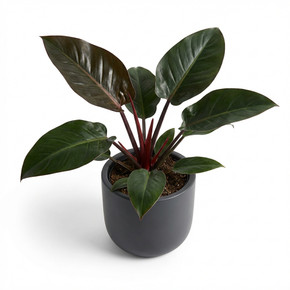



Bring instant tropical luxury to your space with Philodendron Rojo Congo. Its oversized, glossy leaves and rich red stems create a premium, architectural look that elevates living rooms, reception areas, and meeting spaces. Tough, forgiving, and reliably beautiful—this is the statement plant that stays stylish with minimal effort.
Common Name: Philodendron Rojo Congo, Red Congo Philodendron
Botanical Name: Philodendron 'Rojo Congo'
Arabic Name: فيلو
Plant Variant: Red Congo
Plant Color: Natural
Family: Araceae
The Philodendron 'Rojo Congo' is a hybrid perennial belonging to the Araceae family. It is classified as a "self-heading" Philodendron, distinct from climbing varieties, as it grows from a central base in an upright, bushy manner rather than producing aerial roots for climbing.
This cultivar is a modern horticultural hybrid. While the Philodendron genus is native to the tropical regions of Central and South America, the 'Rojo Congo' was specifically bred for the nursery trade to emphasize its deep red coloration and sturdy growth habit. Its lineage includes parent species from Brazil and Colombia.
This plant features large, leathery, oval leaves that are highly glossy. New foliage unfurls in a striking deep burgundy or brownish-red shade, eventually maturing into a dark, forest green. The stems, or petioles, remain a vibrant, dark red, providing a beautiful architectural contrast against the foliage.
The 'Rojo Congo' typically grows to a height of 2 to 3 feet (60-90 cm) and can reach a similar width. Because it does not climb, it maintains a structured, clumping form that fits well in corners or as a floor specimen.
It performs best in bright, indirect light. It can adapt to medium light conditions, though the red coloration may be less intense and growth may slow. Direct sunlight should be strictly avoided as it can cause permanent leaf burn on the glossy surfaces.
Allow the top 50% of the soil to dry out before watering. It is important to avoid overwatering to prevent root rot. This plant is relatively drought-tolerant, and in the winter, the frequency of watering should be significantly reduced.
Requires a well-draining, chunky potting medium. A combination of standard indoor potting soil, perlite, and orchid bark or coco coir works best to ensure the roots receive adequate oxygen while retaining necessary moisture.
The plant thrives in warm temperatures between 65°F and 85°F (18°C–29°C). While it prefers the high humidity typical of tropical origins, it is well-adapted to average indoor humidity levels found in modern homes and offices.
Apply a balanced, water-soluble liquid fertilizer every four to six weeks during the spring and summer months. No fertilization is needed during the dormant winter period when growth naturally slows.
Care Level: Easy. Maintenance is minimal; simply wipe the large leaves with a damp cloth periodically to remove dust and maintain their signature shine. Trim away any old or yellowing leaves near the base to keep the plant tidy.
This Philodendron has a moderate growth rate. Propagation is primarily achieved through stem cuttings or by dividing "pups" or offsets from the base of a mature plant, although it is often slower to propagate than vining Philodendron varieties.
Yellowing leaves are usually a sign of overwatering or poor drainage, while brown, crispy edges may indicate low humidity. It is generally resistant to pests but can occasionally be affected by mealybugs or spider mites if conditions are excessively dry.
Beyond its aesthetic appeal, it is a powerful air-purifying plant that filters indoor air toxins such as formaldehyde. Its robust, upright nature makes it ideal for decorative use in living rooms, entryways, and professional corporate environments like reception areas.
Toxic to both humans and pets. The plant contains insoluble calcium oxalate crystals, which can cause intense swelling and irritation of the mouth, throat, and digestive tract if any part of the plant is consumed.
Bring instant tropical luxury to your space with Philodendron Rojo Congo. Its oversized, glossy leaves and rich red stems create a premium, architectural look that elevates living rooms, reception areas, and meeting spaces. Tough, forgiving, and reliably beautiful—this is the statement plant that stays stylish with minimal effort.
Common Name: Philodendron Rojo Congo, Red Congo Philodendron
Botanical Name: Philodendron 'Rojo Congo'
Arabic Name: فيلو
Plant Variant: Red Congo
Plant Color: Natural
Family: Araceae
The Philodendron 'Rojo Congo' is a hybrid perennial belonging to the Araceae family. It is classified as a "self-heading" Philodendron, distinct from climbing varieties, as it grows from a central base in an upright, bushy manner rather than producing aerial roots for climbing.
This cultivar is a modern horticultural hybrid. While the Philodendron genus is native to the tropical regions of Central and South America, the 'Rojo Congo' was specifically bred for the nursery trade to emphasize its deep red coloration and sturdy growth habit. Its lineage includes parent species from Brazil and Colombia.
This plant features large, leathery, oval leaves that are highly glossy. New foliage unfurls in a striking deep burgundy or brownish-red shade, eventually maturing into a dark, forest green. The stems, or petioles, remain a vibrant, dark red, providing a beautiful architectural contrast against the foliage.
The 'Rojo Congo' typically grows to a height of 2 to 3 feet (60-90 cm) and can reach a similar width. Because it does not climb, it maintains a structured, clumping form that fits well in corners or as a floor specimen.
It performs best in bright, indirect light. It can adapt to medium light conditions, though the red coloration may be less intense and growth may slow. Direct sunlight should be strictly avoided as it can cause permanent leaf burn on the glossy surfaces.
Allow the top 50% of the soil to dry out before watering. It is important to avoid overwatering to prevent root rot. This plant is relatively drought-tolerant, and in the winter, the frequency of watering should be significantly reduced.
Requires a well-draining, chunky potting medium. A combination of standard indoor potting soil, perlite, and orchid bark or coco coir works best to ensure the roots receive adequate oxygen while retaining necessary moisture.
The plant thrives in warm temperatures between 65°F and 85°F (18°C–29°C). While it prefers the high humidity typical of tropical origins, it is well-adapted to average indoor humidity levels found in modern homes and offices.
Apply a balanced, water-soluble liquid fertilizer every four to six weeks during the spring and summer months. No fertilization is needed during the dormant winter period when growth naturally slows.
Care Level: Easy. Maintenance is minimal; simply wipe the large leaves with a damp cloth periodically to remove dust and maintain their signature shine. Trim away any old or yellowing leaves near the base to keep the plant tidy.
This Philodendron has a moderate growth rate. Propagation is primarily achieved through stem cuttings or by dividing "pups" or offsets from the base of a mature plant, although it is often slower to propagate than vining Philodendron varieties.
Yellowing leaves are usually a sign of overwatering or poor drainage, while brown, crispy edges may indicate low humidity. It is generally resistant to pests but can occasionally be affected by mealybugs or spider mites if conditions are excessively dry.
Beyond its aesthetic appeal, it is a powerful air-purifying plant that filters indoor air toxins such as formaldehyde. Its robust, upright nature makes it ideal for decorative use in living rooms, entryways, and professional corporate environments like reception areas.
Toxic to both humans and pets. The plant contains insoluble calcium oxalate crystals, which can cause intense swelling and irritation of the mouth, throat, and digestive tract if any part of the plant is consumed.



Take 20% off your first order
Enter the code below at checkout to get 20% off your first order


