


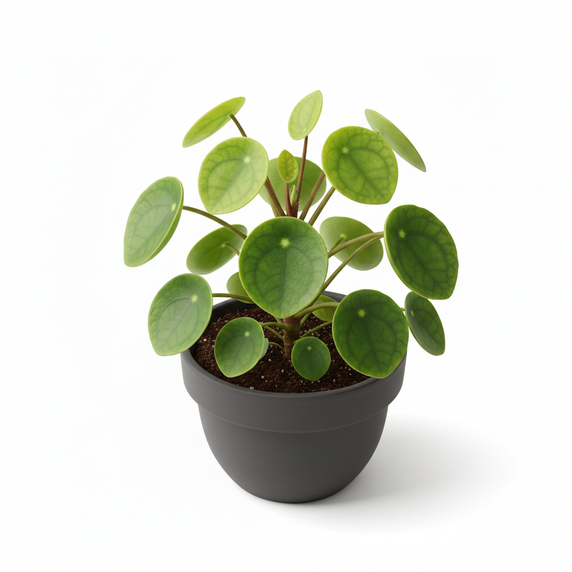




Bring luck and minimalist charm into your space with the Pilea Peperomioides, the famous Chinese Money Plant! Its perfectly round, coin-like leaves on dancing stems create a playful yet elegant vibe. Incredibly easy to care for and non-toxic to pets, it's the ideal green companion for both beginner plant parents and seasoned enthusiasts. Famous for producing 'pups' to share with friends, it's literally the gift that keeps on giving. Perfect for brightening up a desk, shelf, or living room. Order yours today and invite a little green fortune indoors!
Common Name: Chinese Money Plant
Botanical Name: Pilea peperomioides
Former Name: None
Plant Type: Foliage houseplant (Evergreen Perennial)
Plant Code / SKU: PLT-1696
Alternative Names:
UFO Plant
Pancake Plant
Friendship Plant
Missionary Plant
Order: Rosales
Family: Urticaceae
Genus: Pilea
Native Range: Southern China (Yunnan and Sichuan provinces).
Natural Habitat: Grows on shady, damp rocks in forests at altitudes of 1500 to 3000 meters.
Foliage: Distinctive round, bright green, coin-shaped leaves that are peltate, meaning the stem attaches to the center of the leaf's underside.
Stems: Green, upright, and somewhat fleshy, becoming woody and brown at the base with age.
Flowers: Small, inconspicuous, greenish-white flowers on pinkish stems. Flowering is rare for indoor plants.
Growth Habit: An upright, herbaceous perennial that produces numerous offshoots, or 'pups', from its roots and main stem, creating a clumping effect.
Mature Height: Typically 10-12 inches (25-30 cm) tall indoors.
Mature Spread: Can spread up to 10-12 inches (25-30 cm) wide.
Leaf Size: Leaves can grow up to 4 inches (10 cm) in diameter.
Light Needs: Bright, indirect light is ideal. Avoid direct, intense sunlight, which can scorch the leaves.
Placement: An east-facing window is perfect. In brighter locations, place it a few feet back from the window. Rotate the plant weekly for even growth.
Watering Frequency: Water thoroughly when the top 1-2 inches (2.5-5 cm) of soil feel dry to the touch. Allow the soil to dry out between waterings.
Watering Method: Water from the top until it drains from the bottom holes. Discard any excess water from the saucer. Reduce watering during the winter months.
Water Type: Tolerant of tap water, but filtered or distilled water can prevent mineral buildup (white spots) on the leaves.
Soil Type: A high-quality, well-draining potting mix. A mixture of peat moss, perlite, and a bit of sand works well.
Potting: Repot every 1-2 years in the spring into a pot that is 1-2 inches larger in diameter. Ensure the pot has adequate drainage.
Optimal Temperature: Prefers average room temperatures between 60-75°F (15-24°C).
Temperature Tolerance: Protect from temperatures below 50°F (10°C) and avoid placing near cold drafts or heating vents.
Humidity Level: Average household humidity is sufficient. Does not require high humidity but appreciates levels around 50%.
Fertilizer Type: Use a balanced, all-purpose liquid houseplant fertilizer.
Fertilizing Schedule: Feed once a month during the growing season (spring and summer), diluted to half the recommended strength. Do not fertilize in fall and winter.
Care Level: Easy. Ideal for beginners.
Pruning: Generally not necessary. Remove any yellowed or damaged leaves as they appear. You can pinch the top of the main stem to encourage a bushier growth habit.
Cleaning: Gently wipe the leaves with a damp cloth to remove dust and help the plant breathe and absorb light.
Growth Rate: Fast-growing under optimal conditions.
Propagation Method: Extremely easy to propagate from the offshoots (pups) that grow from the root system or the main stem. Once a pup is a few inches tall, sever it from the mother plant with a clean knife, ensuring it has some roots, and plant it in its own pot.
Pests: Can be susceptible to mealybugs, spider mites, and scale insects.
Diseases: Overwatering is the most common issue, leading to root rot.
Common Issues: Drooping leaves can indicate under or overwatering. Yellowing lower leaves are often a sign of overwatering. Curled leaves can be caused by too much direct sun or low humidity. White spots on leaves are usually mineral deposits from hard water.
Indoor Use: A highly popular and stylish houseplant, perfect for desks, shelves, and tabletops. Its unique appearance complements modern and minimalist interior designs.
Air Purification: Contributes to improving indoor air quality by filtering airborne toxins.
Cultural Significance: In Feng Shui, its coin-shaped leaves are believed to bring good luck, wealth, and prosperity to the owner.
Human Toxicity: Non-toxic to humans.
Pet Toxicity: Non-toxic to cats, dogs, and other household pets according to the ASPCA.
Safety Precautions: No specific safety precautions are required.
Bring luck and minimalist charm into your space with the Pilea Peperomioides, the famous Chinese Money Plant! Its perfectly round, coin-like leaves on dancing stems create a playful yet elegant vibe. Incredibly easy to care for and non-toxic to pets, it's the ideal green companion for both beginner plant parents and seasoned enthusiasts. Famous for producing 'pups' to share with friends, it's literally the gift that keeps on giving. Perfect for brightening up a desk, shelf, or living room. Order yours today and invite a little green fortune indoors!
Common Name: Chinese Money Plant
Botanical Name: Pilea peperomioides
Former Name: None
Plant Type: Foliage houseplant (Evergreen Perennial)
Plant Code / SKU: PLT-1696
Alternative Names:
UFO Plant
Pancake Plant
Friendship Plant
Missionary Plant
Order: Rosales
Family: Urticaceae
Genus: Pilea
Native Range: Southern China (Yunnan and Sichuan provinces).
Natural Habitat: Grows on shady, damp rocks in forests at altitudes of 1500 to 3000 meters.
Foliage: Distinctive round, bright green, coin-shaped leaves that are peltate, meaning the stem attaches to the center of the leaf's underside.
Stems: Green, upright, and somewhat fleshy, becoming woody and brown at the base with age.
Flowers: Small, inconspicuous, greenish-white flowers on pinkish stems. Flowering is rare for indoor plants.
Growth Habit: An upright, herbaceous perennial that produces numerous offshoots, or 'pups', from its roots and main stem, creating a clumping effect.
Mature Height: Typically 10-12 inches (25-30 cm) tall indoors.
Mature Spread: Can spread up to 10-12 inches (25-30 cm) wide.
Leaf Size: Leaves can grow up to 4 inches (10 cm) in diameter.
Light Needs: Bright, indirect light is ideal. Avoid direct, intense sunlight, which can scorch the leaves.
Placement: An east-facing window is perfect. In brighter locations, place it a few feet back from the window. Rotate the plant weekly for even growth.
Watering Frequency: Water thoroughly when the top 1-2 inches (2.5-5 cm) of soil feel dry to the touch. Allow the soil to dry out between waterings.
Watering Method: Water from the top until it drains from the bottom holes. Discard any excess water from the saucer. Reduce watering during the winter months.
Water Type: Tolerant of tap water, but filtered or distilled water can prevent mineral buildup (white spots) on the leaves.
Soil Type: A high-quality, well-draining potting mix. A mixture of peat moss, perlite, and a bit of sand works well.
Potting: Repot every 1-2 years in the spring into a pot that is 1-2 inches larger in diameter. Ensure the pot has adequate drainage.
Optimal Temperature: Prefers average room temperatures between 60-75°F (15-24°C).
Temperature Tolerance: Protect from temperatures below 50°F (10°C) and avoid placing near cold drafts or heating vents.
Humidity Level: Average household humidity is sufficient. Does not require high humidity but appreciates levels around 50%.
Fertilizer Type: Use a balanced, all-purpose liquid houseplant fertilizer.
Fertilizing Schedule: Feed once a month during the growing season (spring and summer), diluted to half the recommended strength. Do not fertilize in fall and winter.
Care Level: Easy. Ideal for beginners.
Pruning: Generally not necessary. Remove any yellowed or damaged leaves as they appear. You can pinch the top of the main stem to encourage a bushier growth habit.
Cleaning: Gently wipe the leaves with a damp cloth to remove dust and help the plant breathe and absorb light.
Growth Rate: Fast-growing under optimal conditions.
Propagation Method: Extremely easy to propagate from the offshoots (pups) that grow from the root system or the main stem. Once a pup is a few inches tall, sever it from the mother plant with a clean knife, ensuring it has some roots, and plant it in its own pot.
Pests: Can be susceptible to mealybugs, spider mites, and scale insects.
Diseases: Overwatering is the most common issue, leading to root rot.
Common Issues: Drooping leaves can indicate under or overwatering. Yellowing lower leaves are often a sign of overwatering. Curled leaves can be caused by too much direct sun or low humidity. White spots on leaves are usually mineral deposits from hard water.
Indoor Use: A highly popular and stylish houseplant, perfect for desks, shelves, and tabletops. Its unique appearance complements modern and minimalist interior designs.
Air Purification: Contributes to improving indoor air quality by filtering airborne toxins.
Cultural Significance: In Feng Shui, its coin-shaped leaves are believed to bring good luck, wealth, and prosperity to the owner.
Human Toxicity: Non-toxic to humans.
Pet Toxicity: Non-toxic to cats, dogs, and other household pets according to the ASPCA.
Safety Precautions: No specific safety precautions are required.
Take 20% off your first order
Enter the code below at checkout to get 20% off your first order