

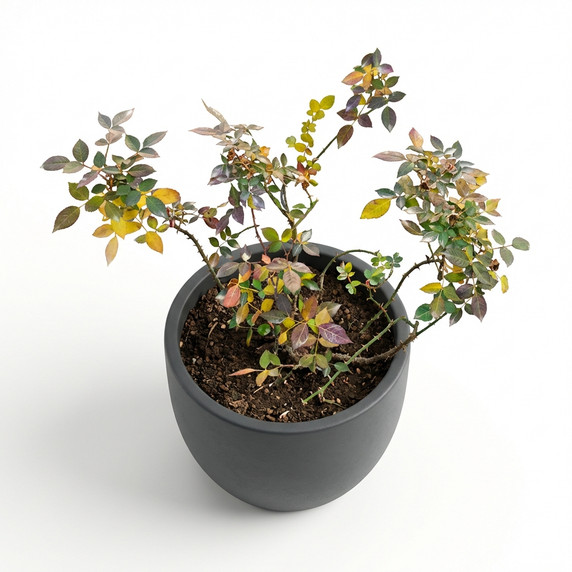


Bring timeless rose elegance to your home with Rosa chinensis. This repeat-flowering China Rose is perfect for patios, balconies, and bright indoor areas—delivering classic blooms and lush foliage when given sun, regular watering, and seasonal feeding. A standout gift and a décor upgrade in one plant.
Common Name: China Rose
Botanical Name: Rosa chinensis
Former Name: Not available
Plant Type: Flowering shrub
Plant Code / SKU: PLT-0402
Alternative Names:
China Rose
Bengal Rose
Order: Rosales
Family: Rosaceae
Genus: Rosa
Species: R. chinensis
Native to southwestern China (notably Guizhou province), Rosa chinensis has been cultivated in its homeland for centuries. Introduced to Europe in the late 18th century, it became a foundational species in modern rose breeding. Today it is grown worldwide in temperate and subtropical regions, both in gardens and containers.
A deciduous shrub with arching, thorny canes bearing pinnate leaves of 5–7 glossy, dark green leaflets. Blooms are single to semi-double or double, approximately 4–6 cm in diameter, typically in shades of pink to deep rose red. Flowers may be mildly to moderately fragrant. Repeat flowering habit yields flushes of blooms from spring through autumn.
Mature height ranges from 1.0 to 2.0 m; spread reaches 1.0 to 1.5 m. In containers or as a standard rose, height is often maintained between 0.5 and 1.0 m. Individual blooms measure about 4–6 cm across.
Requires full sun for optimal blooming (at least 6 hours of direct sunlight daily). Tolerates light afternoon shade in very hot climates but may produce fewer flowers.
Keep soil consistently moist but not waterlogged. Water deeply when the top 2–3 cm of soil feels dry, increasing frequency during active growth and flowering. Reduce watering slightly in winter.
Prefers well-draining loamy soil rich in organic matter, with a slightly acidic to neutral pH (6.0–6.5). In containers, use a high-quality potting mix amended with compost or well-rotted manure. Ensure pots have adequate drainage holes.
Optimal growth occurs between 15 °C and 25 °C. Tolerates short periods down to near 0 °C (requires protection below –5 °C) and up to 30 °C with sufficient moisture. Moderate humidity is acceptable; good air circulation helps prevent disease.
Apply a balanced, slow‐release rose fertilizer in early spring as buds break. Supplement with a liquid high-phosphorus feed every 4–6 weeks through summer, stopping in late autumn to allow plants to harden off.
Care level is moderate. Annual pruning in late winter or early spring encourages healthy structure and flowering. Deadhead spent blooms to promote further flushes. Monitor regularly for pests and diseases and treat as needed.
R. chinensis produces multiple flushes of blooms from spring until first hard frost. Propagation is commonly by hardwood or softwood cuttings, stem layering, budding, or grafting onto hardy rootstocks.
Susceptible to black spot (Diplocarpon rosae), powdery mildew, rust, aphids, thrips, spider mites and rose mosaic virus. Overwatering can lead to root rot. Practice good sanitation, provide adequate spacing and air flow, and treat with appropriate fungicides or insecticidal soaps.
Valued as an ornamental garden shrub, for hedging, mass plantings or container display. Flowers are used in cut‐flower arrangements and for extraction of rose oil. Rose hips are edible and high in vitamin C; petals can be used in culinary applications, teas, potpourri and cosmetics.
Non-toxic to humans and pets; however, the plant’s thorns can cause scratches or puncture wounds. Wear protective gloves and clothing when pruning or handling.
Bring timeless rose elegance to your home with Rosa chinensis. This repeat-flowering China Rose is perfect for patios, balconies, and bright indoor areas—delivering classic blooms and lush foliage when given sun, regular watering, and seasonal feeding. A standout gift and a décor upgrade in one plant.
Common Name: China Rose
Botanical Name: Rosa chinensis
Former Name: Not available
Plant Type: Flowering shrub
Plant Code / SKU: PLT-0402
Alternative Names:
China Rose
Bengal Rose
Order: Rosales
Family: Rosaceae
Genus: Rosa
Species: R. chinensis
Native to southwestern China (notably Guizhou province), Rosa chinensis has been cultivated in its homeland for centuries. Introduced to Europe in the late 18th century, it became a foundational species in modern rose breeding. Today it is grown worldwide in temperate and subtropical regions, both in gardens and containers.
A deciduous shrub with arching, thorny canes bearing pinnate leaves of 5–7 glossy, dark green leaflets. Blooms are single to semi-double or double, approximately 4–6 cm in diameter, typically in shades of pink to deep rose red. Flowers may be mildly to moderately fragrant. Repeat flowering habit yields flushes of blooms from spring through autumn.
Mature height ranges from 1.0 to 2.0 m; spread reaches 1.0 to 1.5 m. In containers or as a standard rose, height is often maintained between 0.5 and 1.0 m. Individual blooms measure about 4–6 cm across.
Requires full sun for optimal blooming (at least 6 hours of direct sunlight daily). Tolerates light afternoon shade in very hot climates but may produce fewer flowers.
Keep soil consistently moist but not waterlogged. Water deeply when the top 2–3 cm of soil feels dry, increasing frequency during active growth and flowering. Reduce watering slightly in winter.
Prefers well-draining loamy soil rich in organic matter, with a slightly acidic to neutral pH (6.0–6.5). In containers, use a high-quality potting mix amended with compost or well-rotted manure. Ensure pots have adequate drainage holes.
Optimal growth occurs between 15 °C and 25 °C. Tolerates short periods down to near 0 °C (requires protection below –5 °C) and up to 30 °C with sufficient moisture. Moderate humidity is acceptable; good air circulation helps prevent disease.
Apply a balanced, slow‐release rose fertilizer in early spring as buds break. Supplement with a liquid high-phosphorus feed every 4–6 weeks through summer, stopping in late autumn to allow plants to harden off.
Care level is moderate. Annual pruning in late winter or early spring encourages healthy structure and flowering. Deadhead spent blooms to promote further flushes. Monitor regularly for pests and diseases and treat as needed.
R. chinensis produces multiple flushes of blooms from spring until first hard frost. Propagation is commonly by hardwood or softwood cuttings, stem layering, budding, or grafting onto hardy rootstocks.
Susceptible to black spot (Diplocarpon rosae), powdery mildew, rust, aphids, thrips, spider mites and rose mosaic virus. Overwatering can lead to root rot. Practice good sanitation, provide adequate spacing and air flow, and treat with appropriate fungicides or insecticidal soaps.
Valued as an ornamental garden shrub, for hedging, mass plantings or container display. Flowers are used in cut‐flower arrangements and for extraction of rose oil. Rose hips are edible and high in vitamin C; petals can be used in culinary applications, teas, potpourri and cosmetics.
Non-toxic to humans and pets; however, the plant’s thorns can cause scratches or puncture wounds. Wear protective gloves and clothing when pruning or handling.

Take 20% off your first order
Enter the code below at checkout to get 20% off your first order