

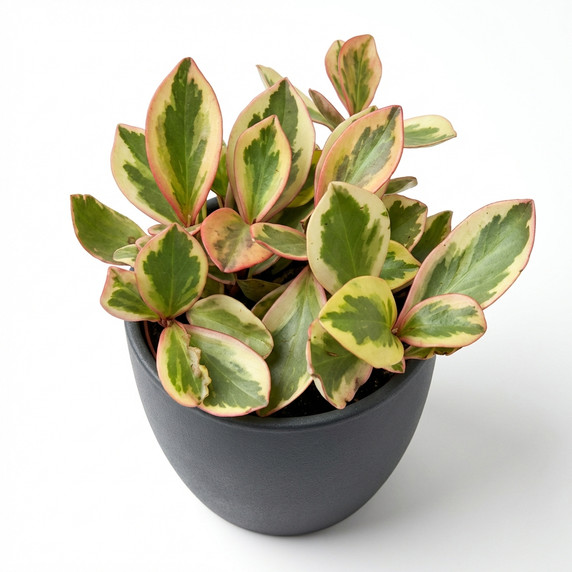





Bring instant color to any room with Red-Edge Peperomia. Its thick, glossy leaves with cream-green variegation and rosy margins look premium all year, yet the plant stays compact and easy to manage. Perfect for desks, shelves, and reception areas—just give it bright, indirect light and water when partly dry for a tidy, designer look with minimal effort.
Common Name: Red-Edge Peperomia, Jelly Peperomia
Botanical Name: Peperomia clusiifolia 'Red Edge'
Arabic Name: بيبروما
Family: Piperaceae
Kingdom: Plantae
Order: Piperales
Family: Piperaceae
Genus: Peperomia
Species: Peperomia clusiifolia
This species is native to the tropical regions of the Caribbean (specifically Jamaica) and parts of South America, where it typically grows as an understory plant in humid forests.
The Red-Edge Peperomia features succulent, leathery leaves that are obovate in shape. The foliage is strikingly variegated with shades of olive green and creamy white, bordered by a vibrant reddish-pink or purple margin that gives the plant its name.
This is a compact, slow-growing plant that typically reaches a height and width of 6 to 10 inches (15–25 cm), making it an ideal choice for limited spaces.
Prefers bright, indirect light to maintain its vibrant variegation. It can tolerate medium light levels, but the colors may become less intense. Avoid direct sunlight, which can scorch the thick leaves.
Water when the top 50-75% of the soil has dried out. Like most succulents, it stores water in its leaves and is sensitive to overwatering, which can lead to root rot.
Requires a well-draining potting medium. A mix of peat moss and perlite or a high-quality cactus and succulent soil works best. It prefers being slightly root-bound in smaller pots.
Thrives in temperatures between 65°F and 80°F (18°C–27°C). It enjoys moderate to high humidity but adapts well to standard indoor humidity levels. Keep away from cold drafts or air conditioning vents.
Feed with a balanced, water-soluble fertilizer diluted to half-strength once a month during the active growing season (spring and summer). Do not fertilize in the winter.
Care Level: Easy. It requires very little maintenance other than occasional watering and removing any yellowing leaves. Wipe the leaves with a damp cloth periodically to keep them dust-free and glossy.
Growth is slow to moderate. It can be easily propagated through stem cuttings or leaf cuttings placed in either water or moist soil during the spring or summer.
The most common issue is root rot due to overwatering. It may occasionally attract pests like mealybugs or spider mites. If leaves drop suddenly, it is often a sign of a significant temperature drop or cold draft.
An excellent air-purifying plant known for removing common indoor toxins. Its compact size and ornamental foliage make it perfect for office desks, tabletops, and terrariums.
Peperomia clusiifolia is considered non-toxic to cats, dogs, and humans, making it a safe choice for households with pets and children.
Bring instant color to any room with Red-Edge Peperomia. Its thick, glossy leaves with cream-green variegation and rosy margins look premium all year, yet the plant stays compact and easy to manage. Perfect for desks, shelves, and reception areas—just give it bright, indirect light and water when partly dry for a tidy, designer look with minimal effort.
Common Name: Red-Edge Peperomia, Jelly Peperomia
Botanical Name: Peperomia clusiifolia 'Red Edge'
Arabic Name: بيبروما
Family: Piperaceae
Kingdom: Plantae
Order: Piperales
Family: Piperaceae
Genus: Peperomia
Species: Peperomia clusiifolia
This species is native to the tropical regions of the Caribbean (specifically Jamaica) and parts of South America, where it typically grows as an understory plant in humid forests.
The Red-Edge Peperomia features succulent, leathery leaves that are obovate in shape. The foliage is strikingly variegated with shades of olive green and creamy white, bordered by a vibrant reddish-pink or purple margin that gives the plant its name.
This is a compact, slow-growing plant that typically reaches a height and width of 6 to 10 inches (15–25 cm), making it an ideal choice for limited spaces.
Prefers bright, indirect light to maintain its vibrant variegation. It can tolerate medium light levels, but the colors may become less intense. Avoid direct sunlight, which can scorch the thick leaves.
Water when the top 50-75% of the soil has dried out. Like most succulents, it stores water in its leaves and is sensitive to overwatering, which can lead to root rot.
Requires a well-draining potting medium. A mix of peat moss and perlite or a high-quality cactus and succulent soil works best. It prefers being slightly root-bound in smaller pots.
Thrives in temperatures between 65°F and 80°F (18°C–27°C). It enjoys moderate to high humidity but adapts well to standard indoor humidity levels. Keep away from cold drafts or air conditioning vents.
Feed with a balanced, water-soluble fertilizer diluted to half-strength once a month during the active growing season (spring and summer). Do not fertilize in the winter.
Care Level: Easy. It requires very little maintenance other than occasional watering and removing any yellowing leaves. Wipe the leaves with a damp cloth periodically to keep them dust-free and glossy.
Growth is slow to moderate. It can be easily propagated through stem cuttings or leaf cuttings placed in either water or moist soil during the spring or summer.
The most common issue is root rot due to overwatering. It may occasionally attract pests like mealybugs or spider mites. If leaves drop suddenly, it is often a sign of a significant temperature drop or cold draft.
An excellent air-purifying plant known for removing common indoor toxins. Its compact size and ornamental foliage make it perfect for office desks, tabletops, and terrariums.
Peperomia clusiifolia is considered non-toxic to cats, dogs, and humans, making it a safe choice for households with pets and children.


Take 20% off your first order
Enter the code below at checkout to get 20% off your first order