

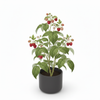
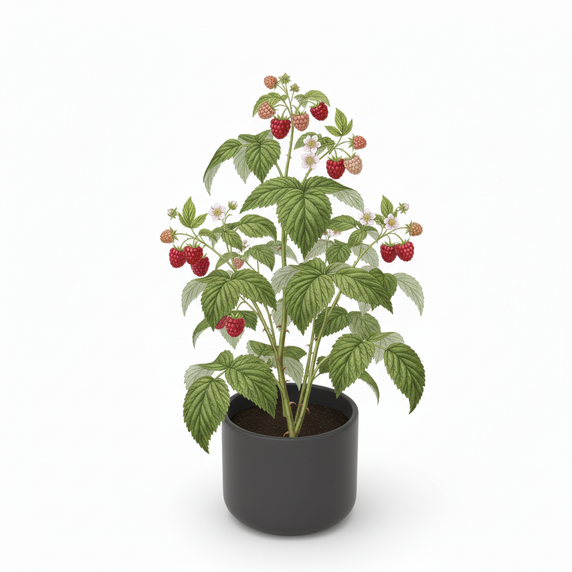




Taste the unmatched sweetness of summer with your very own Red Raspberry plant! Perfect for gardeners of all levels, our robust Rubus idaeus plants are selected for high yields and exceptional flavor. Imagine stepping outside to harvest handfuls of sun-warmed, juicy berries for your breakfast, desserts, or smoothies. These hardy plants are a simple and rewarding way to create an edible garden, providing delicious fruit year after year. Order now and start your journey to homegrown berry bliss!
Common Name: Red Raspberry
Botanical Name: Rubus idaeus
Arabic Name: توت
Family: Rosaceae
Plant Variant: Red
Plant Color: Green
Country of Origin: Netherlands
Rubus idaeus belongs to the Rosaceae (rose) family. Within the genus Rubus, it is classified under the subgenus Idaeobatus. This deciduous shrub is a perennial with biennial canes, meaning the roots are permanent while individual stems live for two years.
Red Raspberries are native to Europe and northern Asia. They have been widely naturalized and cultivated across temperate regions globally, particularly in North America and Europe, due to their high-value fruit and adaptability to cooler climates.
The plant features upright or slightly arching woody canes that often possess small prickles or thorns. The leaves are pinnately compound, typically with 3 to 5 serrated leaflets that are vibrant green on top and have a distinctive silvery-white, fuzzy underside. It produces small, white, drooping flowers that develop into the iconic bright red aggregate fruit.
Under optimal conditions, the Red Raspberry plant typically grows to a height of 1.5 to 2.5 meters (5 to 8 feet) and can spread between 0.6 to 1.2 meters (2 to 4 feet) wide. Pruning and trellising are often used to manage its size in garden settings.
For maximum fruit production and the sweetest berries, Red Raspberries require full sun, meaning at least 6 to 8 hours of direct sunlight per day. While they can tolerate partial shade, the fruit yield will be significantly lower and the canes may become leggy.
Raspberries need consistent moisture, especially during the flowering and fruiting stages. It is best to provide about 1 to 1.5 inches of water per week through deep watering at the base of the plant to avoid wetting the foliage, which can lead to disease. Ensure the soil is well-drained to prevent root rot.
The plant thrives in rich, loamy, well-draining soil with a slightly acidic pH between 5.5 and 6.5. If grown in pots, use a large container (at least 10-15 gallons) with excellent drainage and a high-quality potting mix enriched with organic matter.
Rubus idaeus is very hardy and prefers temperate climates with cool summers. It requires a specific amount of winter "chill hours" (temperatures between 0°C and 7°C) to break dormancy and fruit properly. It is generally hardy in USDA zones 4 through 8.
Feed the plant in early spring with a balanced fertilizer (such as 10-10-10) as new growth appears. A second, lighter application can be made in early summer to support fruit development. Mulching with compost also provides slow-release nutrients.
The care level is moderate. Key maintenance tasks include annual pruning (removing two-year-old canes that have already fruited), providing a trellis or support system for the canes, and regular weeding to reduce competition for nutrients.
Raspberries are fast-growing. They naturally propagate through underground runners (suckers) that emerge from the soil. They can also be propagated by taking hardwood cuttings or by tip layering during the growing season.
Common pests include aphids, raspberry beetles, and Japanese beetles. The plant can also be susceptible to fungal diseases such as botrytis (gray mold), spur blight, and root rot if the environment is too wet or lacks air circulation. Birds are also frequent visitors to the ripening fruit.
Beyond providing delicious, antioxidant-rich edible fruit, Red Raspberries are used in home landscapes as edible hedges. The leaves are sometimes harvested and dried for herbal tea. They are excellent for attracting pollinators like bees and butterflies to the garden.
Red Raspberries are non-toxic to humans, dogs, and cats. The fruit is safe and healthy for consumption. However, gardeners should be cautious of the small prickles on the canes, which can cause minor skin irritation or scratches during handling.
Taste the unmatched sweetness of summer with your very own Red Raspberry plant! Perfect for gardeners of all levels, our robust Rubus idaeus plants are selected for high yields and exceptional flavor. Imagine stepping outside to harvest handfuls of sun-warmed, juicy berries for your breakfast, desserts, or smoothies. These hardy plants are a simple and rewarding way to create an edible garden, providing delicious fruit year after year. Order now and start your journey to homegrown berry bliss!
Common Name: Red Raspberry
Botanical Name: Rubus idaeus
Arabic Name: توت
Family: Rosaceae
Plant Variant: Red
Plant Color: Green
Country of Origin: Netherlands
Rubus idaeus belongs to the Rosaceae (rose) family. Within the genus Rubus, it is classified under the subgenus Idaeobatus. This deciduous shrub is a perennial with biennial canes, meaning the roots are permanent while individual stems live for two years.
Red Raspberries are native to Europe and northern Asia. They have been widely naturalized and cultivated across temperate regions globally, particularly in North America and Europe, due to their high-value fruit and adaptability to cooler climates.
The plant features upright or slightly arching woody canes that often possess small prickles or thorns. The leaves are pinnately compound, typically with 3 to 5 serrated leaflets that are vibrant green on top and have a distinctive silvery-white, fuzzy underside. It produces small, white, drooping flowers that develop into the iconic bright red aggregate fruit.
Under optimal conditions, the Red Raspberry plant typically grows to a height of 1.5 to 2.5 meters (5 to 8 feet) and can spread between 0.6 to 1.2 meters (2 to 4 feet) wide. Pruning and trellising are often used to manage its size in garden settings.
For maximum fruit production and the sweetest berries, Red Raspberries require full sun, meaning at least 6 to 8 hours of direct sunlight per day. While they can tolerate partial shade, the fruit yield will be significantly lower and the canes may become leggy.
Raspberries need consistent moisture, especially during the flowering and fruiting stages. It is best to provide about 1 to 1.5 inches of water per week through deep watering at the base of the plant to avoid wetting the foliage, which can lead to disease. Ensure the soil is well-drained to prevent root rot.
The plant thrives in rich, loamy, well-draining soil with a slightly acidic pH between 5.5 and 6.5. If grown in pots, use a large container (at least 10-15 gallons) with excellent drainage and a high-quality potting mix enriched with organic matter.
Rubus idaeus is very hardy and prefers temperate climates with cool summers. It requires a specific amount of winter "chill hours" (temperatures between 0°C and 7°C) to break dormancy and fruit properly. It is generally hardy in USDA zones 4 through 8.
Feed the plant in early spring with a balanced fertilizer (such as 10-10-10) as new growth appears. A second, lighter application can be made in early summer to support fruit development. Mulching with compost also provides slow-release nutrients.
The care level is moderate. Key maintenance tasks include annual pruning (removing two-year-old canes that have already fruited), providing a trellis or support system for the canes, and regular weeding to reduce competition for nutrients.
Raspberries are fast-growing. They naturally propagate through underground runners (suckers) that emerge from the soil. They can also be propagated by taking hardwood cuttings or by tip layering during the growing season.
Common pests include aphids, raspberry beetles, and Japanese beetles. The plant can also be susceptible to fungal diseases such as botrytis (gray mold), spur blight, and root rot if the environment is too wet or lacks air circulation. Birds are also frequent visitors to the ripening fruit.
Beyond providing delicious, antioxidant-rich edible fruit, Red Raspberries are used in home landscapes as edible hedges. The leaves are sometimes harvested and dried for herbal tea. They are excellent for attracting pollinators like bees and butterflies to the garden.
Red Raspberries are non-toxic to humans, dogs, and cats. The fruit is safe and healthy for consumption. However, gardeners should be cautious of the small prickles on the canes, which can cause minor skin irritation or scratches during handling.


Take 20% off your first order
Enter the code below at checkout to get 20% off your first order