


Rex Begonia 'Painted-Leaf'
Transform your space with the living art of the Rex Begonia. With foliage more stunning than any flower, its vibrant, painterly leaves create an instant 'wow' factor. Each plant is a unique masterpiece, guaranteed to spark conversation and envy. Perfect for the discerning decorator seeking a bold, natural accent. Don't just decorate—inspire. Bring home a Rex Begonia today!
1. Basic Identification
Common Name: Rex Begonia / Painted-Leaf Begonia
Botanical Name: Begonia rex-cultorum
Arabic Name: بكونيا
Plant Variant: Painted-Leaf
Plant Color: Multicolor
Plant Country: Netherlands
2. Taxonomy & Classification
Kingdom: Plantae
Clade: Tracheophytes
Order: Cucurbitales
Family: Begoniaceae
Genus: Begonia
Species: Begonia rex-cultorum
3. Origin & Distribution
The original Begonia rex is native to the forests of North India, while the modern Rex Begonia (Begonia rex-cultorum) is a group of hybrids developed primarily in Europe and North America to highlight dramatic leaf patterns and colors.
4. Visual Characteristics
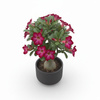
Rex Begonias are prized for their large, asymmetrical leaves that feature striking combinations of silver, pink, purple, burgundy, and deep green. The leaves often have a metallic or iridescent sheen and can be smooth, textured, or covered in fine hairs.
5. Size & Dimensions
Typically reaches a height and width of 12 to 18 inches (30 to 45 cm). The individual leaves can grow up to 6 to 9 inches long depending on the specific cultivar.
6. Light Requirements
Requires bright, indirect light to maintain its vibrant colors. Avoid direct afternoon sun, which can scorch the delicate foliage, but ensure it receives enough light to prevent the patterns from fading.
7. Watering Needs
Keep the soil consistently moist but never waterlogged. Water when the top inch of soil feels dry to the touch. Avoid getting water on the leaves as this can lead to fungal diseases and leaf rot.
8. Soil & Potting
Thrives in a well-draining, light, and airy potting mix, such as a peat-based soil with added perlite or vermiculite. Prefers shallow pots as they grow from a rhizome that sits near the soil surface.
9. Temperature & Humidity
Prefers stable temperatures between 60°F and 75°F (15°C to 24°C). High humidity (50% or higher) is essential for leaf health. Use a pebble tray or humidifier rather than misting to avoid foliage issues.
10. Fertilization
Feed every two to four weeks during the active growing season (spring and summer) with a balanced, water-soluble fertilizer diluted to half-strength. Reduce or stop feeding during the dormant winter months.
11. Maintenance & Care Level
Maintenance Level: Moderate. These plants require careful attention to humidity and moisture levels to prevent leaf drop and disease, making them best suited for enthusiasts who can provide consistent care.
12. Growth & Propagation
Rex Begonias grow at a moderate rate. They are easily propagated through leaf cuttings (either whole leaves or leaf sections) or by dividing the rhizome during repotting.
13. Common Problems
Susceptible to powdery mildew, botrytis (gray mold), and root rot if overwatered. Common pests include mealybugs, spider mites, and whiteflies, especially in low-humidity environments.
14. Benefits & Uses
Primarily used as a high-impact ornamental indoor plant for home and office décor. It is also recognized for its air-purifying qualities, helping to filter common indoor toxins while adding aesthetic value.
15. Toxicity & Safety
Toxic to pets (cats and dogs) and humans if ingested. The plant contains calcium oxalate crystals which cause oral irritation, excessive drooling, and vomiting. The rhizomes are the most toxic part.
Rex Begonia 'Painted-Leaf'

Transform your space with the living art of the Rex Begonia. With foliage more stunning than any flower, its vibrant, painterly leaves create an instant 'wow' factor. Each plant is a unique masterpiece, guaranteed to spark conversation and envy. Perfect for the discerning decorator seeking a bold, natural accent. Don't just decorate—inspire. Bring home a Rex Begonia today!
1. Basic Identification
Common Name: Rex Begonia / Painted-Leaf Begonia
Botanical Name: Begonia rex-cultorum
Arabic Name: بكونيا
Plant Variant: Painted-Leaf
Plant Color: Multicolor
Plant Country: Netherlands
2. Taxonomy & Classification
Kingdom: Plantae
Clade: Tracheophytes
Order: Cucurbitales
Family: Begoniaceae
Genus: Begonia
Species: Begonia rex-cultorum
3. Origin & Distribution
The original Begonia rex is native to the forests of North India, while the modern Rex Begonia (Begonia rex-cultorum) is a group of hybrids developed primarily in Europe and North America to highlight dramatic leaf patterns and colors.
4. Visual Characteristics
Rex Begonias are prized for their large, asymmetrical leaves that feature striking combinations of silver, pink, purple, burgundy, and deep green. The leaves often have a metallic or iridescent sheen and can be smooth, textured, or covered in fine hairs.
5. Size & Dimensions
Typically reaches a height and width of 12 to 18 inches (30 to 45 cm). The individual leaves can grow up to 6 to 9 inches long depending on the specific cultivar.
6. Light Requirements
Requires bright, indirect light to maintain its vibrant colors. Avoid direct afternoon sun, which can scorch the delicate foliage, but ensure it receives enough light to prevent the patterns from fading.
7. Watering Needs
Keep the soil consistently moist but never waterlogged. Water when the top inch of soil feels dry to the touch. Avoid getting water on the leaves as this can lead to fungal diseases and leaf rot.
8. Soil & Potting
Thrives in a well-draining, light, and airy potting mix, such as a peat-based soil with added perlite or vermiculite. Prefers shallow pots as they grow from a rhizome that sits near the soil surface.
9. Temperature & Humidity
Prefers stable temperatures between 60°F and 75°F (15°C to 24°C). High humidity (50% or higher) is essential for leaf health. Use a pebble tray or humidifier rather than misting to avoid foliage issues.
10. Fertilization
Feed every two to four weeks during the active growing season (spring and summer) with a balanced, water-soluble fertilizer diluted to half-strength. Reduce or stop feeding during the dormant winter months.
11. Maintenance & Care Level
Maintenance Level: Moderate. These plants require careful attention to humidity and moisture levels to prevent leaf drop and disease, making them best suited for enthusiasts who can provide consistent care.
12. Growth & Propagation
Rex Begonias grow at a moderate rate. They are easily propagated through leaf cuttings (either whole leaves or leaf sections) or by dividing the rhizome during repotting.
13. Common Problems
Susceptible to powdery mildew, botrytis (gray mold), and root rot if overwatered. Common pests include mealybugs, spider mites, and whiteflies, especially in low-humidity environments.
14. Benefits & Uses
Primarily used as a high-impact ornamental indoor plant for home and office décor. It is also recognized for its air-purifying qualities, helping to filter common indoor toxins while adding aesthetic value.
15. Toxicity & Safety
Toxic to pets (cats and dogs) and humans if ingested. The plant contains calcium oxalate crystals which cause oral irritation, excessive drooling, and vomiting. The rhizomes are the most toxic part.