


Rosaceae
Rubus idaeus
Harvest homegrown raspberries with a vigorous, easy-care fruiting plant that thrives in sunny spots. Ideal for patios and small gardens, it arrives potted and ready to grow—just water, feed, and support the canes for delicious seasonal rewards.
1. Basic Identification
Common Name: Raspberry
Botanical Name: Rubus idaeus
Variant: Standard
Color: Green
Country: Not mentioned
Arabic Name: فيلودندرون
Stems: 1
Family: Rosaceae
2. Taxonomy & Classification
Kingdom: Plantae
Clade: Angiosperms
Clade: Eudicots
Order: Rosales
Family: Rosaceae
Genus: Rubus
Subgenus: Idaeobatus
3. Origin & Distribution
Rubus idaeus is native to Europe and northern Asia. It has been widely naturalized in temperate regions across North America and other parts of the world due to its popularity as a commercial and garden fruit crop.
4. Visual Characteristics
This deciduous shrub features upright or arching canes that are often armed with small prickles. The leaves are pinnately compound with 3 to 7 serrated leaflets, exhibiting a bright green color on top and a silvery-white pubescence underneath. It produces small, drooping clusters of white flowers followed by the iconic red aggregate fruits.
5. Size & Dimensions
In a single growing season, canes typically reach heights of 1.5 to 2.5 meters (5 to 8 feet). The plant spreads via underground suckers to form a dense thicket or colony if not contained.
6. Light Requirements
For optimal fruit production and plant health, it requires full sun, meaning at least 6 to 8 hours of direct sunlight daily. It can tolerate partial shade but fruit yields will be significantly reduced.
7. Watering Needs
Requires consistent moisture, especially during the flowering and fruiting stages. It is best to provide about 1 inch of water per week through deep watering at the base of the plant to keep the soil moist but not soggy.
8. Soil & Potting
Prefers fertile, well-draining soil rich in organic matter. It thrives in slightly acidic soil with a pH between 5.5 and 6.5. For container growing, use a large pot with excellent drainage holes and high-quality potting compost.
9. Temperature & Humidity
Thrives in temperate climates. The plant is very hardy (USDA Zones 3-9) and requires a certain number of "chilling hours" during winter dormancy to successfully produce fruit the following year. It prefers moderate humidity levels.
10. Fertilization
Feed in early spring with a balanced, all-purpose fertilizer (such as 10-10-10). A second, lighter application can be made in early summer to support the development of next year's canes.
11. Maintenance & Care Level
Easy to moderate. Key maintenance involves regular watering and annual pruning. Floricane (summer-bearing) varieties require pruning of the canes that have already fruited, while primocane (autumn-bearing) varieties can be cut back to the ground in late winter.
12. Growth & Propagation
The plant grows vigorously through a perennial root system that sends up biennial canes. Propagation is easily achieved by digging up and transplanting suckers, or through tip layering and root cuttings.
13. Common Problems
Potential issues include aphids, raspberry beetles, and spider mites. It can also be susceptible to fungal diseases such as gray mold (Botrytis), cane blight, and root rot if the soil drainage is poor.
14. Benefits & Uses
Primarily grown for its delicious, antioxidant-rich edible fruit which can be eaten fresh, frozen, or used in preserves and baking. The leaves are also frequently used in herbal teas. It serves as a great addition to edible landscapes and wildlife gardens.
15. Toxicity & Safety
The fruit and foliage of Rubus idaeus are considered non-toxic to humans, dogs, cats, and horses. However, the small prickles on the canes can cause minor skin irritation if handled without gloves.

Rubus idaeus
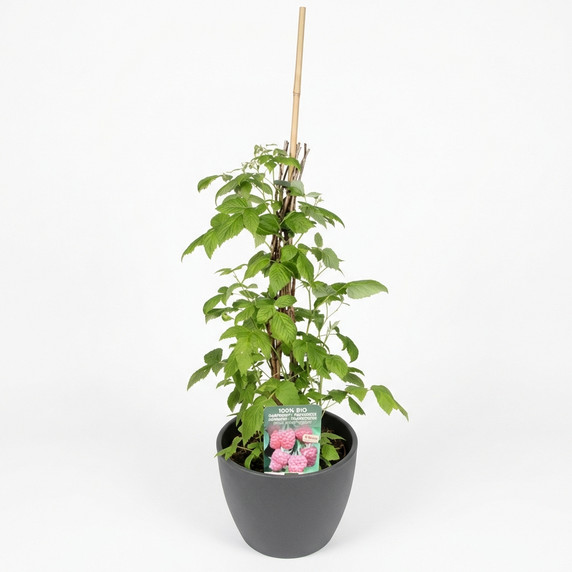
Harvest homegrown raspberries with a vigorous, easy-care fruiting plant that thrives in sunny spots. Ideal for patios and small gardens, it arrives potted and ready to grow—just water, feed, and support the canes for delicious seasonal rewards.
1. Basic Identification
Common Name: Raspberry
Botanical Name: Rubus idaeus
Variant: Standard
Color: Green
Country: Not mentioned
Arabic Name: فيلودندرون
Stems: 1
Family: Rosaceae
2. Taxonomy & Classification
Kingdom: Plantae
Clade: Angiosperms
Clade: Eudicots
Order: Rosales
Family: Rosaceae
Genus: Rubus
Subgenus: Idaeobatus
3. Origin & Distribution
Rubus idaeus is native to Europe and northern Asia. It has been widely naturalized in temperate regions across North America and other parts of the world due to its popularity as a commercial and garden fruit crop.
4. Visual Characteristics
This deciduous shrub features upright or arching canes that are often armed with small prickles. The leaves are pinnately compound with 3 to 7 serrated leaflets, exhibiting a bright green color on top and a silvery-white pubescence underneath. It produces small, drooping clusters of white flowers followed by the iconic red aggregate fruits.
5. Size & Dimensions
In a single growing season, canes typically reach heights of 1.5 to 2.5 meters (5 to 8 feet). The plant spreads via underground suckers to form a dense thicket or colony if not contained.
6. Light Requirements
For optimal fruit production and plant health, it requires full sun, meaning at least 6 to 8 hours of direct sunlight daily. It can tolerate partial shade but fruit yields will be significantly reduced.
7. Watering Needs
Requires consistent moisture, especially during the flowering and fruiting stages. It is best to provide about 1 inch of water per week through deep watering at the base of the plant to keep the soil moist but not soggy.
8. Soil & Potting
Prefers fertile, well-draining soil rich in organic matter. It thrives in slightly acidic soil with a pH between 5.5 and 6.5. For container growing, use a large pot with excellent drainage holes and high-quality potting compost.
9. Temperature & Humidity
Thrives in temperate climates. The plant is very hardy (USDA Zones 3-9) and requires a certain number of "chilling hours" during winter dormancy to successfully produce fruit the following year. It prefers moderate humidity levels.
10. Fertilization
Feed in early spring with a balanced, all-purpose fertilizer (such as 10-10-10). A second, lighter application can be made in early summer to support the development of next year's canes.
11. Maintenance & Care Level
Easy to moderate. Key maintenance involves regular watering and annual pruning. Floricane (summer-bearing) varieties require pruning of the canes that have already fruited, while primocane (autumn-bearing) varieties can be cut back to the ground in late winter.
12. Growth & Propagation
The plant grows vigorously through a perennial root system that sends up biennial canes. Propagation is easily achieved by digging up and transplanting suckers, or through tip layering and root cuttings.
13. Common Problems
Potential issues include aphids, raspberry beetles, and spider mites. It can also be susceptible to fungal diseases such as gray mold (Botrytis), cane blight, and root rot if the soil drainage is poor.
14. Benefits & Uses
Primarily grown for its delicious, antioxidant-rich edible fruit which can be eaten fresh, frozen, or used in preserves and baking. The leaves are also frequently used in herbal teas. It serves as a great addition to edible landscapes and wildlife gardens.
15. Toxicity & Safety
The fruit and foliage of Rubus idaeus are considered non-toxic to humans, dogs, cats, and horses. However, the small prickles on the canes can cause minor skin irritation if handled without gloves.