


Sago Palm (Cycas)
Add instant resort-style structure to any space with Cycas revoluta. Its perfectly arranged, deep-green fronds create a premium look in entryways, living rooms, and reception areas—without demanding constant attention. Keep it bright, keep it well-drained, and enjoy a long-lived statement plant that only gets better with age.
1. Basic Identification
Common Name: Sago Palm
Botanical Name: Cycas revoluta
Arabic Name: سيكاس
Variant: Standard
Color: Natural
Stems: 1
2. Taxonomy & Classification
Kingdom: Plantae
Division: Cycadophyta
Class: Cycadopsida
Order: Cycadales
Family: Cycadaceae
Genus: Cycas
Species: Cycas revoluta
3. Origin & Distribution
Native to southern Japan and the Ryukyu Islands. It is widely cultivated globally in subtropical and warm-temperate regions as an ornamental plant.
4. Visual Characteristics
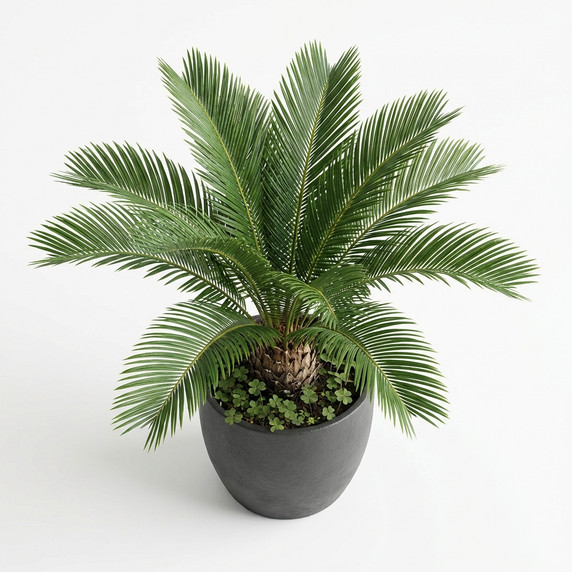
The Sago Palm features a thick, shaggy, dark-brown trunk topped with a symmetrical crown of stiff, feathery, dark-green fronds. Each leaflet is narrow and has a slightly recessed midrib, with margins that roll under (revolute).
5. Size & Dimensions
A very slow-growing species. In the wild or outdoors, it can eventually reach 10 feet in height over decades. As an indoor plant, it typically reaches 2 to 3 feet in height with a similar spread.
6. Light Requirements
Prefers bright, indirect light. It can tolerate some direct morning sun, but intense, direct afternoon sun may scorch the foliage. It can adapt to lower light levels, though growth will be significantly slower.
7. Watering Needs
Low to moderate. Allow the soil to dry out almost completely between waterings. It is highly drought-tolerant but extremely sensitive to overwatering and root rot.
8. Soil & Potting
Requires extremely well-draining soil. A high-quality potting mix blended with sand or perlite, or a specific cactus/palm mix, is ideal. Use a container with ample drainage holes.
9. Temperature & Humidity
Thrives in temperatures between 15°C and 24°C. While it can tolerate short periods of cold down to -10°C once mature, it prefers consistent warmth. Average indoor humidity is generally sufficient.
10. Fertilization
Apply a balanced liquid fertilizer or a slow-release palm fertilizer 2–3 times during the growing season (spring through fall). Do not fertilize during the winter months.
11. Maintenance & Care Level
Low Maintenance. Maintenance is limited to removing dead or yellowing lower fronds once they have completely withered. It does not require frequent repotting due to its slow growth rate.
12. Growth & Propagation
Extremely slow growth rate. Propagation is primarily achieved through seeds or by removing "pups" (offsets) that develop at the base of the trunk or along the sides.
13. Common Problems
Susceptible to scale insects, mealybugs, and spider mites. Yellowing of leaves can occur due to nutrient deficiencies (specifically manganese) or overwatering.
14. Benefits & Uses
Primarily used as a premium architectural statement plant in interior design and landscaping. It provides a tropical, resort-like aesthetic and is valued for its longevity.
15. Toxicity & Safety
Highly toxic to humans and pets (dogs, cats, and horses) if any part of the plant is ingested. The seeds (nuts) contain the highest concentration of cycasin, which can cause severe liver failure.
Sago Palm (Cycas)
Add instant resort-style structure to any space with Cycas revoluta. Its perfectly arranged, deep-green fronds create a premium look in entryways, living rooms, and reception areas—without demanding constant attention. Keep it bright, keep it well-drained, and enjoy a long-lived statement plant that only gets better with age.
1. Basic Identification
Common Name: Sago Palm
Botanical Name: Cycas revoluta
Arabic Name: سيكاس
Variant: Standard
Color: Natural
Stems: 1
2. Taxonomy & Classification
Kingdom: Plantae
Division: Cycadophyta
Class: Cycadopsida
Order: Cycadales
Family: Cycadaceae
Genus: Cycas
Species: Cycas revoluta
3. Origin & Distribution
Native to southern Japan and the Ryukyu Islands. It is widely cultivated globally in subtropical and warm-temperate regions as an ornamental plant.
4. Visual Characteristics
The Sago Palm features a thick, shaggy, dark-brown trunk topped with a symmetrical crown of stiff, feathery, dark-green fronds. Each leaflet is narrow and has a slightly recessed midrib, with margins that roll under (revolute).
5. Size & Dimensions
A very slow-growing species. In the wild or outdoors, it can eventually reach 10 feet in height over decades. As an indoor plant, it typically reaches 2 to 3 feet in height with a similar spread.
6. Light Requirements
Prefers bright, indirect light. It can tolerate some direct morning sun, but intense, direct afternoon sun may scorch the foliage. It can adapt to lower light levels, though growth will be significantly slower.
7. Watering Needs
Low to moderate. Allow the soil to dry out almost completely between waterings. It is highly drought-tolerant but extremely sensitive to overwatering and root rot.
8. Soil & Potting
Requires extremely well-draining soil. A high-quality potting mix blended with sand or perlite, or a specific cactus/palm mix, is ideal. Use a container with ample drainage holes.
9. Temperature & Humidity
Thrives in temperatures between 15°C and 24°C. While it can tolerate short periods of cold down to -10°C once mature, it prefers consistent warmth. Average indoor humidity is generally sufficient.
10. Fertilization
Apply a balanced liquid fertilizer or a slow-release palm fertilizer 2–3 times during the growing season (spring through fall). Do not fertilize during the winter months.
11. Maintenance & Care Level
Low Maintenance. Maintenance is limited to removing dead or yellowing lower fronds once they have completely withered. It does not require frequent repotting due to its slow growth rate.
12. Growth & Propagation
Extremely slow growth rate. Propagation is primarily achieved through seeds or by removing "pups" (offsets) that develop at the base of the trunk or along the sides.
13. Common Problems
Susceptible to scale insects, mealybugs, and spider mites. Yellowing of leaves can occur due to nutrient deficiencies (specifically manganese) or overwatering.
14. Benefits & Uses
Primarily used as a premium architectural statement plant in interior design and landscaping. It provides a tropical, resort-like aesthetic and is valued for its longevity.
15. Toxicity & Safety
Highly toxic to humans and pets (dogs, cats, and horses) if any part of the plant is ingested. The seeds (nuts) contain the highest concentration of cycasin, which can cause severe liver failure.