

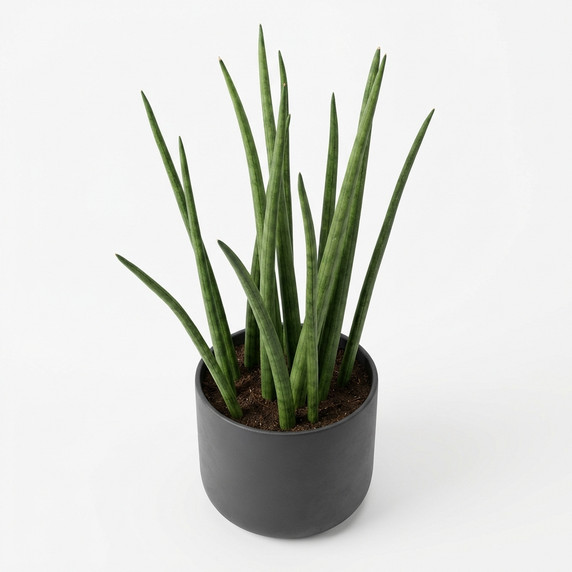
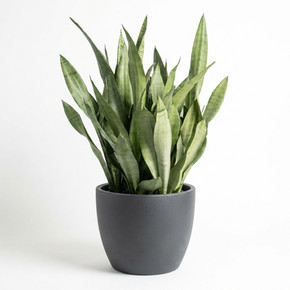
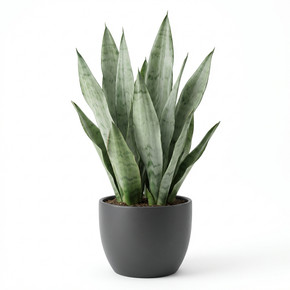


A confident, modern look with almost no effort—Snake Plant is the go-to choice for busy plant owners and professional spaces. Its upright, sculptural leaves instantly elevate interiors, while its drought tolerance means you can forget a watering now and then. Place it in a reception, office, or bedroom corner and enjoy a cleaner, greener atmosphere with a plant that stays stylish year-round.
Common Name: Snake Plant
Botanical Name: Dracaena trifasciata
Former Name: Sansevieria trifasciata
Plant Type: Foliage houseplant (Succulent)
Plant Code / SKU: PLT-0131
Alternative Names:
Mother-in-law's tongue
Viper's bowstring hemp
Arabic: سنسفيريا
Order: Asparagales
Family: Asparagaceae
Genus: Dracaena
Species: Dracaena trifasciata
Native to West Africa (southern Nigeria and the Democratic Republic of the Congo). Widely cultivated and naturalized in tropical and subtropical regions worldwide as an ornamental houseplant.
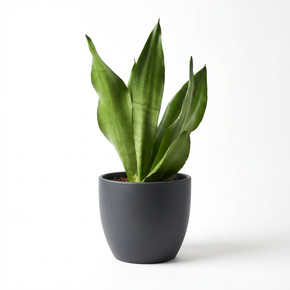
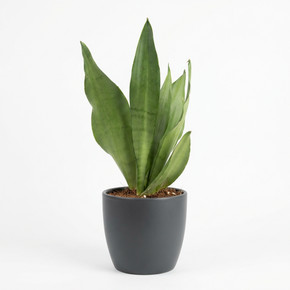
Upright, stiff, sword-shaped leaves growing in a rosette. Leaves are dark green with light gray-green horizontal bands, margins often edged with yellow or cream. Leaves are thick and succulent, measuring 2–3 cm thick.
Height: 60–120 cm (varies by cultivar).
Width: 30–50 cm.
Growth Rate: Slow to moderate.
Thrives in bright indirect light but tolerates low light conditions. Avoid prolonged exposure to direct, harsh sunlight to prevent leaf scorch.
Allow soil to dry out completely between waterings. Water sparingly; overwatering can lead to root rot. Reduce frequency during winter dormancy.
Use a well-draining potting mix (cactus or succulent mix) amended with perlite or coarse sand. Provide pots with drainage holes to prevent waterlogging.
Optimal temperature range: 18–27 °C (65–80 °F). Minimum tolerable temperature: 12 °C (54 °F). Prefers average household humidity; appreciates occasional misting in very dry air.
Feed monthly during the spring and summer growing seasons with a balanced, diluted houseplant fertilizer. Suspend feeding in fall and winter.
Very low maintenance; suitable for beginners. Remove dust from leaves occasionally. Repot every 2–3 years or when root-bound.
Propagated by division of rhizomes when repotting. Leaf cuttings can also be rooted in water or soil for additional plants.
Overwatering can cause root rot and yellowing leaves. Susceptible to mealybugs and spider mites in dry conditions. Brown leaf tips may indicate under- or overwatering.
Excellent air purifier, removing toxins such as formaldehyde and benzene. Decorative architectural form enhances modern interiors. Improves indoor air quality.
All parts are mildly toxic to humans and pets if ingested, causing nausea, vomiting, and diarrhea. Handle with care and keep out of reach of children and animals.
A confident, modern look with almost no effort—Snake Plant is the go-to choice for busy plant owners and professional spaces. Its upright, sculptural leaves instantly elevate interiors, while its drought tolerance means you can forget a watering now and then. Place it in a reception, office, or bedroom corner and enjoy a cleaner, greener atmosphere with a plant that stays stylish year-round.
Common Name: Snake Plant
Botanical Name: Dracaena trifasciata
Former Name: Sansevieria trifasciata
Plant Type: Foliage houseplant (Succulent)
Plant Code / SKU: PLT-0131
Alternative Names:
Mother-in-law's tongue
Viper's bowstring hemp
Arabic: سنسفيريا
Order: Asparagales
Family: Asparagaceae
Genus: Dracaena
Species: Dracaena trifasciata
Native to West Africa (southern Nigeria and the Democratic Republic of the Congo). Widely cultivated and naturalized in tropical and subtropical regions worldwide as an ornamental houseplant.
Upright, stiff, sword-shaped leaves growing in a rosette. Leaves are dark green with light gray-green horizontal bands, margins often edged with yellow or cream. Leaves are thick and succulent, measuring 2–3 cm thick.
Height: 60–120 cm (varies by cultivar).
Width: 30–50 cm.
Growth Rate: Slow to moderate.
Thrives in bright indirect light but tolerates low light conditions. Avoid prolonged exposure to direct, harsh sunlight to prevent leaf scorch.
Allow soil to dry out completely between waterings. Water sparingly; overwatering can lead to root rot. Reduce frequency during winter dormancy.
Use a well-draining potting mix (cactus or succulent mix) amended with perlite or coarse sand. Provide pots with drainage holes to prevent waterlogging.
Optimal temperature range: 18–27 °C (65–80 °F). Minimum tolerable temperature: 12 °C (54 °F). Prefers average household humidity; appreciates occasional misting in very dry air.
Feed monthly during the spring and summer growing seasons with a balanced, diluted houseplant fertilizer. Suspend feeding in fall and winter.
Very low maintenance; suitable for beginners. Remove dust from leaves occasionally. Repot every 2–3 years or when root-bound.
Propagated by division of rhizomes when repotting. Leaf cuttings can also be rooted in water or soil for additional plants.
Overwatering can cause root rot and yellowing leaves. Susceptible to mealybugs and spider mites in dry conditions. Brown leaf tips may indicate under- or overwatering.
Excellent air purifier, removing toxins such as formaldehyde and benzene. Decorative architectural form enhances modern interiors. Improves indoor air quality.
All parts are mildly toxic to humans and pets if ingested, causing nausea, vomiting, and diarrhea. Handle with care and keep out of reach of children and animals.





Take 20% off your first order
Enter the code below at checkout to get 20% off your first order