


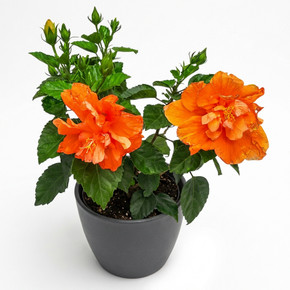



Make a statement with Sea Hibiscus: oversized, heart-shaped leaves and a lush canopy that instantly fills empty corners and high-ceiling spaces. Perfect for receptions and modern interiors needing a strong green focal point. Give it bright light, consistent watering, and a simple seasonal prune—and enjoy a resilient, architectural tree that looks premium all year.
Common Name: Sea Hibiscus
Botanical Name: Hibiscus tiliaceus
Arabic Name: مطاط
Plant Variant: Standard
Plant Color: Natural
Plant Country: Australia
Stems: 1
Family: Malvaceae
Hibiscus tiliaceus belongs to the genus Hibiscus and the family Malvaceae. It is a member of the Hibiscus section Azanza, characterized by its woody growth habit and distinctive floral structure. Common synonyms include Talipariti tiliaceum.
Native to the tropical and subtropical coastal regions of the Old World, its range extends from eastern Africa and southern Asia to Australia and the Pacific Islands. It has become naturalized in parts of the Americas and the Caribbean due to its salt tolerance and ornamental appeal.
The Sea Hibiscus is known for its broad, leathery, and heart-shaped (cordate) leaves that can reach up to 20 cm in diameter. The foliage is dark green with a soft, silvery-grey pubescent underside. It produces attractive cup-shaped flowers that open bright yellow with a deep maroon center, gradually darkening to orange and red before falling within a single day.
In its native coastal environment, it can grow as a spreading tree reaching 4 to 10 meters. When cultivated as an indoor focal point or container specimen, it is typically maintained through pruning at a height of 1.5 to 3 meters with a canopy spread of 1 to 2 meters.
This plant thrives in bright, indirect light. While it can tolerate several hours of direct morning sun, it should be protected from harsh, direct midday sunlight when grown indoors to prevent leaf scorch. It is relatively adaptable but performs best in high-light environments.
Requires consistent watering to keep the soil evenly moist, especially during the active growing season. It is more tolerant of moist soil than many other indoor trees but should never be left in standing water. Allow the top 2-3 cm of soil to dry slightly before watering again.
Best grown in a rich, well-draining organic potting mix. A combination of peat moss, perlite, and sand is effective for ensuring proper drainage while retaining necessary moisture. It prefers a slightly acidic to neutral soil pH.
Being a tropical species, it prefers warm temperatures between 18°C and 30°C. It is sensitive to cold drafts and should not be exposed to temperatures below 12°C. High humidity is preferred; misting the leaves or using a room humidifier can help maintain its lush appearance in air-conditioned environments.
Feed with a balanced, water-soluble fertilizer every 4 weeks during the spring and summer. During the dormant winter period, fertilization should be reduced or stopped entirely.
Care Level: Easy to Moderate. The primary maintenance involves seasonal pruning to control its height and shape. Regularly removing dead or yellowing leaves will help keep the canopy dense and healthy.
It is a fast-growing species that can quickly fill a space. Propagation is most commonly achieved through semi-hardwood stem cuttings or seeds. Cuttings root easily in moist soil or water when provided with sufficient warmth and light.
Potential pests include aphids, mealybugs, and spider mites, which can be managed with neem oil or insecticidal soap. Yellowing leaves may occur if the plant is overwatered or if it experiences a sudden drop in light levels.
Excellent for air purification and as an architectural focal point in large rooms, lobbies, and receptions. In coastal landscapes, it is used for windbreaks and erosion control. Its dense canopy provides significant shade and aesthetic value.
While many Hibiscus species are considered non-toxic, Hibiscus tiliaceus has not been extensively certified as pet-safe in all regions. Based on product data, it is recommended to keep the plant out of reach of pets and children to avoid potential gastrointestinal upset if leaves are ingested.
Make a statement with Sea Hibiscus: oversized, heart-shaped leaves and a lush canopy that instantly fills empty corners and high-ceiling spaces. Perfect for receptions and modern interiors needing a strong green focal point. Give it bright light, consistent watering, and a simple seasonal prune—and enjoy a resilient, architectural tree that looks premium all year.
Common Name: Sea Hibiscus
Botanical Name: Hibiscus tiliaceus
Arabic Name: مطاط
Plant Variant: Standard
Plant Color: Natural
Plant Country: Australia
Stems: 1
Family: Malvaceae
Hibiscus tiliaceus belongs to the genus Hibiscus and the family Malvaceae. It is a member of the Hibiscus section Azanza, characterized by its woody growth habit and distinctive floral structure. Common synonyms include Talipariti tiliaceum.
Native to the tropical and subtropical coastal regions of the Old World, its range extends from eastern Africa and southern Asia to Australia and the Pacific Islands. It has become naturalized in parts of the Americas and the Caribbean due to its salt tolerance and ornamental appeal.
The Sea Hibiscus is known for its broad, leathery, and heart-shaped (cordate) leaves that can reach up to 20 cm in diameter. The foliage is dark green with a soft, silvery-grey pubescent underside. It produces attractive cup-shaped flowers that open bright yellow with a deep maroon center, gradually darkening to orange and red before falling within a single day.
In its native coastal environment, it can grow as a spreading tree reaching 4 to 10 meters. When cultivated as an indoor focal point or container specimen, it is typically maintained through pruning at a height of 1.5 to 3 meters with a canopy spread of 1 to 2 meters.
This plant thrives in bright, indirect light. While it can tolerate several hours of direct morning sun, it should be protected from harsh, direct midday sunlight when grown indoors to prevent leaf scorch. It is relatively adaptable but performs best in high-light environments.
Requires consistent watering to keep the soil evenly moist, especially during the active growing season. It is more tolerant of moist soil than many other indoor trees but should never be left in standing water. Allow the top 2-3 cm of soil to dry slightly before watering again.
Best grown in a rich, well-draining organic potting mix. A combination of peat moss, perlite, and sand is effective for ensuring proper drainage while retaining necessary moisture. It prefers a slightly acidic to neutral soil pH.
Being a tropical species, it prefers warm temperatures between 18°C and 30°C. It is sensitive to cold drafts and should not be exposed to temperatures below 12°C. High humidity is preferred; misting the leaves or using a room humidifier can help maintain its lush appearance in air-conditioned environments.
Feed with a balanced, water-soluble fertilizer every 4 weeks during the spring and summer. During the dormant winter period, fertilization should be reduced or stopped entirely.
Care Level: Easy to Moderate. The primary maintenance involves seasonal pruning to control its height and shape. Regularly removing dead or yellowing leaves will help keep the canopy dense and healthy.
It is a fast-growing species that can quickly fill a space. Propagation is most commonly achieved through semi-hardwood stem cuttings or seeds. Cuttings root easily in moist soil or water when provided with sufficient warmth and light.
Potential pests include aphids, mealybugs, and spider mites, which can be managed with neem oil or insecticidal soap. Yellowing leaves may occur if the plant is overwatered or if it experiences a sudden drop in light levels.
Excellent for air purification and as an architectural focal point in large rooms, lobbies, and receptions. In coastal landscapes, it is used for windbreaks and erosion control. Its dense canopy provides significant shade and aesthetic value.
While many Hibiscus species are considered non-toxic, Hibiscus tiliaceus has not been extensively certified as pet-safe in all regions. Based on product data, it is recommended to keep the plant out of reach of pets and children to avoid potential gastrointestinal upset if leaves are ingested.
Take 20% off your first order
Enter the code below at checkout to get 20% off your first order