


Crassulaceae
Sedum morganianum
Bring effortless style to your space with Burrito Sedum—dense, cascading stems of plump green leaves that look stunning in a hanging pot or on a high shelf. It thrives on bright light and infrequent watering, making it an ideal choice for busy plant lovers and modern interiors. Add one to your desk, reception, or home corner for a clean, architectural splash of living green.
1. Basic Identification
Common Name: Burrito Sedum / Donkey's Tail
Botanical Name: Sedum morganianum
Arabic Name: أوركيد
Variation: Standard
Color: Natural
Family: Crassulaceae
2. Taxonomy & Classification
Kingdom: Plantae
Order: Saxifragales
Family: Crassulaceae
Genus: Sedum
Species: Sedum morganianum 'Burrito'
3. Origin & Distribution
Native to Southern Mexico and Honduras, Burrito Sedum is naturally found growing on vertical cliffs and rocky outcrops, which accounts for its trailing habit.
4. Visual Characteristics
This succulent features long, pendulous stems densely packed with fleshy, bean-shaped leaves. The foliage typically has a powdery glaucous coating (epicuticular wax) that gives it a soft blue-green or silvery-green appearance. The 'Burrito' cultivar is known for having shorter, rounder leaves compared to the standard Sedum morganianum.
5. Size & Dimensions
The cascading stems can grow anywhere from 12 to 24 inches (30–60 cm) in length. Individual leaves are approximately 0.5 inches long, creating a thick, braided look as they overlap down the stem.
6. Light Requirements
Requires bright, indirect light or partial sun. It performs best near a south- or west-facing window. While it loves light, intense direct afternoon sun in very hot climates may cause the leaves to scorch or turn yellow.
7. Watering Needs
As a succulent, it is highly drought-tolerant. Use the "soak and dry" method: water thoroughly until it drains out the bottom, then allow the soil to dry out completely before watering again. During winter, reduce watering frequency significantly.
8. Soil & Potting
Needs a well-draining cactus or succulent potting mix. Using a container with drainage holes is essential to prevent water from sitting at the roots. Terracotta pots are ideal as they help wick away excess moisture.
9. Temperature & Humidity
Prefers average room temperatures between 65°F and 75°F (18°C–24°C). It is not frost-hardy and should be kept away from cold drafts. It thrives in low to average humidity, making it well-suited for typical indoor environments.
10. Fertilization
Feed sparingly. Apply a balanced, water-soluble fertilizer diluted to half-strength once or twice during the active growing season (spring and summer). Do not fertilize in the winter.
11. Maintenance & Care Level
Level: Low Maintenance. The primary care consideration is handling; the leaves are very fragile and fall off easily if bumped. It is best placed in a location where it won't be frequently touched or moved.
12. Growth & Propagation
A slow-to-moderate grower. It is exceptionally easy to propagate through stem cuttings or even individual leaves that have fallen off; simply place the leaf on top of moist soil, and it will eventually sprout new roots and plantlets.
13. Common Problems
The most common issue is root rot due to overwatering. It can also be susceptible to mealybugs hidden between the dense leaves. Excessive leaf drop is usually a sign of physical disturbance rather than poor health.
14. Benefits & Uses
An excellent air-purifying plant that adds vertical interest to home décor. Its trailing nature makes it perfect for hanging baskets, high shelves, or "spiller" elements in succulent arrangements. It is highly valued for its unique architectural texture.
15. Toxicity & Safety
According to the ASPCA and other horticultural sources, Sedum morganianum is generally considered non-toxic to cats, dogs, and horses, making it a safer choice for households with pets.

Sedum morganianum
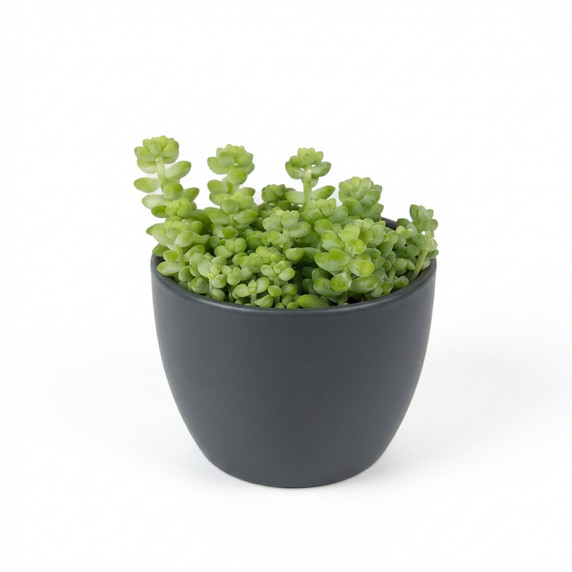
Bring effortless style to your space with Burrito Sedum—dense, cascading stems of plump green leaves that look stunning in a hanging pot or on a high shelf. It thrives on bright light and infrequent watering, making it an ideal choice for busy plant lovers and modern interiors. Add one to your desk, reception, or home corner for a clean, architectural splash of living green.
1. Basic Identification
Common Name: Burrito Sedum / Donkey's Tail
Botanical Name: Sedum morganianum
Arabic Name: أوركيد
Variation: Standard
Color: Natural
Family: Crassulaceae
2. Taxonomy & Classification
Kingdom: Plantae
Order: Saxifragales
Family: Crassulaceae
Genus: Sedum
Species: Sedum morganianum 'Burrito'
3. Origin & Distribution
Native to Southern Mexico and Honduras, Burrito Sedum is naturally found growing on vertical cliffs and rocky outcrops, which accounts for its trailing habit.
4. Visual Characteristics
This succulent features long, pendulous stems densely packed with fleshy, bean-shaped leaves. The foliage typically has a powdery glaucous coating (epicuticular wax) that gives it a soft blue-green or silvery-green appearance. The 'Burrito' cultivar is known for having shorter, rounder leaves compared to the standard Sedum morganianum.
5. Size & Dimensions
The cascading stems can grow anywhere from 12 to 24 inches (30–60 cm) in length. Individual leaves are approximately 0.5 inches long, creating a thick, braided look as they overlap down the stem.
6. Light Requirements
Requires bright, indirect light or partial sun. It performs best near a south- or west-facing window. While it loves light, intense direct afternoon sun in very hot climates may cause the leaves to scorch or turn yellow.
7. Watering Needs
As a succulent, it is highly drought-tolerant. Use the "soak and dry" method: water thoroughly until it drains out the bottom, then allow the soil to dry out completely before watering again. During winter, reduce watering frequency significantly.
8. Soil & Potting
Needs a well-draining cactus or succulent potting mix. Using a container with drainage holes is essential to prevent water from sitting at the roots. Terracotta pots are ideal as they help wick away excess moisture.
9. Temperature & Humidity
Prefers average room temperatures between 65°F and 75°F (18°C–24°C). It is not frost-hardy and should be kept away from cold drafts. It thrives in low to average humidity, making it well-suited for typical indoor environments.
10. Fertilization
Feed sparingly. Apply a balanced, water-soluble fertilizer diluted to half-strength once or twice during the active growing season (spring and summer). Do not fertilize in the winter.
11. Maintenance & Care Level
Level: Low Maintenance. The primary care consideration is handling; the leaves are very fragile and fall off easily if bumped. It is best placed in a location where it won't be frequently touched or moved.
12. Growth & Propagation
A slow-to-moderate grower. It is exceptionally easy to propagate through stem cuttings or even individual leaves that have fallen off; simply place the leaf on top of moist soil, and it will eventually sprout new roots and plantlets.
13. Common Problems
The most common issue is root rot due to overwatering. It can also be susceptible to mealybugs hidden between the dense leaves. Excessive leaf drop is usually a sign of physical disturbance rather than poor health.
14. Benefits & Uses
An excellent air-purifying plant that adds vertical interest to home décor. Its trailing nature makes it perfect for hanging baskets, high shelves, or "spiller" elements in succulent arrangements. It is highly valued for its unique architectural texture.
15. Toxicity & Safety
According to the ASPCA and other horticultural sources, Sedum morganianum is generally considered non-toxic to cats, dogs, and horses, making it a safer choice for households with pets.