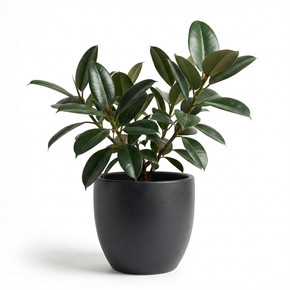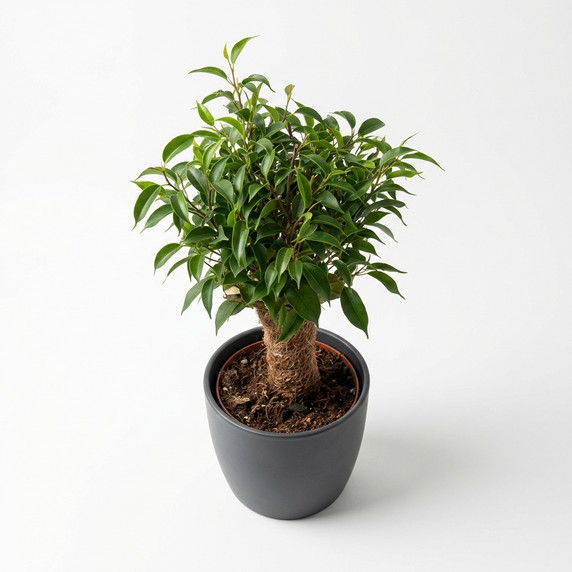


Bring instant greenery and a refined, tree-like silhouette to your space with Ficus benjamina. Its dense canopy and glossy leaves make it a timeless statement for living rooms, offices, and reception areas. With bright indirect light and consistent watering, it stays full and elegant—ideal for anyone who wants a classic indoor tree that looks premium all year.
Common Name: Weeping Fig
Botanical Name: Ficus benjamina
Former Name: Not available
Plant Type: Indoor tree / Foliage houseplant
Plant Code / SKU: PLT-0043
Alternative Names:
Weeping fig
Benjamin fig
بنجامين
Order: Rosales
Family: Moraceae
Genus: Ficus
Species: F. benjamina
Native to tropical and subtropical regions of Asia and Australia, ranging from India and Bangladesh through Southeast Asia to northern Australia. Widely cultivated worldwide as an ornamental indoor and outdoor plant, and naturalized in many tropical and subtropical areas.
Evergreen tree with a graceful, drooping habit; smooth, light gray trunk often branching close to soil level. Leaves are glossy, ovate to lanceolate, 6–13 cm long and 3–6 cm wide, dark green, with a pointed tip. Younger foliage may appear lighter; canopy is dense and arching.
Indoors typically 1.2–1.8 m tall; can reach over 3 m if space and light permit. Leaf length 6–13 cm. Outdoors in native habitat may exceed 20 m. Pot size often 20–30 cm diameter for mature indoor specimens.
Bright, indirect light ideal; tolerates medium light. Avoid prolonged direct midday sun which can scorch leaves. Some morning or late afternoon sun is acceptable. In low light growth slows and leaf drop may occur.
Keep evenly moist but not waterlogged. Allow top 2–3 cm of soil to dry between waterings. Overwatering leads to root rot and yellowing; underwatering causes leaf drop. Reduce frequency in winter.
Use a well-draining, aerated potting mix. A blend of peat moss or coir, pine bark fines and perlite or coarse sand works well. pH preference 6.0–7.0. Repot every 2–3 years or when root-bound, increasing pot size by one grade.
Optimal temperature 18–24 °C; minimum 15 °C. Sensitive to cold drafts and rapid temperature changes. Prefers high humidity (50–80%); mist foliage or use pebble tray to maintain humidity, especially in dry indoor air.
Feed with a balanced, water-soluble fertilizer (e.g., 10-10-10 NPK) every 4–6 weeks during spring and summer. Reduce to every 8–10 weeks in fall and winter. Follow label rates; avoid overfertilization which can burn roots.
Moderate care. Regularly wipe leaves to remove dust and allow light penetration. Prune to shape and remove dead or crossing branches. Monitor for pests and adjust watering seasonally.
Propagation by semi-hardwood cuttings taken in spring or early summer: use 10–12 cm stem sections with 2–3 nodes in moist rooting medium under high humidity. Air layering is also effective for large specimens. Seed propagation is uncommon in cultivation.
Leaf drop due to light or humidity changes, overwatering or underwatering. Pests include spider mites, scale insects and Mealybugs. Overwatering may cause root rot; underwatering leads to wilting and brown leaf edges. Cold drafts can induce leaf loss.
Popular ornamental indoor tree providing architectural interest and lush greenery. Known to improve indoor air quality by removing formaldehyde, benzene and xylene. Creates a calming atmosphere and can be used as a natural room divider or focal point.
Toxic to pets (cats, dogs) and humans if ingested. Contains latex and ficin, which can cause oral irritation, vomiting and diarrhea. Skin contact may trigger mild dermatitis in sensitive individuals. Keep out of reach of children and pets.
Bring instant greenery and a refined, tree-like silhouette to your space with Ficus benjamina. Its dense canopy and glossy leaves make it a timeless statement for living rooms, offices, and reception areas. With bright indirect light and consistent watering, it stays full and elegant—ideal for anyone who wants a classic indoor tree that looks premium all year.
Common Name: Weeping Fig
Botanical Name: Ficus benjamina
Former Name: Not available
Plant Type: Indoor tree / Foliage houseplant
Plant Code / SKU: PLT-0043
Alternative Names:
Weeping fig
Benjamin fig
بنجامين
Order: Rosales
Family: Moraceae
Genus: Ficus
Species: F. benjamina
Native to tropical and subtropical regions of Asia and Australia, ranging from India and Bangladesh through Southeast Asia to northern Australia. Widely cultivated worldwide as an ornamental indoor and outdoor plant, and naturalized in many tropical and subtropical areas.
Evergreen tree with a graceful, drooping habit; smooth, light gray trunk often branching close to soil level. Leaves are glossy, ovate to lanceolate, 6–13 cm long and 3–6 cm wide, dark green, with a pointed tip. Younger foliage may appear lighter; canopy is dense and arching.
Indoors typically 1.2–1.8 m tall; can reach over 3 m if space and light permit. Leaf length 6–13 cm. Outdoors in native habitat may exceed 20 m. Pot size often 20–30 cm diameter for mature indoor specimens.
Bright, indirect light ideal; tolerates medium light. Avoid prolonged direct midday sun which can scorch leaves. Some morning or late afternoon sun is acceptable. In low light growth slows and leaf drop may occur.
Keep evenly moist but not waterlogged. Allow top 2–3 cm of soil to dry between waterings. Overwatering leads to root rot and yellowing; underwatering causes leaf drop. Reduce frequency in winter.
Use a well-draining, aerated potting mix. A blend of peat moss or coir, pine bark fines and perlite or coarse sand works well. pH preference 6.0–7.0. Repot every 2–3 years or when root-bound, increasing pot size by one grade.
Optimal temperature 18–24 °C; minimum 15 °C. Sensitive to cold drafts and rapid temperature changes. Prefers high humidity (50–80%); mist foliage or use pebble tray to maintain humidity, especially in dry indoor air.
Feed with a balanced, water-soluble fertilizer (e.g., 10-10-10 NPK) every 4–6 weeks during spring and summer. Reduce to every 8–10 weeks in fall and winter. Follow label rates; avoid overfertilization which can burn roots.
Moderate care. Regularly wipe leaves to remove dust and allow light penetration. Prune to shape and remove dead or crossing branches. Monitor for pests and adjust watering seasonally.
Propagation by semi-hardwood cuttings taken in spring or early summer: use 10–12 cm stem sections with 2–3 nodes in moist rooting medium under high humidity. Air layering is also effective for large specimens. Seed propagation is uncommon in cultivation.
Leaf drop due to light or humidity changes, overwatering or underwatering. Pests include spider mites, scale insects and Mealybugs. Overwatering may cause root rot; underwatering leads to wilting and brown leaf edges. Cold drafts can induce leaf loss.
Popular ornamental indoor tree providing architectural interest and lush greenery. Known to improve indoor air quality by removing formaldehyde, benzene and xylene. Creates a calming atmosphere and can be used as a natural room divider or focal point.
Toxic to pets (cats, dogs) and humans if ingested. Contains latex and ficin, which can cause oral irritation, vomiting and diarrhea. Skin contact may trigger mild dermatitis in sensitive individuals. Keep out of reach of children and pets.

Take 20% off your first order
Enter the code below at checkout to get 20% off your first order