


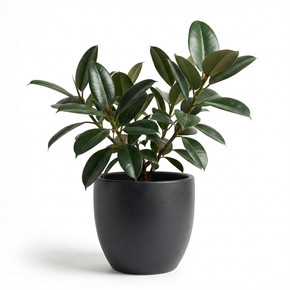


Bring instant, high-end greenery to your space with the Black Rubber Plant. Its thick, glossy dark leaves look dramatic in modern interiors and require minimal upkeep—just bright indirect light and sensible watering. Perfect for receptions, living rooms, and offices where you want a strong statement plant that stays elegant year-round.
Common Name: Black Rubber Plant
Botanical Name: Ficus elastica
Plant Variant: Burgundy
Plant Color: Natural
Plant Country: Not mentioned
SKU: PLT-0342
Arabic Name: مطاط
Stems: Not available
Family: Moraceae
Order: Rosales
Family: Moraceae
Genus: Ficus
Species: Ficus elastica
Native to eastern South Asia and Southeast Asia, including India, Nepal, Myanmar, Malaysia, and Indonesia. Widely cultivated globally as an ornamental houseplant.
Evergreen shrub or small tree with large, glossy, leathery, elliptical leaves. The ‘Burgundy’ variant displays deep burgundy to nearly black foliage. New leaves emerge tightly furled, lighter in color, then darken as they mature.
Indoors typically reaches 1.5–3 m in height with a spread of 1–2 m. Leaves grow up to 30–35 cm long and 10–15 cm wide. In native habitat, can attain 20–30 m tall.
Thrives in bright, indirect light. Tolerates moderate to low light, though growth slows and foliage may pale. Avoid direct midday sun to prevent leaf scorch.
Allow the top 2–5 cm of soil to dry between waterings. Maintain even moisture without waterlogging. Reduce frequency during cooler months.
Use a well-draining, aerated mix (peat-based with perlite or coarse sand). Ensure good drainage with a pot having holes. Repot every 2–3 years or when root-bound.
Optimal 18–24 °C; minimum 15 °C. Avoid cold drafts. Prefers moderate to high humidity; average indoor levels are acceptable. Increase humidity with misting or a pebble tray if air is very dry.
Feed with a balanced liquid fertilizer (e.g., 10-10-10 NPK) at half strength monthly during spring and summer. Hold off or reduce feeding in autumn and winter.
Low to moderate care. Wipe leaves periodically to remove dust. Prune to maintain shape and size. Inspect routinely for pests and remove any dead or yellowing leaves.
Propagate by stem cuttings. Take a 10–15 cm cutting with at least one node, strip lower leaves, dip in rooting hormone, and place in moist soil or water. Roots develop in about 3–6 weeks.
Overwatering can cause root rot; underwatering leads to leaf drop. Low humidity may produce brown leaf tips. Susceptible to spider mites, mealybugs, and scale. Yellowing leaves can signal nutrient deficiencies or incorrect lighting.
Valued as an ornamental specimen for its striking foliage and air-purifying properties. Adds architectural interest to interiors; ideal for offices, lobbies, reception areas, and living rooms.
Contains milky latex that can irritate skin. Toxic if ingested by pets or humans, causing oral irritation, vomiting, and diarrhea. Wear gloves when handling and keep away from children and animals.
Bring instant, high-end greenery to your space with the Black Rubber Plant. Its thick, glossy dark leaves look dramatic in modern interiors and require minimal upkeep—just bright indirect light and sensible watering. Perfect for receptions, living rooms, and offices where you want a strong statement plant that stays elegant year-round.
Common Name: Black Rubber Plant
Botanical Name: Ficus elastica
Plant Variant: Burgundy
Plant Color: Natural
Plant Country: Not mentioned
SKU: PLT-0342
Arabic Name: مطاط
Stems: Not available
Family: Moraceae
Order: Rosales
Family: Moraceae
Genus: Ficus
Species: Ficus elastica
Native to eastern South Asia and Southeast Asia, including India, Nepal, Myanmar, Malaysia, and Indonesia. Widely cultivated globally as an ornamental houseplant.
Evergreen shrub or small tree with large, glossy, leathery, elliptical leaves. The ‘Burgundy’ variant displays deep burgundy to nearly black foliage. New leaves emerge tightly furled, lighter in color, then darken as they mature.
Indoors typically reaches 1.5–3 m in height with a spread of 1–2 m. Leaves grow up to 30–35 cm long and 10–15 cm wide. In native habitat, can attain 20–30 m tall.
Thrives in bright, indirect light. Tolerates moderate to low light, though growth slows and foliage may pale. Avoid direct midday sun to prevent leaf scorch.
Allow the top 2–5 cm of soil to dry between waterings. Maintain even moisture without waterlogging. Reduce frequency during cooler months.
Use a well-draining, aerated mix (peat-based with perlite or coarse sand). Ensure good drainage with a pot having holes. Repot every 2–3 years or when root-bound.
Optimal 18–24 °C; minimum 15 °C. Avoid cold drafts. Prefers moderate to high humidity; average indoor levels are acceptable. Increase humidity with misting or a pebble tray if air is very dry.
Feed with a balanced liquid fertilizer (e.g., 10-10-10 NPK) at half strength monthly during spring and summer. Hold off or reduce feeding in autumn and winter.
Low to moderate care. Wipe leaves periodically to remove dust. Prune to maintain shape and size. Inspect routinely for pests and remove any dead or yellowing leaves.
Propagate by stem cuttings. Take a 10–15 cm cutting with at least one node, strip lower leaves, dip in rooting hormone, and place in moist soil or water. Roots develop in about 3–6 weeks.
Overwatering can cause root rot; underwatering leads to leaf drop. Low humidity may produce brown leaf tips. Susceptible to spider mites, mealybugs, and scale. Yellowing leaves can signal nutrient deficiencies or incorrect lighting.
Valued as an ornamental specimen for its striking foliage and air-purifying properties. Adds architectural interest to interiors; ideal for offices, lobbies, reception areas, and living rooms.
Contains milky latex that can irritate skin. Toxic if ingested by pets or humans, causing oral irritation, vomiting, and diarrhea. Wear gloves when handling and keep away from children and animals.







Take 20% off your first order
Enter the code below at checkout to get 20% off your first order