


Rutaceae
Skimmia japonica
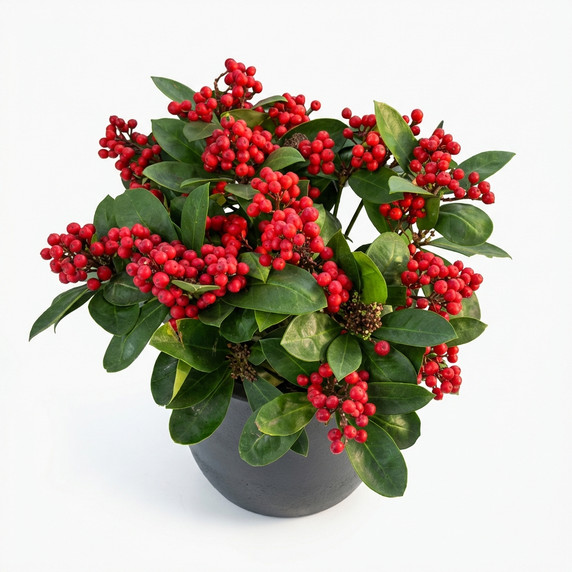
Bring instant seasonal elegance to your space with Japanese Skimmia. Its deep green, glossy leaves and abundant red berry clusters create a premium festive look that lasts for weeks—perfect for entrances, patios, and shaded balconies. Compact, tidy, and easy to maintain, Skimmia is a standout gifting plant and a reliable evergreen accent for homes and businesses alike.
1. Basic Identification
Common Name: Japanese Skimmia
Botanical Name: Skimmia japonica
Former Name: Not available
Plant Type: Evergreen shrub
Plant Code / SKU: PLT-0466
Alternative Names:
Japanese false pepper
Skimmia japonica subsp. japonica
Makino Skimmia
2. Taxonomy & Classification
Order: Sapindales
Family: Rutaceae
Genus: Skimmia
Species: S. japonica
3. Origin & Distribution
Native to woodlands and mountainous regions of Japan, southern China and Taiwan. Widely cultivated in temperate climates and naturalized in parts of Europe and North America as an ornamental evergreen shrub.
4. Visual Characteristics
Evergreen, compact shrub with glossy, dark green, leathery leaves 3–10 cm long, arranged oppositely. In spring, bears dense clusters of small, fragrant white to pinkish flowers. Female plants develop showy red berries that persist from autumn through winter. Stems are slender and erect, forming a bushy habit.
5. Size & Dimensions
Mature height: 0.6–1 m; spread: 0.6–1 m. Young potted plants typically sold in 2–3 L containers; mature specimens may require 5–7 L pots to accommodate root growth.
6. Light Requirements
Thrives in partial to full shade; tolerates dappled light. Avoid direct midday sun, which can scorch leaves, especially in warmer climates.
7. Watering Needs
Maintain evenly moist soil without waterlogging. Water regularly during the growing season; reduce frequency slightly in winter. Avoid prolonged drought or standing water to prevent root rot.
8. Soil & Potting
Prefers acidic to neutral, well-draining soil (pH 5.5–7). Enrich with organic matter. Use ericaceous or peat-based potting mix amended with grit or perlite for improved drainage.
9. Temperature & Humidity
Hardy to USDA zones 7–9. Optimal temperatures 10–20 °C; tolerates short dips to –10 °C when mulched. Protect from extreme heat above 30 °C. Prefers moderate humidity; avoid excessively dry indoor air.
10. Fertilization
Apply a balanced slow-release fertilizer in early spring after flowering. Alternatively, use an ericaceous liquid feed monthly during the growing season. Do not overfertilize in autumn to avoid tender new growth before winter.
11. Maintenance & Care Level
Low maintenance. Lightly prune immediately after flowering to shape and remove spent blooms and any dead wood. Apply a 5 cm layer of acidic mulch annually to conserve moisture and suppress weeds.
12. Growth & Propagation
Propagate via semi-ripe cuttings in summer with bottom heat and misting to maintain humidity. Seeds can be sown fresh but germination is slow and erratic. Division of older clumps in early spring is possible but may stress the plant.
13. Common Problems
Overwatering can lead to root rot. Leaf scorch may occur in excessive sun. Susceptible to scale insects, aphids and vine weevil; monitor and treat pests early. In humid, poorly ventilated conditions, powdery mildew or leaf spot can develop.
14. Benefits & Uses
Valued for year-round ornamental foliage and winter berry display. Ideal for containers, shaded borders and as a festive gift plant. Spring flowers attract bees and other pollinators.
15. Toxicity & Safety
Berries and foliage contain alkaloids that can cause nausea, vomiting and diarrhea if ingested. Keep out of reach of children and pets. Sap may cause mild skin irritation in sensitive individuals; wear gloves when pruning.

Skimmia japonica
Bring instant seasonal elegance to your space with Japanese Skimmia. Its deep green, glossy leaves and abundant red berry clusters create a premium festive look that lasts for weeks—perfect for entrances, patios, and shaded balconies. Compact, tidy, and easy to maintain, Skimmia is a standout gifting plant and a reliable evergreen accent for homes and businesses alike.
1. Basic Identification
Common Name: Japanese Skimmia
Botanical Name: Skimmia japonica
Former Name: Not available
Plant Type: Evergreen shrub
Plant Code / SKU: PLT-0466
Alternative Names:
Japanese false pepper
Skimmia japonica subsp. japonica
Makino Skimmia
2. Taxonomy & Classification
Order: Sapindales
Family: Rutaceae
Genus: Skimmia
Species: S. japonica
3. Origin & Distribution
Native to woodlands and mountainous regions of Japan, southern China and Taiwan. Widely cultivated in temperate climates and naturalized in parts of Europe and North America as an ornamental evergreen shrub.
4. Visual Characteristics
Evergreen, compact shrub with glossy, dark green, leathery leaves 3–10 cm long, arranged oppositely. In spring, bears dense clusters of small, fragrant white to pinkish flowers. Female plants develop showy red berries that persist from autumn through winter. Stems are slender and erect, forming a bushy habit.
5. Size & Dimensions
Mature height: 0.6–1 m; spread: 0.6–1 m. Young potted plants typically sold in 2–3 L containers; mature specimens may require 5–7 L pots to accommodate root growth.
6. Light Requirements
Thrives in partial to full shade; tolerates dappled light. Avoid direct midday sun, which can scorch leaves, especially in warmer climates.
7. Watering Needs
Maintain evenly moist soil without waterlogging. Water regularly during the growing season; reduce frequency slightly in winter. Avoid prolonged drought or standing water to prevent root rot.
8. Soil & Potting
Prefers acidic to neutral, well-draining soil (pH 5.5–7). Enrich with organic matter. Use ericaceous or peat-based potting mix amended with grit or perlite for improved drainage.
9. Temperature & Humidity
Hardy to USDA zones 7–9. Optimal temperatures 10–20 °C; tolerates short dips to –10 °C when mulched. Protect from extreme heat above 30 °C. Prefers moderate humidity; avoid excessively dry indoor air.
10. Fertilization
Apply a balanced slow-release fertilizer in early spring after flowering. Alternatively, use an ericaceous liquid feed monthly during the growing season. Do not overfertilize in autumn to avoid tender new growth before winter.
11. Maintenance & Care Level
Low maintenance. Lightly prune immediately after flowering to shape and remove spent blooms and any dead wood. Apply a 5 cm layer of acidic mulch annually to conserve moisture and suppress weeds.
12. Growth & Propagation
Propagate via semi-ripe cuttings in summer with bottom heat and misting to maintain humidity. Seeds can be sown fresh but germination is slow and erratic. Division of older clumps in early spring is possible but may stress the plant.
13. Common Problems
Overwatering can lead to root rot. Leaf scorch may occur in excessive sun. Susceptible to scale insects, aphids and vine weevil; monitor and treat pests early. In humid, poorly ventilated conditions, powdery mildew or leaf spot can develop.
14. Benefits & Uses
Valued for year-round ornamental foliage and winter berry display. Ideal for containers, shaded borders and as a festive gift plant. Spring flowers attract bees and other pollinators.
15. Toxicity & Safety
Berries and foliage contain alkaloids that can cause nausea, vomiting and diarrhea if ingested. Keep out of reach of children and pets. Sap may cause mild skin irritation in sensitive individuals; wear gloves when pruning.