


Snow Bush 'Roseopicta'
Transform your home into a tropical paradise with the Snow Bush! Each leaf is a unique masterpiece, splashed with green, white, and dazzling pink. Perfect for brightening up a living room or office, this plant’s vibrant energy is contagious. It’s not just a plant; it’s a living piece of art that grows with you. Demanding a bit of attention, it rewards dedicated plant parents with an unrivaled display of color. Bring the Snow Bush home today and let its cheerful foliage elevate your space!
1. Basic Identification
Common Name: Snow Bush, Hawaiian Snowbush
Botanical Name: Breynia disticha
Variety: Roseopicta
Color: Multicolor (Green, White, Pink)
Origin Country: Netherlands
Arabic Name: ثلجي
Family: Phyllanthaceae
2. Taxonomy & Classification
Kingdom: Plantae
Clade: Tracheophytes
Order: Malpighiales
Family: Phyllanthaceae
Genus: Breynia
Species: B. disticha
3. Origin & Distribution
Breynia disticha is native to the tropical islands of the Western Pacific, particularly Vanuatu. While it originates in tropical archipelagos, it has become a popular ornamental plant in warm climates worldwide and is widely cultivated in greenhouses in regions like the Netherlands for the global indoor plant market.
4. Visual Characteristics
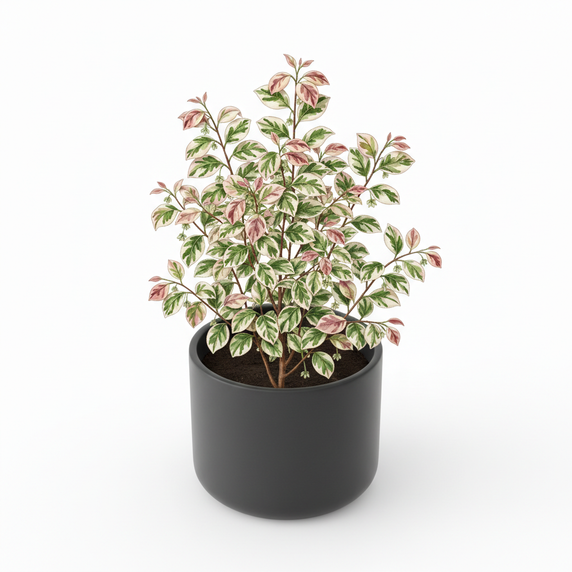
The Snow Bush is celebrated for its distinctive foliage. Its small, rounded leaves grow on slender, zig-zagging stems, giving it a soft, airy appearance. The 'Roseopicta' variety is especially striking, featuring mottled variegation of emerald green, snowy white, and splashes of rosy pink that look like painted highlights.
5. Size & Dimensions
When grown indoors, it typically reaches a height and spread of 2 to 4 feet. In its natural tropical habitat or as an outdoor shrub in frost-free zones, it can grow much larger, reaching up to 5 to 8 feet tall.
6. Light Requirements
This plant thrives in bright, indirect light. High light levels are necessary to maintain the vibrant pink and white variegation. Direct, harsh afternoon sunlight should be avoided as it can scorch the delicate leaves, while too little light will cause the new growth to emerge solid green.
7. Watering Needs
The Snow Bush prefers consistently moist soil. It does not tolerate drying out and may drop its leaves if the soil becomes too dry. However, it is important to ensure the pot has excellent drainage to prevent root rot from standing water.
8. Soil & Potting
Use a rich, well-draining potting soil mix. A combination of peat moss, perlite, and pine bark is ideal to provide the moisture retention it needs while allowing for proper aeration of the roots.
9. Temperature & Humidity
As a tropical native, it loves warm temperatures between 18°C and 27°C (65°F to 80°F). It requires high humidity to look its best; using a humidifier or placing the plant in a naturally humid room like a bathroom can prevent leaf edges from browning.
10. Fertilization
Feed with a balanced, liquid fertilizer diluted to half strength once a month during the active growing season (spring and summer). No fertilizer is needed during the dormant winter months.
11. Maintenance & Care Level
Maintenance Level: Moderate. It is a slightly demanding plant that requires regular monitoring of soil moisture and humidity. Pruning is recommended to keep the plant bushy and to encourage new, colorful growth.
12. Growth & Propagation
It has a moderate growth rate. Propagation is most successful via softwood cuttings taken in the summer. These cuttings can be rooted in water or moist soil under high humidity conditions.
13. Common Problems
The most common issue is leaf drop, usually caused by the soil drying out or sudden temperature fluctuations. It can also be susceptible to spider mites and whiteflies if the air is too dry.
14. Benefits & Uses
The Snow Bush is primarily used as a stunning accent plant for interior design. It adds a pop of rare color to desk setups, living rooms, and reception areas. It is also used in tropical landscaping as a colorful low hedge.
15. Toxicity & Safety
Breynia disticha is considered mildly toxic to humans and pets if ingested. Consumption may result in vomiting or diarrhea. The sap may also cause mild skin irritation in sensitive individuals.
Snow Bush 'Roseopicta'
Transform your home into a tropical paradise with the Snow Bush! Each leaf is a unique masterpiece, splashed with green, white, and dazzling pink. Perfect for brightening up a living room or office, this plant’s vibrant energy is contagious. It’s not just a plant; it’s a living piece of art that grows with you. Demanding a bit of attention, it rewards dedicated plant parents with an unrivaled display of color. Bring the Snow Bush home today and let its cheerful foliage elevate your space!
1. Basic Identification
Common Name: Snow Bush, Hawaiian Snowbush
Botanical Name: Breynia disticha
Variety: Roseopicta
Color: Multicolor (Green, White, Pink)
Origin Country: Netherlands
Arabic Name: ثلجي
Family: Phyllanthaceae
2. Taxonomy & Classification
Kingdom: Plantae
Clade: Tracheophytes
Order: Malpighiales
Family: Phyllanthaceae
Genus: Breynia
Species: B. disticha
3. Origin & Distribution
Breynia disticha is native to the tropical islands of the Western Pacific, particularly Vanuatu. While it originates in tropical archipelagos, it has become a popular ornamental plant in warm climates worldwide and is widely cultivated in greenhouses in regions like the Netherlands for the global indoor plant market.
4. Visual Characteristics
The Snow Bush is celebrated for its distinctive foliage. Its small, rounded leaves grow on slender, zig-zagging stems, giving it a soft, airy appearance. The 'Roseopicta' variety is especially striking, featuring mottled variegation of emerald green, snowy white, and splashes of rosy pink that look like painted highlights.
5. Size & Dimensions
When grown indoors, it typically reaches a height and spread of 2 to 4 feet. In its natural tropical habitat or as an outdoor shrub in frost-free zones, it can grow much larger, reaching up to 5 to 8 feet tall.
6. Light Requirements
This plant thrives in bright, indirect light. High light levels are necessary to maintain the vibrant pink and white variegation. Direct, harsh afternoon sunlight should be avoided as it can scorch the delicate leaves, while too little light will cause the new growth to emerge solid green.
7. Watering Needs
The Snow Bush prefers consistently moist soil. It does not tolerate drying out and may drop its leaves if the soil becomes too dry. However, it is important to ensure the pot has excellent drainage to prevent root rot from standing water.
8. Soil & Potting
Use a rich, well-draining potting soil mix. A combination of peat moss, perlite, and pine bark is ideal to provide the moisture retention it needs while allowing for proper aeration of the roots.
9. Temperature & Humidity
As a tropical native, it loves warm temperatures between 18°C and 27°C (65°F to 80°F). It requires high humidity to look its best; using a humidifier or placing the plant in a naturally humid room like a bathroom can prevent leaf edges from browning.
10. Fertilization
Feed with a balanced, liquid fertilizer diluted to half strength once a month during the active growing season (spring and summer). No fertilizer is needed during the dormant winter months.
11. Maintenance & Care Level
Maintenance Level: Moderate. It is a slightly demanding plant that requires regular monitoring of soil moisture and humidity. Pruning is recommended to keep the plant bushy and to encourage new, colorful growth.
12. Growth & Propagation
It has a moderate growth rate. Propagation is most successful via softwood cuttings taken in the summer. These cuttings can be rooted in water or moist soil under high humidity conditions.
13. Common Problems
The most common issue is leaf drop, usually caused by the soil drying out or sudden temperature fluctuations. It can also be susceptible to spider mites and whiteflies if the air is too dry.
14. Benefits & Uses
The Snow Bush is primarily used as a stunning accent plant for interior design. It adds a pop of rare color to desk setups, living rooms, and reception areas. It is also used in tropical landscaping as a colorful low hedge.
15. Toxicity & Safety
Breynia disticha is considered mildly toxic to humans and pets if ingested. Consumption may result in vomiting or diarrhea. The sap may also cause mild skin irritation in sensitive individuals.