


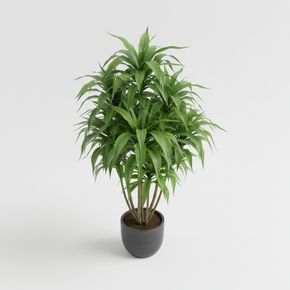



Transform your interior with the dazzling Song of India! With its explosion of lemon-yellow and rich green foliage, this Dracaena reflexa isn't just a plant—it's a living piece of art. Perfect as a vibrant floor plant or a dramatic tabletop feature, it actively purifies your air while demanding only straightforward care. Its elegant, upright stems bring a touch of tropical paradise to any room, making it an unforgettable addition to your home or a thoughtful, lasting gift. Bring home the sunshine today!
Common Name: Song of India
Botanical Name: Dracaena reflexa
Variant: Song of India
Plant Color: Multicolor
Country of Origin: Netherlands
Arabic Name: دراسينيا ريفلكس
Family: Asparagaceae
Kingdom: Plantae
Clade: Tracheophytes
Order: Asparagales
Family: Asparagaceae
Subfamily: Nolinoideae
Genus: Dracaena
Species: Dracaena reflexa
The Dracaena reflexa is native to Mozambique, Madagascar, Mauritius, and other islands of the Indian Ocean. It has been widely naturalized in other tropical regions around the world due to its popularity as an ornamental plant.
The Song of India is known for its strikingly variegated foliage. It features short, narrow, lanceolate leaves that are spirally arranged along the stems. The leaves possess a rich green center with thick, vibrant lemon-yellow margins. As the plant ages, the lower leaves fall off, revealing thick, woody stems that often grow in twisting, architectural patterns.
When grown indoors, the Song of India typically reaches a height of 3 to 6 feet (0.9 to 1.8 meters). In its natural habitat, it can grow as tall as 15-20 feet. It is considered a slow-growing species, making it manageable for indoor spaces.
This plant thrives in bright, indirect light. While it can tolerate lower light levels, the distinctive yellow variegation may fade and become more solid green. Avoid direct afternoon sun, which can scorch the delicate leaves.
Keep the soil consistently moist but never soggy. Allow the top inch of soil to dry out before watering again. Dracaenas are sensitive to fluoride and salts often found in tap water, which can cause leaf tip burn; using filtered or distilled water is highly recommended.
Use a well-draining potting mix, ideally a peat-based mixture with added perlite or bark to ensure excellent aeration. Ensure the pot has adequate drainage holes to prevent water from sitting at the roots.
The Song of India prefers warm environments with temperatures between 18°C and 24°C (65°F to 75°F). It is sensitive to cold drafts and should not be exposed to temperatures below 10°C (50°F). While it appreciates high humidity, it adapts well to average household humidity levels.
Apply a balanced, water-soluble fertilizer diluted to half-strength once a month during the spring and summer. Avoid fertilization in the autumn and winter months when growth is naturally slower.
Maintenance is moderate. Regular care involves wiping the leaves with a damp cloth to remove dust and maintain their shine, as well as pruning any dead or yellowing leaves to keep the plant looking tidy.
It is a slow grower. Propagation is most easily achieved through stem cuttings. Cuttings can be rooted in water or directly in moist soil, preferably with the help of a rooting hormone in a warm environment.
Common issues include spider mites, mealybugs, and scale. Brown leaf tips are a frequent problem, usually caused by low humidity, inconsistent watering, or chemical sensitivities to tap water.
Beyond its ornamental beauty, it is a powerful air purifier. According to NASA studies, Dracaena reflexa can remove toxins like formaldehyde, benzene, and trichloroethylene from the air. It is commonly used as a focal point in interior design, offices, and lobbies.
Dracaena reflexa is toxic to pets. It contains saponins, which can cause vomiting, drooling, and dilated pupils in cats and dogs if ingested. It is generally considered non-toxic to humans but may cause mild stomach upset if eaten.
Transform your interior with the dazzling Song of India! With its explosion of lemon-yellow and rich green foliage, this Dracaena reflexa isn't just a plant—it's a living piece of art. Perfect as a vibrant floor plant or a dramatic tabletop feature, it actively purifies your air while demanding only straightforward care. Its elegant, upright stems bring a touch of tropical paradise to any room, making it an unforgettable addition to your home or a thoughtful, lasting gift. Bring home the sunshine today!
Common Name: Song of India
Botanical Name: Dracaena reflexa
Variant: Song of India
Plant Color: Multicolor
Country of Origin: Netherlands
Arabic Name: دراسينيا ريفلكس
Family: Asparagaceae
Kingdom: Plantae
Clade: Tracheophytes
Order: Asparagales
Family: Asparagaceae
Subfamily: Nolinoideae
Genus: Dracaena
Species: Dracaena reflexa
The Dracaena reflexa is native to Mozambique, Madagascar, Mauritius, and other islands of the Indian Ocean. It has been widely naturalized in other tropical regions around the world due to its popularity as an ornamental plant.
The Song of India is known for its strikingly variegated foliage. It features short, narrow, lanceolate leaves that are spirally arranged along the stems. The leaves possess a rich green center with thick, vibrant lemon-yellow margins. As the plant ages, the lower leaves fall off, revealing thick, woody stems that often grow in twisting, architectural patterns.
When grown indoors, the Song of India typically reaches a height of 3 to 6 feet (0.9 to 1.8 meters). In its natural habitat, it can grow as tall as 15-20 feet. It is considered a slow-growing species, making it manageable for indoor spaces.
This plant thrives in bright, indirect light. While it can tolerate lower light levels, the distinctive yellow variegation may fade and become more solid green. Avoid direct afternoon sun, which can scorch the delicate leaves.
Keep the soil consistently moist but never soggy. Allow the top inch of soil to dry out before watering again. Dracaenas are sensitive to fluoride and salts often found in tap water, which can cause leaf tip burn; using filtered or distilled water is highly recommended.
Use a well-draining potting mix, ideally a peat-based mixture with added perlite or bark to ensure excellent aeration. Ensure the pot has adequate drainage holes to prevent water from sitting at the roots.
The Song of India prefers warm environments with temperatures between 18°C and 24°C (65°F to 75°F). It is sensitive to cold drafts and should not be exposed to temperatures below 10°C (50°F). While it appreciates high humidity, it adapts well to average household humidity levels.
Apply a balanced, water-soluble fertilizer diluted to half-strength once a month during the spring and summer. Avoid fertilization in the autumn and winter months when growth is naturally slower.
Maintenance is moderate. Regular care involves wiping the leaves with a damp cloth to remove dust and maintain their shine, as well as pruning any dead or yellowing leaves to keep the plant looking tidy.
It is a slow grower. Propagation is most easily achieved through stem cuttings. Cuttings can be rooted in water or directly in moist soil, preferably with the help of a rooting hormone in a warm environment.
Common issues include spider mites, mealybugs, and scale. Brown leaf tips are a frequent problem, usually caused by low humidity, inconsistent watering, or chemical sensitivities to tap water.
Beyond its ornamental beauty, it is a powerful air purifier. According to NASA studies, Dracaena reflexa can remove toxins like formaldehyde, benzene, and trichloroethylene from the air. It is commonly used as a focal point in interior design, offices, and lobbies.
Dracaena reflexa is toxic to pets. It contains saponins, which can cause vomiting, drooling, and dilated pupils in cats and dogs if ingested. It is generally considered non-toxic to humans but may cause mild stomach upset if eaten.




Take 20% off your first order
Enter the code below at checkout to get 20% off your first order