


Spotted Dumb Cane 'Spotted'
Transform your space with the dramatic foliage of the Spotted Dumb Cane. Its large, lush leaves, beautifully speckled with cream and white, create an instant jungle vibe. Not just a pretty face, this Dieffenbachia is a powerful air purifier, working silently to freshen your home or office. It's forgiving and low-maintenance, making it an ideal choice for both new plant parents and seasoned enthusiasts. Please note: this plant is toxic if ingested and should be kept away from curious pets and children.
1. Basic Identification
Common Name: Spotted Dumb Cane
Botanical Name: Dieffenbachia seguine
Arabic Name: دفن باخية مرقط
Variant: Spotted
Plant Color: Multicolor (Green with White/Cream speckles)
Country of Origin: Netherlands
2. Taxonomy & Classification
Kingdom: Plantae
Order: Alismatales
Family: Araceae
Genus: Dieffenbachia
Species: Dieffenbachia seguine
3. Origin & Distribution
Dieffenbachia seguine is native to the tropical regions of the New World, spanning from Mexico and the West Indies south to Brazil and Argentina. It thrives in the moist, shaded floors of tropical rainforests.
4. Visual Characteristics
This variety features large, broad, ovate leaves that grow from a central upright stem. The foliage is primarily dark green but is heavily "spotted" or mottled with irregular patches of cream and white. As the plant matures, the lower leaves may drop, revealing a thick, cane-like trunk.
5. Size & Dimensions
Indoors, the Spotted Dumb Cane typically reaches a height of 3 to 6 feet (0.9 to 1.8 meters). The individual leaves can grow up to 12 inches long depending on the light and humidity conditions.
6. Light Requirements
Prefers bright, indirect sunlight. It can tolerate medium light levels, but low light may cause the variegation to fade and the plant to become "leggy." Avoid direct sunlight, as it can easily scorch the delicate leaves.
7. Watering Needs
Keep the soil consistently moist but not waterlogged. Water when the top inch of soil feels dry to the touch. Ensure the pot has excellent drainage to prevent root rot. During winter, reduce watering frequency.
8. Soil & Potting
A well-draining, peat-based potting mix is ideal. A combination of standard potting soil with added perlite or orchid bark works well to ensure aeration and drainage.
9. Temperature & Humidity
Thrives in warm temperatures between 65°F and 75°F (18°C-24°C). It is sensitive to cold drafts and temperatures below 60°F. Being a tropical plant, it loves high humidity; misting the leaves or using a pebble tray is recommended in dry environments.
10. Fertilization
Apply a balanced, water-soluble fertilizer diluted to half-strength once a month during the growing season (spring and summer). Do not fertilize during the winter months.
11. Maintenance & Care Level
Care Level: Easy to Moderate. Maintenance involves wiping the large leaves with a damp cloth to remove dust and improve photosynthesis, and pruning away any yellowing lower leaves to keep the plant looking tidy.
12. Growth & Propagation
This plant is a relatively fast grower. It can be easily propagated through stem cuttings (either tip cuttings or mid-section "cane" cuttings) placed in water or directly into moist soil.
13. Common Problems
Watch for yellowing leaves, which usually indicate overwatering. Brown leaf tips often signify low humidity or chemical buildup from tap water. Common pests include spider mites and mealybugs, which can be treated with neem oil.
14. Benefits & Uses
Beyond its ornamental value, it is a recognized air purifier that helps remove indoor toxins like xylene and toluene. It is perfect for large floor containers in living rooms, offices, and lobbies.
15. Toxicity & Safety
Highly Toxic. The plant contains calcium oxalate crystals. If chewed or ingested, it causes intense numbing, oral irritation, and swelling of the tongue and throat, which can lead to temporary loss of speech (hence the name "Dumb Cane"). Keep strictly away from pets and small children.

Spotted Dumb Cane 'Spotted'
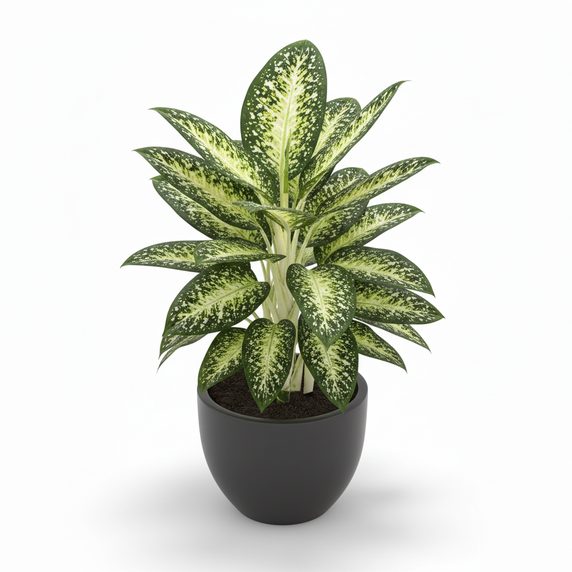
Transform your space with the dramatic foliage of the Spotted Dumb Cane. Its large, lush leaves, beautifully speckled with cream and white, create an instant jungle vibe. Not just a pretty face, this Dieffenbachia is a powerful air purifier, working silently to freshen your home or office. It's forgiving and low-maintenance, making it an ideal choice for both new plant parents and seasoned enthusiasts. Please note: this plant is toxic if ingested and should be kept away from curious pets and children.
1. Basic Identification
Common Name: Spotted Dumb Cane
Botanical Name: Dieffenbachia seguine
Arabic Name: دفن باخية مرقط
Variant: Spotted
Plant Color: Multicolor (Green with White/Cream speckles)
Country of Origin: Netherlands
2. Taxonomy & Classification
Kingdom: Plantae
Order: Alismatales
Family: Araceae
Genus: Dieffenbachia
Species: Dieffenbachia seguine
3. Origin & Distribution
Dieffenbachia seguine is native to the tropical regions of the New World, spanning from Mexico and the West Indies south to Brazil and Argentina. It thrives in the moist, shaded floors of tropical rainforests.
4. Visual Characteristics
This variety features large, broad, ovate leaves that grow from a central upright stem. The foliage is primarily dark green but is heavily "spotted" or mottled with irregular patches of cream and white. As the plant matures, the lower leaves may drop, revealing a thick, cane-like trunk.
5. Size & Dimensions
Indoors, the Spotted Dumb Cane typically reaches a height of 3 to 6 feet (0.9 to 1.8 meters). The individual leaves can grow up to 12 inches long depending on the light and humidity conditions.
6. Light Requirements
Prefers bright, indirect sunlight. It can tolerate medium light levels, but low light may cause the variegation to fade and the plant to become "leggy." Avoid direct sunlight, as it can easily scorch the delicate leaves.
7. Watering Needs
Keep the soil consistently moist but not waterlogged. Water when the top inch of soil feels dry to the touch. Ensure the pot has excellent drainage to prevent root rot. During winter, reduce watering frequency.
8. Soil & Potting
A well-draining, peat-based potting mix is ideal. A combination of standard potting soil with added perlite or orchid bark works well to ensure aeration and drainage.
9. Temperature & Humidity
Thrives in warm temperatures between 65°F and 75°F (18°C-24°C). It is sensitive to cold drafts and temperatures below 60°F. Being a tropical plant, it loves high humidity; misting the leaves or using a pebble tray is recommended in dry environments.
10. Fertilization
Apply a balanced, water-soluble fertilizer diluted to half-strength once a month during the growing season (spring and summer). Do not fertilize during the winter months.
11. Maintenance & Care Level
Care Level: Easy to Moderate. Maintenance involves wiping the large leaves with a damp cloth to remove dust and improve photosynthesis, and pruning away any yellowing lower leaves to keep the plant looking tidy.
12. Growth & Propagation
This plant is a relatively fast grower. It can be easily propagated through stem cuttings (either tip cuttings or mid-section "cane" cuttings) placed in water or directly into moist soil.
13. Common Problems
Watch for yellowing leaves, which usually indicate overwatering. Brown leaf tips often signify low humidity or chemical buildup from tap water. Common pests include spider mites and mealybugs, which can be treated with neem oil.
14. Benefits & Uses
Beyond its ornamental value, it is a recognized air purifier that helps remove indoor toxins like xylene and toluene. It is perfect for large floor containers in living rooms, offices, and lobbies.
15. Toxicity & Safety
Highly Toxic. The plant contains calcium oxalate crystals. If chewed or ingested, it causes intense numbing, oral irritation, and swelling of the tongue and throat, which can lead to temporary loss of speech (hence the name "Dumb Cane"). Keep strictly away from pets and small children.