

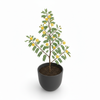





Intoxicate your senses with the Sweet Acacia. More than just a plant, it's an experience. Imagine stepping onto your patio and being greeted by the sweet, unforgettable fragrance of its golden, sun-like blossoms. The delicate, feathery foliage dances in the breeze, adding a touch of serene elegance to your space. Incredibly easy to care for and tolerant of dry conditions, the Sweet Acacia asks for little but gives so much in return. It's the perfect statement piece for a sun-drenched spot, promising seasons of beauty and perfume. Order yours today and bring the scent of sunshine home.
Common Name: Sweet Acacia, Huisache, Needle Bush
Botanical Name: Vachellia farnesiana
Arabic Name: اكاسيا
Variety: Standard
Color: Natural
Country of Origin: Netherlands
Kingdom: Plantae
Clade: Tracheophytes
Order: Fabales
Family: Fabaceae
Genus: Vachellia
Native to the tropical and subtropical regions of the Americas, specifically Mexico, Central America, and the Caribbean. It has been widely naturalized in many other warm-temperate and tropical regions worldwide, including parts of Africa, Asia, and Australia.
This deciduous to semi-evergreen shrub features delicate, feathery, bipinnate light green foliage. It is highly recognized for its highly fragrant, globe-shaped, bright yellow flowers and its pairs of sharp, greyish spines found at the base of each leaf.
In its natural habitat, it can reach a height of 15 to 20 feet (4.5 to 6 meters). When kept in containers or as a managed landscape plant, it is typically maintained as a medium-sized shrub between 4 to 8 feet in height.
Thrives in full sun. It requires at least 6 to 8 hours of direct, bright sunlight daily to maintain its health and promote prolific flowering.
Exhibits excellent drought tolerance once established. Watering should be deep but infrequent, allowing the soil to dry out almost completely between sessions. Avoid soggy conditions which can lead to root issues.
Prefers well-draining soil. A sandy or loamy soil mix is ideal. If potting, ensure the container has adequate drainage holes and use a mix amended with perlite or coarse sand.
Warm-weather plant suited for USDA Hardiness Zones 9-11. It is very heat-tolerant and prefers low to moderate humidity. It is sensitive to prolonged freezing temperatures and should be protected during frost.
Requires minimal fertilization. A balanced, slow-release fertilizer applied once in the early spring is sufficient to support seasonal growth and blooming.
Low maintenance and very hardy. Occasional pruning is recommended to maintain its shape or to remove dead branches. Handle with care due to the presence of sharp thorns.
Displays a relatively fast growth rate. It is primarily propagated by seeds, which usually require scarification and soaking in water before planting to encourage germination.
Relatively pest-free, though it can occasionally attract aphids, scale, or spider mites. Overwatering is the most common issue, potentially causing root rot.
The flowers are highly prized in the perfume industry for producing 'Cassie' essential oil. It is used ornamentally for its fragrance and beauty, and as a nitrogen-fixing plant, it helps improve soil quality.
Not considered safe for pets or humans based on provided data. The plant possesses sharp thorns that can cause physical injury, so it should be placed away from high-traffic areas where children or pets play.
Intoxicate your senses with the Sweet Acacia. More than just a plant, it's an experience. Imagine stepping onto your patio and being greeted by the sweet, unforgettable fragrance of its golden, sun-like blossoms. The delicate, feathery foliage dances in the breeze, adding a touch of serene elegance to your space. Incredibly easy to care for and tolerant of dry conditions, the Sweet Acacia asks for little but gives so much in return. It's the perfect statement piece for a sun-drenched spot, promising seasons of beauty and perfume. Order yours today and bring the scent of sunshine home.
Common Name: Sweet Acacia, Huisache, Needle Bush
Botanical Name: Vachellia farnesiana
Arabic Name: اكاسيا
Variety: Standard
Color: Natural
Country of Origin: Netherlands
Kingdom: Plantae
Clade: Tracheophytes
Order: Fabales
Family: Fabaceae
Genus: Vachellia
Native to the tropical and subtropical regions of the Americas, specifically Mexico, Central America, and the Caribbean. It has been widely naturalized in many other warm-temperate and tropical regions worldwide, including parts of Africa, Asia, and Australia.
This deciduous to semi-evergreen shrub features delicate, feathery, bipinnate light green foliage. It is highly recognized for its highly fragrant, globe-shaped, bright yellow flowers and its pairs of sharp, greyish spines found at the base of each leaf.
In its natural habitat, it can reach a height of 15 to 20 feet (4.5 to 6 meters). When kept in containers or as a managed landscape plant, it is typically maintained as a medium-sized shrub between 4 to 8 feet in height.
Thrives in full sun. It requires at least 6 to 8 hours of direct, bright sunlight daily to maintain its health and promote prolific flowering.
Exhibits excellent drought tolerance once established. Watering should be deep but infrequent, allowing the soil to dry out almost completely between sessions. Avoid soggy conditions which can lead to root issues.
Prefers well-draining soil. A sandy or loamy soil mix is ideal. If potting, ensure the container has adequate drainage holes and use a mix amended with perlite or coarse sand.
Warm-weather plant suited for USDA Hardiness Zones 9-11. It is very heat-tolerant and prefers low to moderate humidity. It is sensitive to prolonged freezing temperatures and should be protected during frost.
Requires minimal fertilization. A balanced, slow-release fertilizer applied once in the early spring is sufficient to support seasonal growth and blooming.
Low maintenance and very hardy. Occasional pruning is recommended to maintain its shape or to remove dead branches. Handle with care due to the presence of sharp thorns.
Displays a relatively fast growth rate. It is primarily propagated by seeds, which usually require scarification and soaking in water before planting to encourage germination.
Relatively pest-free, though it can occasionally attract aphids, scale, or spider mites. Overwatering is the most common issue, potentially causing root rot.
The flowers are highly prized in the perfume industry for producing 'Cassie' essential oil. It is used ornamentally for its fragrance and beauty, and as a nitrogen-fixing plant, it helps improve soil quality.
Not considered safe for pets or humans based on provided data. The plant possesses sharp thorns that can cause physical injury, so it should be placed away from high-traffic areas where children or pets play.
Take 20% off your first order
Enter the code below at checkout to get 20% off your first order