


Araceae
Syngonium podophyllum
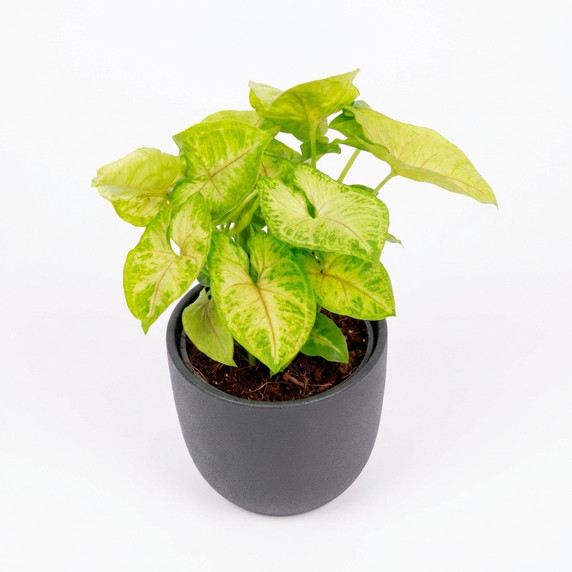
Bring instant tropical freshness to your space with Syngonium (Arrowhead Plant). Its bright, patterned leaves look premium, yet the plant stays forgiving for busy schedules—just give it indirect light and sensible watering. Display it compact on a desk or let it trail for a stylish, modern jungle effect. A reliable choice for homes, offices, and gifting.
1. Basic Identification
Common Name: Syngonium (Arrowhead Plant)
Botanical Name: Syngonium podophyllum
Arabic Name: سنجونيوم
Family: Araceae
Color: Multicolor
2. Taxonomy & Classification
Syngonium podophyllum belongs to the Araceae family. It is a monocotyledonous flowering plant in the genus Syngonium. It is commonly referred to as the arrowhead vine or arrowhead philodendron due to the characteristic shape of its juvenile leaves.
3. Origin & Distribution
Native to a wide region of the Americas, ranging from Mexico through Central America to northern South America, including Brazil and Bolivia. It has become naturalized in many tropical regions worldwide.
4. Visual Characteristics
The plant features distinct arrowhead-shaped juvenile leaves that evolve into multi-lobed shapes as the plant matures. The foliage is often variegated with shades of white, cream, or silver against a vibrant green background. It has a climbing or trailing growth habit using aerial roots.
5. Size & Dimensions
When grown indoors, it typically reaches a height of 3 to 6 feet (0.9 to 1.8 meters) if provided with a support to climb, or it can trail several feet when grown in hanging baskets.
6. Light Requirements
Thrives in medium to bright indirect light. It can tolerate lower light levels, though its growth will slow and variegation may become less pronounced. Avoid direct harsh sunlight, which can scorch the leaves.
7. Watering Needs
Prefers consistently moist soil during the growing season. Allow the top inch (2.5 cm) of soil to dry out between waterings. Reduce watering frequency in the winter months. Avoid letting the plant sit in water to prevent root rot.
8. Soil & Potting
Requires a well-draining potting mix rich in organic matter. A mixture of peat moss, perlite, and pine bark is ideal to ensure proper aeration and drainage.
9. Temperature & Humidity
Prefers temperatures between 60°F and 80°F (15°C to 27°C). It enjoys high humidity levels (60% or higher). In dry environments, misting the leaves or using a humidifier is beneficial.
10. Fertilization
Apply a balanced, water-soluble fertilizer at half-strength every 2 to 4 weeks during the active growing seasons of spring and summer. Do not fertilize during the dormant winter period.
11. Maintenance & Care Level
Maintenance is considered easy to moderate. Regular pruning helps maintain a bushy shape and prevents the plant from becoming too leggy. Wiping the leaves with a damp cloth helps keep them dust-free and healthy.
12. Growth & Propagation
A relatively fast-growing plant. Propagation is easily achieved through stem cuttings placed in water or directly into moist soil, especially those with visible aerial root nodes.
13. Common Problems
Susceptible to common houseplant pests like spider mites, mealybugs, and aphids. Overwatering is the primary cause of root rot. Brown leaf tips may indicate low humidity or underwatering.
14. Benefits & Uses
Acts as an effective air purifier by removing indoor pollutants like formaldehyde, benzene, and toluene. It is highly decorative, suitable for desks, shelves, and hanging baskets.
15. Toxicity & Safety
Toxic to humans and pets (cats and dogs). All parts of the plant contain calcium oxalate crystals, which can cause irritation to the mouth, throat, and digestive tract if ingested.

Syngonium podophyllum
Bring instant tropical freshness to your space with Syngonium (Arrowhead Plant). Its bright, patterned leaves look premium, yet the plant stays forgiving for busy schedules—just give it indirect light and sensible watering. Display it compact on a desk or let it trail for a stylish, modern jungle effect. A reliable choice for homes, offices, and gifting.
1. Basic Identification
Common Name: Syngonium (Arrowhead Plant)
Botanical Name: Syngonium podophyllum
Arabic Name: سنجونيوم
Family: Araceae
Color: Multicolor
2. Taxonomy & Classification
Syngonium podophyllum belongs to the Araceae family. It is a monocotyledonous flowering plant in the genus Syngonium. It is commonly referred to as the arrowhead vine or arrowhead philodendron due to the characteristic shape of its juvenile leaves.
3. Origin & Distribution
Native to a wide region of the Americas, ranging from Mexico through Central America to northern South America, including Brazil and Bolivia. It has become naturalized in many tropical regions worldwide.
4. Visual Characteristics
The plant features distinct arrowhead-shaped juvenile leaves that evolve into multi-lobed shapes as the plant matures. The foliage is often variegated with shades of white, cream, or silver against a vibrant green background. It has a climbing or trailing growth habit using aerial roots.
5. Size & Dimensions
When grown indoors, it typically reaches a height of 3 to 6 feet (0.9 to 1.8 meters) if provided with a support to climb, or it can trail several feet when grown in hanging baskets.
6. Light Requirements
Thrives in medium to bright indirect light. It can tolerate lower light levels, though its growth will slow and variegation may become less pronounced. Avoid direct harsh sunlight, which can scorch the leaves.
7. Watering Needs
Prefers consistently moist soil during the growing season. Allow the top inch (2.5 cm) of soil to dry out between waterings. Reduce watering frequency in the winter months. Avoid letting the plant sit in water to prevent root rot.
8. Soil & Potting
Requires a well-draining potting mix rich in organic matter. A mixture of peat moss, perlite, and pine bark is ideal to ensure proper aeration and drainage.
9. Temperature & Humidity
Prefers temperatures between 60°F and 80°F (15°C to 27°C). It enjoys high humidity levels (60% or higher). In dry environments, misting the leaves or using a humidifier is beneficial.
10. Fertilization
Apply a balanced, water-soluble fertilizer at half-strength every 2 to 4 weeks during the active growing seasons of spring and summer. Do not fertilize during the dormant winter period.
11. Maintenance & Care Level
Maintenance is considered easy to moderate. Regular pruning helps maintain a bushy shape and prevents the plant from becoming too leggy. Wiping the leaves with a damp cloth helps keep them dust-free and healthy.
12. Growth & Propagation
A relatively fast-growing plant. Propagation is easily achieved through stem cuttings placed in water or directly into moist soil, especially those with visible aerial root nodes.
13. Common Problems
Susceptible to common houseplant pests like spider mites, mealybugs, and aphids. Overwatering is the primary cause of root rot. Brown leaf tips may indicate low humidity or underwatering.
14. Benefits & Uses
Acts as an effective air purifier by removing indoor pollutants like formaldehyde, benzene, and toluene. It is highly decorative, suitable for desks, shelves, and hanging baskets.
15. Toxicity & Safety
Toxic to humans and pets (cats and dogs). All parts of the plant contain calcium oxalate crystals, which can cause irritation to the mouth, throat, and digestive tract if ingested.