


Tagetes erecta
Bring a wave of pure sunshine to your garden! The African Marigold is your go-to plant for effortless, season-long color. Its brilliant, cheerful blooms are incredibly low-maintenance and even help keep pests away. Perfect for pots, patios, or garden beds – add this easy-care classic to your cart and watch your outdoor space come alive!
1. Basic Identification
Common Name: African Marigold
Botanical Name: Tagetes erecta
Former Name: Not available
Plant Type: Annual flowering plant
Plant Code / SKU: PLT-1755
Alternative Names:
Aztec Marigold
Mexican Marigold
Big Marigold
جعفري
2. Taxonomy & Classification
Order: Asterales
Family: Asteraceae
Genus: Tagetes
3. Origin & Distribution
Native Range: Mexico and Central America.
Introduced Range: Widely cultivated and naturalized in tropical and subtropical regions around the world, including parts of Africa, Asia, and Europe.
4. Visual Characteristics
Leaves: Pinnately compound with lance-shaped, toothed leaflets. The foliage is dark green and has a characteristically strong, pungent scent when crushed.
Flowers: Large, dense, and globe-shaped double flower heads, ranging from 5 to 12 cm in diameter. Blooms come in vibrant shades of yellow, orange, and creamy white.
Stems: Erect, stout, and branching, forming a bushy plant.
5. Size & Dimensions
Height: Typically 30 cm to 110 cm (1 to 3.5 feet).
Width/Spread: 30 cm to 60 cm (1 to 2 feet).
Flower Size: 5 cm to 12 cm (2 to 5 inches) in diameter.
6. Light Requirements
Optimal Light: Full sun, requiring at least 6-8 hours of direct sunlight per day for the best growth and most prolific blooming.
Low Light Tolerance: Can tolerate partial shade, but this will often result in fewer flowers and weaker, leggy stems.
7. Watering Needs
Watering Frequency: Water regularly, allowing the top 2-3 cm of soil to dry out between waterings. They are relatively drought-tolerant once established but perform best with consistent moisture.
Watering Technique: Water at the base of the plant to keep foliage and flowers dry, which helps prevent fungal diseases. Avoid overwatering.
8. Soil & Potting
Soil Type: Adaptable to most soil types but thrives in well-drained, moderately fertile loam.
pH: Prefers a soil pH between 6.0 and 7.5 (slightly acidic to neutral).
Potting: Use a quality, all-purpose potting mix for containers. Ensure the pot has adequate drainage holes.
9. Temperature & Humidity
Optimal Temperature: Thrives in warm conditions, with ideal daytime temperatures between 18°C and 30°C (65°F to 85°F).
Hardiness: As a tender annual, it is not frost-tolerant and will die back with the first hard frost.
Humidity: Tolerates a range of humidity levels but benefits from good air circulation to prevent fungal issues.
10. Fertilization
Fertilizer Type: A balanced, all-purpose fertilizer. Avoid high-nitrogen fertilizers, which promote lush foliage at the expense of flowers.
Fertilizing Schedule: Fertilize sparingly. A slow-release fertilizer can be mixed into the soil at planting time, or a liquid fertilizer can be applied every 4-6 weeks during the growing season.
11. Maintenance & Care Level
Care Level: Easy. Ideal for beginner gardeners.
Pruning/Deadheading: Deadheading (removing spent blooms) is highly recommended. This practice encourages the plant to produce more flowers throughout the season and maintains a tidy appearance.
Pest & Disease Resistance: Generally resistant to pests. The roots excrete a substance that can repel soil nematodes. May be susceptible to spider mites in hot, dry weather and fungal diseases like powdery mildew in overly damp conditions.
12. Growth & Propagation
Growth Rate: Fast.
Life Cycle: Annual. It completes its entire life cycle, from seed to flower to seed, within one growing season.
Propagation: Easily grown from seed. Seeds can be started indoors 4-6 weeks before the last frost or sown directly into the garden soil after the danger of frost has passed.
13. Common Problems
Pests: Spider mites, thrips, and aphids can occasionally be a problem, especially on stressed plants.
Diseases: Susceptible to fungal issues like powdery mildew, botrytis (gray mold), and root rot if soil is poorly drained or air circulation is poor.
Other Issues: Leggy stems and reduced flowering can be caused by insufficient sunlight or excessive nitrogen fertilization.
14. Benefits & Uses
Garden Use: A classic choice for garden beds, borders, mass plantings, and container gardens. Provides vibrant, long-lasting color.
Companion Planting: Widely used as a companion plant in vegetable gardens to help deter nematodes and other pests like whiteflies.
Other Uses: The flowers are popular for cutting and are used extensively in garlands, dyes, and cultural ceremonies, such as Día de los Muertos (Day of the Dead) in Mexico.
15. Toxicity & Safety
Human Toxicity: Generally considered non-toxic. However, the sap may cause mild contact dermatitis (skin irritation) in sensitive individuals.
Pet Toxicity: According to the ASPCA, marigolds (Tagetes spp.) are non-toxic to dogs, cats, and horses. Ingesting the plant may cause mild gastrointestinal irritation.
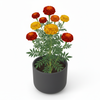
Tagetes erecta

Bring a wave of pure sunshine to your garden! The African Marigold is your go-to plant for effortless, season-long color. Its brilliant, cheerful blooms are incredibly low-maintenance and even help keep pests away. Perfect for pots, patios, or garden beds – add this easy-care classic to your cart and watch your outdoor space come alive!
1. Basic Identification
Common Name: African Marigold
Botanical Name: Tagetes erecta
Former Name: Not available
Plant Type: Annual flowering plant
Plant Code / SKU: PLT-1755
Alternative Names:
Aztec Marigold
Mexican Marigold
Big Marigold
جعفري
2. Taxonomy & Classification
Order: Asterales
Family: Asteraceae
Genus: Tagetes
3. Origin & Distribution
Native Range: Mexico and Central America.
Introduced Range: Widely cultivated and naturalized in tropical and subtropical regions around the world, including parts of Africa, Asia, and Europe.
4. Visual Characteristics
Leaves: Pinnately compound with lance-shaped, toothed leaflets. The foliage is dark green and has a characteristically strong, pungent scent when crushed.
Flowers: Large, dense, and globe-shaped double flower heads, ranging from 5 to 12 cm in diameter. Blooms come in vibrant shades of yellow, orange, and creamy white.
Stems: Erect, stout, and branching, forming a bushy plant.
5. Size & Dimensions
Height: Typically 30 cm to 110 cm (1 to 3.5 feet).
Width/Spread: 30 cm to 60 cm (1 to 2 feet).
Flower Size: 5 cm to 12 cm (2 to 5 inches) in diameter.
6. Light Requirements
Optimal Light: Full sun, requiring at least 6-8 hours of direct sunlight per day for the best growth and most prolific blooming.
Low Light Tolerance: Can tolerate partial shade, but this will often result in fewer flowers and weaker, leggy stems.
7. Watering Needs
Watering Frequency: Water regularly, allowing the top 2-3 cm of soil to dry out between waterings. They are relatively drought-tolerant once established but perform best with consistent moisture.
Watering Technique: Water at the base of the plant to keep foliage and flowers dry, which helps prevent fungal diseases. Avoid overwatering.
8. Soil & Potting
Soil Type: Adaptable to most soil types but thrives in well-drained, moderately fertile loam.
pH: Prefers a soil pH between 6.0 and 7.5 (slightly acidic to neutral).
Potting: Use a quality, all-purpose potting mix for containers. Ensure the pot has adequate drainage holes.
9. Temperature & Humidity
Optimal Temperature: Thrives in warm conditions, with ideal daytime temperatures between 18°C and 30°C (65°F to 85°F).
Hardiness: As a tender annual, it is not frost-tolerant and will die back with the first hard frost.
Humidity: Tolerates a range of humidity levels but benefits from good air circulation to prevent fungal issues.
10. Fertilization
Fertilizer Type: A balanced, all-purpose fertilizer. Avoid high-nitrogen fertilizers, which promote lush foliage at the expense of flowers.
Fertilizing Schedule: Fertilize sparingly. A slow-release fertilizer can be mixed into the soil at planting time, or a liquid fertilizer can be applied every 4-6 weeks during the growing season.
11. Maintenance & Care Level
Care Level: Easy. Ideal for beginner gardeners.
Pruning/Deadheading: Deadheading (removing spent blooms) is highly recommended. This practice encourages the plant to produce more flowers throughout the season and maintains a tidy appearance.
Pest & Disease Resistance: Generally resistant to pests. The roots excrete a substance that can repel soil nematodes. May be susceptible to spider mites in hot, dry weather and fungal diseases like powdery mildew in overly damp conditions.
12. Growth & Propagation
Growth Rate: Fast.
Life Cycle: Annual. It completes its entire life cycle, from seed to flower to seed, within one growing season.
Propagation: Easily grown from seed. Seeds can be started indoors 4-6 weeks before the last frost or sown directly into the garden soil after the danger of frost has passed.
13. Common Problems
Pests: Spider mites, thrips, and aphids can occasionally be a problem, especially on stressed plants.
Diseases: Susceptible to fungal issues like powdery mildew, botrytis (gray mold), and root rot if soil is poorly drained or air circulation is poor.
Other Issues: Leggy stems and reduced flowering can be caused by insufficient sunlight or excessive nitrogen fertilization.
14. Benefits & Uses
Garden Use: A classic choice for garden beds, borders, mass plantings, and container gardens. Provides vibrant, long-lasting color.
Companion Planting: Widely used as a companion plant in vegetable gardens to help deter nematodes and other pests like whiteflies.
Other Uses: The flowers are popular for cutting and are used extensively in garlands, dyes, and cultural ceremonies, such as Día de los Muertos (Day of the Dead) in Mexico.
15. Toxicity & Safety
Human Toxicity: Generally considered non-toxic. However, the sap may cause mild contact dermatitis (skin irritation) in sensitive individuals.
Pet Toxicity: According to the ASPCA, marigolds (Tagetes spp.) are non-toxic to dogs, cats, and horses. Ingesting the plant may cause mild gastrointestinal irritation.