

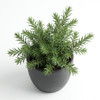





Bring home the refreshing look and scent of Tea Tree. Its fine, elegant foliage instantly lightens any corner, while its hardy nature makes it a reliable choice for bright indoor spaces, balconies, and gardens. With simple watering and occasional pruning, it stays lush, tidy, and beautifully green—perfect for modern home décor and welcoming entrances.
Common Name: Tea Tree, Narrow-leaved Paperbark
Botanical Name: Melaleuca alternifolia
Arabic Name: شجرة الشاي
Variant: Standard
Plant Color: Natural Green
Stems: 5
Kingdom: Plantae
Order: Myrtales
Family: Myrtaceae
Genus: Melaleuca
Species: M. alternifolia
Native to the subtropical coastal regions of eastern Australia, specifically New South Wales and Queensland. It is commonly found growing in swampy lowlands or along stream banks.
Features fine, needle-like or narrow linear leaves that are soft to the touch. The plant often exhibits a bushy, upright growth habit with distinctive papery bark on older stems. When it blooms, it produces white or cream-colored fluffy flowers arranged in spikes.
In its natural habitat, it can grow into a small tree of 5-7 meters. As an ornamental container plant or indoor specimen, it is typically maintained between 60 cm to 1.5 meters through pruning.
Prefers bright, direct sunlight or very bright indirect light. While it can tolerate partial shade, it requires high light levels to maintain its dense foliage and vigorous growth.
Requires consistent moisture. The soil should be kept damp but not waterlogged. It does not tolerate drying out completely; if the soil becomes too dry, the fine foliage may shed quickly.
Thrives in well-draining, slightly acidic soil. A mix of peat moss and perlite or a sandy loam is ideal to ensure drainage while retaining necessary moisture.
Prefers warm temperatures ranging from 15°C to 30°C. It is not frost-tolerant and should be protected from temperatures below 5°C. It appreciates moderate to high humidity, especially when kept indoors.
Apply a balanced, water-soluble fertilizer once a month during the active growing season (spring and summer). Reduce fertilization during the dormant winter months.
Care Level: Easy to Moderate. It is a hardy plant but requires regular attention to watering. Occasional pruning is recommended to maintain a tidy shape and encourage bushier growth.
A relatively fast-growing plant. It can be propagated through semi-hardwood cuttings or from seeds, though cuttings are generally more successful for home gardeners.
Potential issues include root rot if the soil is poorly drained, or leaf drop if the plant is under-watered. It can occasionally be susceptible to scale insects or spider mites in dry indoor environments.
Primarily grown ornamentally for its fine texture and refreshing scent. It is the primary source of Tea Tree Oil, known for its antiseptic and antimicrobial properties. It is also an excellent choice for creating a "green screen" on balconies.
Toxic if ingested. Tea tree oil and the plant parts can be harmful to humans and pets (cats and dogs) if swallowed, potentially causing digestive upset or neurological symptoms. Skin sensitivity may occur in some individuals upon handling.
Bring home the refreshing look and scent of Tea Tree. Its fine, elegant foliage instantly lightens any corner, while its hardy nature makes it a reliable choice for bright indoor spaces, balconies, and gardens. With simple watering and occasional pruning, it stays lush, tidy, and beautifully green—perfect for modern home décor and welcoming entrances.
Common Name: Tea Tree, Narrow-leaved Paperbark
Botanical Name: Melaleuca alternifolia
Arabic Name: شجرة الشاي
Variant: Standard
Plant Color: Natural Green
Stems: 5
Kingdom: Plantae
Order: Myrtales
Family: Myrtaceae
Genus: Melaleuca
Species: M. alternifolia
Native to the subtropical coastal regions of eastern Australia, specifically New South Wales and Queensland. It is commonly found growing in swampy lowlands or along stream banks.
Features fine, needle-like or narrow linear leaves that are soft to the touch. The plant often exhibits a bushy, upright growth habit with distinctive papery bark on older stems. When it blooms, it produces white or cream-colored fluffy flowers arranged in spikes.
In its natural habitat, it can grow into a small tree of 5-7 meters. As an ornamental container plant or indoor specimen, it is typically maintained between 60 cm to 1.5 meters through pruning.
Prefers bright, direct sunlight or very bright indirect light. While it can tolerate partial shade, it requires high light levels to maintain its dense foliage and vigorous growth.
Requires consistent moisture. The soil should be kept damp but not waterlogged. It does not tolerate drying out completely; if the soil becomes too dry, the fine foliage may shed quickly.
Thrives in well-draining, slightly acidic soil. A mix of peat moss and perlite or a sandy loam is ideal to ensure drainage while retaining necessary moisture.
Prefers warm temperatures ranging from 15°C to 30°C. It is not frost-tolerant and should be protected from temperatures below 5°C. It appreciates moderate to high humidity, especially when kept indoors.
Apply a balanced, water-soluble fertilizer once a month during the active growing season (spring and summer). Reduce fertilization during the dormant winter months.
Care Level: Easy to Moderate. It is a hardy plant but requires regular attention to watering. Occasional pruning is recommended to maintain a tidy shape and encourage bushier growth.
A relatively fast-growing plant. It can be propagated through semi-hardwood cuttings or from seeds, though cuttings are generally more successful for home gardeners.
Potential issues include root rot if the soil is poorly drained, or leaf drop if the plant is under-watered. It can occasionally be susceptible to scale insects or spider mites in dry indoor environments.
Primarily grown ornamentally for its fine texture and refreshing scent. It is the primary source of Tea Tree Oil, known for its antiseptic and antimicrobial properties. It is also an excellent choice for creating a "green screen" on balconies.
Toxic if ingested. Tea tree oil and the plant parts can be harmful to humans and pets (cats and dogs) if swallowed, potentially causing digestive upset or neurological symptoms. Skin sensitivity may occur in some individuals upon handling.


Take 20% off your first order
Enter the code below at checkout to get 20% off your first order

