


New





Transform your home or office into a stylish, healthy sanctuary with the Dracaena Warneckii. Its elegant, striped foliage not only serves as a stunning piece of living art but also works tirelessly to purify your air. Incredibly resilient and easy to care for, this plant is perfect for anyone, from beginners to experts. It forgives occasional neglect and thrives in typical indoor conditions, making it a stress-free choice for a busy lifestyle. Order now to add a touch of architectural beauty and a breath of fresh air to your space!
Common Name: Dracaena Warneckii, Striped Dracaena
Botanical Name: Dracaena fragrans 'Warneckii'
Variant: Warneckii
Plant Color: Multicolor (Green with white/gray stripes)
Arabic Name: دراسينيا
Family: Asparagaceae
Country of Origin: Netherlands
The Dracaena Warneckii is a member of the Asparagaceae family. It is a cultivar of Dracaena fragrans (formerly often classified under Dracaena deremensis). It belongs to the genus Dracaena, which comprises approximately 120 species of trees and succulent shrubs.
The parent species is native to tropical Africa, ranging from Sudan south to Mozambique and west to Côte d'Ivoire. The 'Warneckii' cultivar was developed for the ornamental trade and is now grown worldwide as a popular indoor plant, particularly in European nurseries like those in the Netherlands.
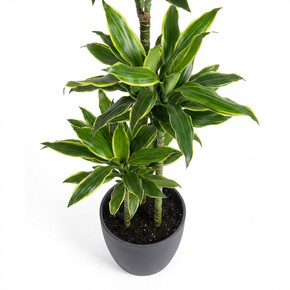
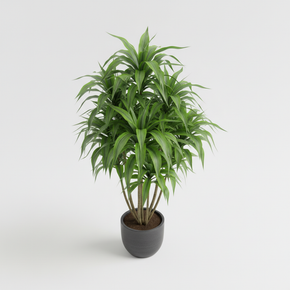
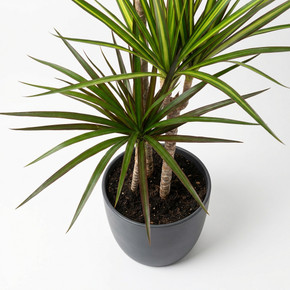
This plant features striking, sword-shaped leaves that are stiff and pointed. The foliage is primarily dark green with distinct, longitudinal stripes of white or silvery-gray. The leaves grow in a rosette pattern around a central woody stem (cane), creating a structured, architectural appearance.
When grown indoors, Dracaena Warneckii typically reaches a height of 3 to 5 feet. The leaves themselves can grow up to 2 feet long and approximately 2 inches wide. Its upright growth habit makes it ideal for narrow spaces.
It thrives best in bright, indirect light. While it is known for its ability to tolerate lower light levels, its growth will slow, and the vibrant white stripes may become less pronounced. Direct afternoon sun should be avoided as it can scorch the leaves.
Water when the top 50% to 75% of the soil has dried out. Dracaena Warneckii is sensitive to fluoride and chlorine often found in tap water, which can cause brown leaf tips; using filtered, distilled, or rainwater is recommended.
Requires a well-draining potting mix to prevent root rot. A standard high-quality indoor potting soil amended with perlite, peat moss, or pine bark is ideal to ensure proper aeration and drainage.
Preferred temperatures range between 60°F and 80°F (15°C to 27°C). It should be kept away from cold drafts and heating vents. While it tolerates average household humidity, it will flourish in slightly higher humidity environments.
Feed with a balanced, water-soluble liquid fertilizer at half-strength once a month during the active growing season (spring and summer). No fertilization is necessary during the dormant winter months.
Maintenance is low, making it an easy-care plant. Caring involves wiping the leaves periodically with a damp cloth to remove dust and maintain the plant's ability to photosynthesize. Prune away any yellow or brown leaves at the base.
It is a slow-to-moderate grower. Propagation is most successfully achieved through stem cuttings or air layering. Cuttings can be rooted in either water or moist soil during the warmer months.
The most common issue is brown leaf tips, usually caused by chemical sensitivities in tap water or low humidity. Overwatering can lead to root rot and yellowing leaves. It may occasionally be susceptible to pests like mealybugs or spider mites.
Dracaena Warneckii is a renowned air-purifier, recognized by NASA for its ability to remove toxins such as benzene, formaldehyde, and trichloroethylene from the air. Its architectural shape makes it a favorite for home decor and modern office spaces.
Toxic to pets. If ingested by cats or dogs, it can cause vomiting (sometimes with blood), drooling, and dilated pupils due to the presence of saponins. It is generally non-toxic to humans, though ingestion may cause mild stomach upset.
Transform your home or office into a stylish, healthy sanctuary with the Dracaena Warneckii. Its elegant, striped foliage not only serves as a stunning piece of living art but also works tirelessly to purify your air. Incredibly resilient and easy to care for, this plant is perfect for anyone, from beginners to experts. It forgives occasional neglect and thrives in typical indoor conditions, making it a stress-free choice for a busy lifestyle. Order now to add a touch of architectural beauty and a breath of fresh air to your space!
Common Name: Dracaena Warneckii, Striped Dracaena
Botanical Name: Dracaena fragrans 'Warneckii'
Variant: Warneckii
Plant Color: Multicolor (Green with white/gray stripes)
Arabic Name: دراسينيا
Family: Asparagaceae
Country of Origin: Netherlands
The Dracaena Warneckii is a member of the Asparagaceae family. It is a cultivar of Dracaena fragrans (formerly often classified under Dracaena deremensis). It belongs to the genus Dracaena, which comprises approximately 120 species of trees and succulent shrubs.
The parent species is native to tropical Africa, ranging from Sudan south to Mozambique and west to Côte d'Ivoire. The 'Warneckii' cultivar was developed for the ornamental trade and is now grown worldwide as a popular indoor plant, particularly in European nurseries like those in the Netherlands.
This plant features striking, sword-shaped leaves that are stiff and pointed. The foliage is primarily dark green with distinct, longitudinal stripes of white or silvery-gray. The leaves grow in a rosette pattern around a central woody stem (cane), creating a structured, architectural appearance.
When grown indoors, Dracaena Warneckii typically reaches a height of 3 to 5 feet. The leaves themselves can grow up to 2 feet long and approximately 2 inches wide. Its upright growth habit makes it ideal for narrow spaces.
It thrives best in bright, indirect light. While it is known for its ability to tolerate lower light levels, its growth will slow, and the vibrant white stripes may become less pronounced. Direct afternoon sun should be avoided as it can scorch the leaves.
Water when the top 50% to 75% of the soil has dried out. Dracaena Warneckii is sensitive to fluoride and chlorine often found in tap water, which can cause brown leaf tips; using filtered, distilled, or rainwater is recommended.
Requires a well-draining potting mix to prevent root rot. A standard high-quality indoor potting soil amended with perlite, peat moss, or pine bark is ideal to ensure proper aeration and drainage.
Preferred temperatures range between 60°F and 80°F (15°C to 27°C). It should be kept away from cold drafts and heating vents. While it tolerates average household humidity, it will flourish in slightly higher humidity environments.
Feed with a balanced, water-soluble liquid fertilizer at half-strength once a month during the active growing season (spring and summer). No fertilization is necessary during the dormant winter months.
Maintenance is low, making it an easy-care plant. Caring involves wiping the leaves periodically with a damp cloth to remove dust and maintain the plant's ability to photosynthesize. Prune away any yellow or brown leaves at the base.
It is a slow-to-moderate grower. Propagation is most successfully achieved through stem cuttings or air layering. Cuttings can be rooted in either water or moist soil during the warmer months.
The most common issue is brown leaf tips, usually caused by chemical sensitivities in tap water or low humidity. Overwatering can lead to root rot and yellowing leaves. It may occasionally be susceptible to pests like mealybugs or spider mites.
Dracaena Warneckii is a renowned air-purifier, recognized by NASA for its ability to remove toxins such as benzene, formaldehyde, and trichloroethylene from the air. Its architectural shape makes it a favorite for home decor and modern office spaces.
Toxic to pets. If ingested by cats or dogs, it can cause vomiting (sometimes with blood), drooling, and dilated pupils due to the presence of saponins. It is generally non-toxic to humans, though ingestion may cause mild stomach upset.



Take 20% off your first order
Enter the code below at checkout to get 20% off your first order