


Asparagaceae
Yucca elephantipes 'Triple Cane'
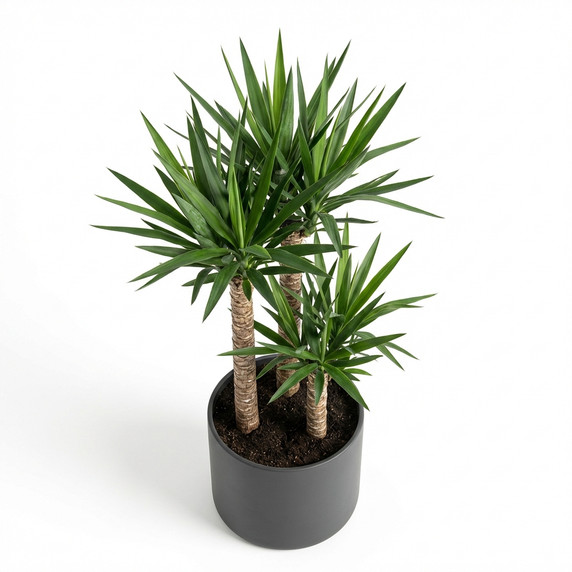
Bring instant structure to any space with the Triple Yucca Cane. Three strong canes, clean green foliage, and a designer silhouette—without fussy care. Place it in bright light, water sparingly, and enjoy a premium, modern statement plant that thrives in homes and high-traffic business interiors.
1. Basic Identification
Common Name: Yucca Cane, Spineless Yucca
Botanical Name: Yucca elephantipes
Variant: Triple Cane
Color: Green
Arabic Name: يوغا
Country of Origin: Netherlands
2. Taxonomy & Classification
Kingdom: Plantae
Order: Asparagales
Family: Asparagaceae
Subfamily: Agavoideae
Genus: Yucca
Species: Yucca elephantipes (syn. Yucca gigantea)
3. Origin & Distribution
Native to Central America and Mexico, the Yucca elephantipes is naturally found in regions like Belize, Guatemala, and Honduras. It is widely cultivated globally as an ornamental plant due to its hardiness and architectural appeal.
4. Visual Characteristics
This plant features multiple woody, trunk-like stems (canes) that grow at staggered heights. Each cane is topped with a dense rosette of sword-shaped, leathery, dark green leaves. Unlike many other Yucca species, the leaves of Yucca elephantipes are spineless, making them softer and safer for high-traffic areas.
5. Size & Dimensions
The Triple Cane variant typically features three canes of varying heights (often ranging from 12 to 48 inches). Indoors, it can reach an overall height of 5 to 10 feet depending on the container size and care.
6. Light Requirements
Thrives in bright, indirect light but is highly versatile. It can tolerate several hours of direct morning or late afternoon sun and can also survive in medium-light conditions, though its growth will be slower.
7. Watering Needs
Water sparingly. Allow the top 50-75% of the soil to dry out completely before watering again. This plant is drought-tolerant; overwatering or allowing the roots to sit in water will likely cause root rot.
8. Soil & Potting
Needs a well-draining potting medium. A mix designed for cacti and succulents, or a standard potting soil amended with extra perlite or sand, is ideal to ensure rapid drainage.
9. Temperature & Humidity
Prefers temperatures between 60°F and 80°F (15°C - 27°C). It is well-adapted to average home and office humidity levels and does not require frequent misting.
10. Fertilization
Apply a balanced liquid fertilizer diluted to half-strength once a month during the growing season (spring and summer). Do not fertilize during the winter months when growth naturally slows.
11. Maintenance & Care Level
Maintenance level is very low. Occasionally wipe the leaves with a damp cloth to remove dust. As the plant grows, lower leaves may naturally turn yellow or brown; these can be easily pulled off or trimmed to keep the canes looking clean.
12. Growth & Propagation
A relatively slow-growing plant indoors. It can be propagated via stem cuttings or by removing and replanting the small offsets (pups) that may appear at the base of the canes.
13. Common Problems
Generally pest-resistant, but can occasionally be affected by mealybugs or spider mites. Brown tips are usually a result of low humidity or chemical sensitivity in tap water, while yellowing leaves often indicate overwatering.
14. Benefits & Uses
An excellent air-purifying plant known to filter indoor toxins such as formaldehyde and benzene. Its upright, architectural form makes it a popular choice for corner placements in lobbies, receptions, and living rooms.
15. Toxicity & Safety
Contains saponins and is considered toxic to cats and dogs if ingested, potentially causing drooling, vomiting, or digestive upset. It is not considered human-safe for consumption.
Yucca elephantipes 'Triple Cane'
Bring instant structure to any space with the Triple Yucca Cane. Three strong canes, clean green foliage, and a designer silhouette—without fussy care. Place it in bright light, water sparingly, and enjoy a premium, modern statement plant that thrives in homes and high-traffic business interiors.
1. Basic Identification
Common Name: Yucca Cane, Spineless Yucca
Botanical Name: Yucca elephantipes
Variant: Triple Cane
Color: Green
Arabic Name: يوغا
Country of Origin: Netherlands
2. Taxonomy & Classification
Kingdom: Plantae
Order: Asparagales
Family: Asparagaceae
Subfamily: Agavoideae
Genus: Yucca
Species: Yucca elephantipes (syn. Yucca gigantea)
3. Origin & Distribution
Native to Central America and Mexico, the Yucca elephantipes is naturally found in regions like Belize, Guatemala, and Honduras. It is widely cultivated globally as an ornamental plant due to its hardiness and architectural appeal.
4. Visual Characteristics
This plant features multiple woody, trunk-like stems (canes) that grow at staggered heights. Each cane is topped with a dense rosette of sword-shaped, leathery, dark green leaves. Unlike many other Yucca species, the leaves of Yucca elephantipes are spineless, making them softer and safer for high-traffic areas.
5. Size & Dimensions
The Triple Cane variant typically features three canes of varying heights (often ranging from 12 to 48 inches). Indoors, it can reach an overall height of 5 to 10 feet depending on the container size and care.
6. Light Requirements
Thrives in bright, indirect light but is highly versatile. It can tolerate several hours of direct morning or late afternoon sun and can also survive in medium-light conditions, though its growth will be slower.
7. Watering Needs
Water sparingly. Allow the top 50-75% of the soil to dry out completely before watering again. This plant is drought-tolerant; overwatering or allowing the roots to sit in water will likely cause root rot.
8. Soil & Potting
Needs a well-draining potting medium. A mix designed for cacti and succulents, or a standard potting soil amended with extra perlite or sand, is ideal to ensure rapid drainage.
9. Temperature & Humidity
Prefers temperatures between 60°F and 80°F (15°C - 27°C). It is well-adapted to average home and office humidity levels and does not require frequent misting.
10. Fertilization
Apply a balanced liquid fertilizer diluted to half-strength once a month during the growing season (spring and summer). Do not fertilize during the winter months when growth naturally slows.
11. Maintenance & Care Level
Maintenance level is very low. Occasionally wipe the leaves with a damp cloth to remove dust. As the plant grows, lower leaves may naturally turn yellow or brown; these can be easily pulled off or trimmed to keep the canes looking clean.
12. Growth & Propagation
A relatively slow-growing plant indoors. It can be propagated via stem cuttings or by removing and replanting the small offsets (pups) that may appear at the base of the canes.
13. Common Problems
Generally pest-resistant, but can occasionally be affected by mealybugs or spider mites. Brown tips are usually a result of low humidity or chemical sensitivity in tap water, while yellowing leaves often indicate overwatering.
14. Benefits & Uses
An excellent air-purifying plant known to filter indoor toxins such as formaldehyde and benzene. Its upright, architectural form makes it a popular choice for corner placements in lobbies, receptions, and living rooms.
15. Toxicity & Safety
Contains saponins and is considered toxic to cats and dogs if ingested, potentially causing drooling, vomiting, or digestive upset. It is not considered human-safe for consumption.