


Araceae
Zamioculcas zamiifolia
Upgrade any space with the ZZ Plant: a sleek, glossy houseplant that thrives where others struggle. It stays elegant in low light, forgives missed waterings, and looks professional in offices and living rooms alike—an effortless way to add lasting greenery with minimal care.
1. Basic Identification
Common Name: ZZ Plant, Zanzibar Gem
Botanical Name: Zamioculcas zamiifolia
Arabic Name: زامبيا
Plant Variant: Standard
Plant Color: Green
Family: Araceae
2. Taxonomy & Classification
Kingdom: Plantae
Clade: Tracheophytes
Clade: Angiosperms
Clade: Monocots
Order: Alismatales
Family: Araceae
Subfamily: Zamioculcadoideae
Genus: Zamioculcas
Species: Zamioculcas zamiifolia
3. Origin & Distribution
The ZZ plant is native to eastern Africa, spanning from southern Kenya to northeastern South Africa. It naturally grows in dry grasslands and lowland forests, where its ability to store water allows it to survive periods of severe drought.
4. Visual Characteristics
It features thick, upright stems adorned with smooth, shiny, dark green leaflets that look almost like they have been polished with wax. The plant grows from thick, succulent rhizomes located beneath the soil surface, which act as water storage organs.
5. Size & Dimensions
Indoors, the ZZ plant typically grows between 2 to 3 feet (60–90 cm) tall and wide. It is a slow-growing plant, maintaining its shape and size for a long period without needing frequent repotting.
6. Light Requirements
This plant is highly adaptable and can thrive in low to bright indirect light. It is one of the few plants that can tolerate windowless rooms with only fluorescent lighting. Avoid direct afternoon sunlight, as it can scorch the leaves.
7. Watering Needs
ZZ plants are extremely drought-tolerant. Allow the soil to dry out completely between waterings. Typically, watering every 2 to 4 weeks is sufficient, depending on the light and temperature. Overwatering is the most common cause of failure.
8. Soil & Potting
Requires a well-draining potting soil, such as a high-quality all-purpose mix or a succulent/cactus mix. Ensure the pot has drainage holes at the bottom to prevent water from sitting around the rhizomes.
9. Temperature & Humidity
Prefers temperatures between 60°F and 75°F (15°C to 24°C). It does well in average household humidity levels and does not require extra misting, though it should be kept away from cold drafts and air conditioning vents.
10. Fertilization
Feed the plant with a balanced, water-soluble fertilizer diluted to half-strength once or twice during the growing season (spring and summer). No fertilizer is needed during the winter months.
11. Maintenance & Care Level
Maintenance level is low. Care involves occasional dusting of the leaves with a damp cloth to keep them shiny and free of debris. Pruning is rarely necessary except to remove any yellowing or old leaves at the base.
12. Growth & Propagation
The ZZ plant is a slow grower. Propagation can be achieved by dividing the rhizomes during repotting, or by taking stem or leaf cuttings, though leaf cuttings can take several months to develop new rhizomes.
13. Common Problems
The most frequent issue is root rot caused by overwatering, indicated by yellowing leaves and mushy stems. It is relatively pest-resistant but can occasionally attract aphids or scale insects if the plant is stressed.
14. Benefits & Uses
The ZZ plant is a powerful air purifier, identified by NASA studies as effective at removing volatile organic compounds such as xylene, toluene, and benzene. Its sleek, architectural look makes it a favorite for modern interior design and office spaces.
15. Toxicity & Safety
All parts of the ZZ plant are considered toxic if ingested. It contains calcium oxalate crystals, which cause irritation and swelling of the mouth and digestive tract. Keep away from pets (cats and dogs) and small children. It is also recommended to wash hands after handling the plant or use gloves if you have sensitive skin.

Zamioculcas zamiifolia
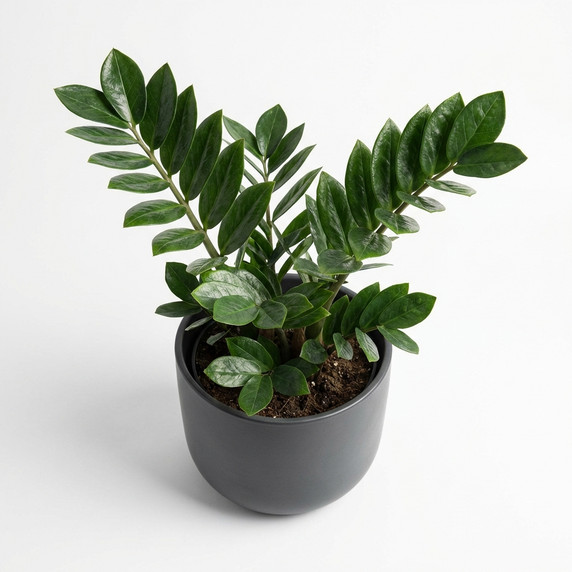
Upgrade any space with the ZZ Plant: a sleek, glossy houseplant that thrives where others struggle. It stays elegant in low light, forgives missed waterings, and looks professional in offices and living rooms alike—an effortless way to add lasting greenery with minimal care.
1. Basic Identification
Common Name: ZZ Plant, Zanzibar Gem
Botanical Name: Zamioculcas zamiifolia
Arabic Name: زامبيا
Plant Variant: Standard
Plant Color: Green
Family: Araceae
2. Taxonomy & Classification
Kingdom: Plantae
Clade: Tracheophytes
Clade: Angiosperms
Clade: Monocots
Order: Alismatales
Family: Araceae
Subfamily: Zamioculcadoideae
Genus: Zamioculcas
Species: Zamioculcas zamiifolia
3. Origin & Distribution
The ZZ plant is native to eastern Africa, spanning from southern Kenya to northeastern South Africa. It naturally grows in dry grasslands and lowland forests, where its ability to store water allows it to survive periods of severe drought.
4. Visual Characteristics
It features thick, upright stems adorned with smooth, shiny, dark green leaflets that look almost like they have been polished with wax. The plant grows from thick, succulent rhizomes located beneath the soil surface, which act as water storage organs.
5. Size & Dimensions
Indoors, the ZZ plant typically grows between 2 to 3 feet (60–90 cm) tall and wide. It is a slow-growing plant, maintaining its shape and size for a long period without needing frequent repotting.
6. Light Requirements
This plant is highly adaptable and can thrive in low to bright indirect light. It is one of the few plants that can tolerate windowless rooms with only fluorescent lighting. Avoid direct afternoon sunlight, as it can scorch the leaves.
7. Watering Needs
ZZ plants are extremely drought-tolerant. Allow the soil to dry out completely between waterings. Typically, watering every 2 to 4 weeks is sufficient, depending on the light and temperature. Overwatering is the most common cause of failure.
8. Soil & Potting
Requires a well-draining potting soil, such as a high-quality all-purpose mix or a succulent/cactus mix. Ensure the pot has drainage holes at the bottom to prevent water from sitting around the rhizomes.
9. Temperature & Humidity
Prefers temperatures between 60°F and 75°F (15°C to 24°C). It does well in average household humidity levels and does not require extra misting, though it should be kept away from cold drafts and air conditioning vents.
10. Fertilization
Feed the plant with a balanced, water-soluble fertilizer diluted to half-strength once or twice during the growing season (spring and summer). No fertilizer is needed during the winter months.
11. Maintenance & Care Level
Maintenance level is low. Care involves occasional dusting of the leaves with a damp cloth to keep them shiny and free of debris. Pruning is rarely necessary except to remove any yellowing or old leaves at the base.
12. Growth & Propagation
The ZZ plant is a slow grower. Propagation can be achieved by dividing the rhizomes during repotting, or by taking stem or leaf cuttings, though leaf cuttings can take several months to develop new rhizomes.
13. Common Problems
The most frequent issue is root rot caused by overwatering, indicated by yellowing leaves and mushy stems. It is relatively pest-resistant but can occasionally attract aphids or scale insects if the plant is stressed.
14. Benefits & Uses
The ZZ plant is a powerful air purifier, identified by NASA studies as effective at removing volatile organic compounds such as xylene, toluene, and benzene. Its sleek, architectural look makes it a favorite for modern interior design and office spaces.
15. Toxicity & Safety
All parts of the ZZ plant are considered toxic if ingested. It contains calcium oxalate crystals, which cause irritation and swelling of the mouth and digestive tract. Keep away from pets (cats and dogs) and small children. It is also recommended to wash hands after handling the plant or use gloves if you have sensitive skin.