


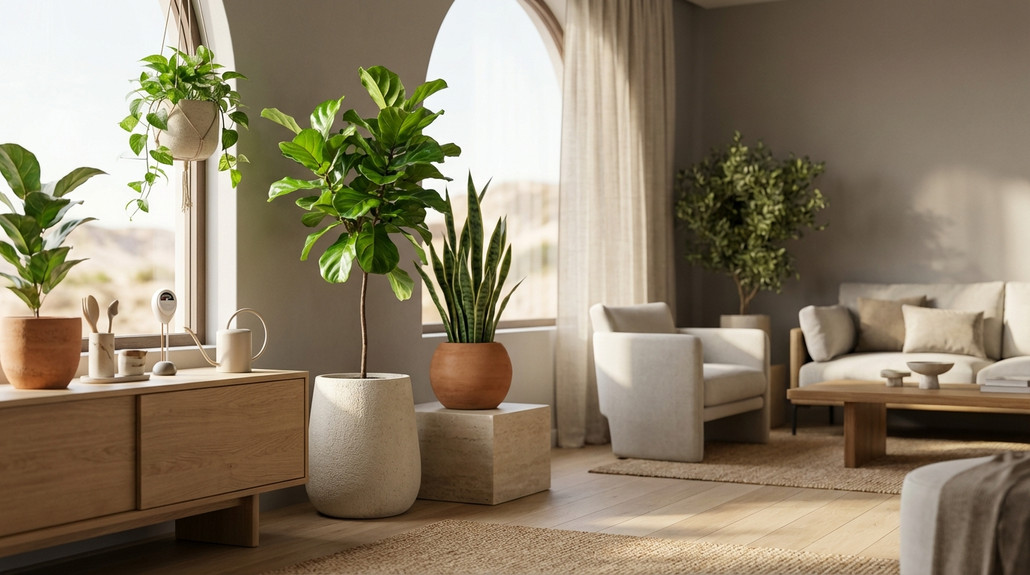
Indoor Plants Explained for First-Time Owners in Saudi Arabia Homes
Posted by Mozher Experts on 20.02.26
Living With Heat Outside and Cold Air Indoors
Step into a typical Saudi home in August and you feel two climates at once. Outside, extreme heat and dry air. Inside, constant AC running for most of the day. That contrast shapes how house plants behave more than anything else.
The main challenge is not just temperature. It is the combination of cold, dry airflow from AC vents, low indoor humidity, and filtered window light. Many first-time owners place plants where they “look good” without considering that a strong AC draft can pull moisture from leaves within hours. Tender foliage starts browning at the edges, even when the soil is wet.
In indoor plants Saudi Arabia homes, dehydration often happens from the air before the roots ever dry out. This leads to a common mistake: adding more water. The soil stays constantly wet while leaves still look stressed. Roots weaken, and decline begins slowly.
Healthy house plants here depend on managing three pressures at once: intense outdoor light, dry conditioned air, and irregular watering habits. Once you understand how these forces interact, plant care becomes predictable rather than confusing.
Understanding Light in Saudi Homes
Light in Saudi Arabia is strong, but indoor light is often weaker than people assume. Thick curtains, tinted glass, and deep rooms reduce intensity significantly. A bright room to your eyes may still be low light for a plant.
Direct sun through glass can also be harsher than expected. South- or west-facing windows can scorch leaves, especially in summer. Yet moving a plant too far from the window creates slow, stretched growth.
Matching Plants to Real Conditions
Instead of guessing, observe how long sunlight actually hits the spot. Two hours of direct exposure is very different from six. For darker apartments, start with options from the low light indoor plant collection. For brighter living rooms with filtered sun, consider selections suited to bright indirect light environments.
Rotation helps balance growth. Turn pots every few weeks so one side does not stretch toward the window. If natural light is limited, some species tolerate artificial lighting well, but intensity and duration must be consistent.
Light drives growth speed. Faster growth means more frequent watering and feeding. Slower growth in winter means patience. Adjusting expectations to light levels prevents overcare.
Watering: Why More Plants Die From Kindness
In hot climates, people assume plants need frequent watering. Outdoors, that may be true. Indoors under AC, evaporation from soil is slower than you think. Overwatering is the most common beginner mistake I see.
Watering should respond to soil dryness, not the calendar. Insert a finger several centimeters deep. If it still feels moist, wait. Consistently wet soil suffocates roots. Yellowing leaves, soft stems, and fungus gnats often follow.
Tools That Remove Guesswork
A simple soil moisture meter for accurate watering helps beginners avoid assumptions. It gives a clearer reading of what is happening below the surface, especially in deeper pots where the top dries faster than the bottom.
Use a controlled pour rather than flooding the surface. A narrow-spout watering can designed for indoor plants allows you to direct water evenly until it drains from the base. Always empty excess water from trays.
In most Saudi homes, watering frequency may range from every 7–14 days for medium plants, depending on light and season. Winter often requires less. Summer may require slightly more, but only if growth is active.
Humidity, Airflow, and AC Drafts
Air conditioning reduces indoor humidity dramatically. Many house plants originate from tropical regions where humidity is moderate to high. Under AC, leaf tips can dry even when soil moisture is adequate.
The solution is rarely constant misting. Light misting evaporates quickly in dry air and offers limited benefit. Instead, reposition plants away from direct AC vents. Even a one-meter shift can reduce stress significantly.
Creating Stable Microclimates
Grouping plants together raises local humidity slightly. Placing pots on trays with pebbles and water can help, as long as the pot base does not sit directly in water. Bathrooms with natural light can support certain species better due to higher humidity.
Airflow should be gentle, not stagnant. Completely closed rooms without circulation may encourage fungal issues. Balanced airflow without cold drafts is ideal.
For a deeper explanation of how heat and conditioned air change plant behavior, review this climate-specific guide: how indoor plants react to hot Saudi interiors.
Soil and Pots: The Hidden Foundation
Soil choice affects everything—watering rhythm, root health, and long-term survival. Dense garden soil compacts quickly indoors. Roots require oxygen as much as water.
Choose well-draining mixes that balance moisture retention with airflow. Containers must have drainage holes. Decorative outer pots are fine, but always use an inner nursery pot or ensure proper drainage.
Pot Size and Material Matter
Oversized pots hold excess moisture. A plant placed in a pot far larger than its root ball often declines from slow-drying soil. Gradual size increases are safer.
Breathable materials like terracotta dry faster, which can be helpful in brighter rooms. Glazed ceramic retains moisture longer, useful in low light. Select containers thoughtfully from the indoor plant pots collection based on your space conditions.
Healthy roots anchor resilient growth. When soil and pot are appropriate, many common problems simply do not appear.
Acclimation and Delivery Stress
When house plants move from nursery conditions into your home, they experience shock. Light intensity changes. Humidity drops. Airflow shifts. Minor leaf loss during the first weeks can be normal.
Avoid repotting immediately unless roots are severely cramped. Give the plant time to adjust. Place it in stable light, away from AC drafts, and maintain consistent watering.
Quality sourcing reduces stress. Climate-aware selections from the curated indoor plants range are prepared for regional conditions, which lowers failure rates for beginners.
During the first month, observe rather than react quickly. Sudden changes in location, pot, and watering all at once create confusion for the plant. Stability supports recovery.
Quick-Start Checklist for Beginners
- Place plants away from direct AC airflow.
- Confirm actual light exposure before choosing a species.
- Water only when the top layer of soil has dried appropriately.
- Ensure every pot has drainage.
- Rotate plants periodically for balanced growth.
- Expect minor adjustment after moving plants into your home.
For a broader regional foundation, refer to the Middle East-focused pillar guide: indoor plants in Middle East homes.
Common Myths vs Reality
| Myth | Reality in Saudi Homes |
|---|---|
| More sun is always better. | Direct summer sun through glass can burn leaves quickly. |
| Water weekly, no matter what. | Watering depends on soil dryness, light, and season. |
| Misting fixes dry air. | Reducing AC drafts and improving placement is more effective. |
| Bigger pots help plants grow faster. | Oversized pots increase risk of root rot indoors. |
For science-based plant care fundamentals, consult resources from the Royal Horticultural Society and university extension programs such as the University of Florida IFAS Extension, both of which provide reliable horticultural guidance.
Frequently Asked Questions
How often should I water house plants in Saudi Arabia?
There is no fixed schedule. Most medium indoor plants require watering every 7–14 days, but always check soil dryness first. Light, pot size, and season all influence frequency.
Can I place plants directly under an AC vent?
No. Continuous cold airflow dries leaves and stresses roots. Position plants at least a short distance away from vents to prevent dehydration damage.
Are indoor plants in Saudi Arabia harder to maintain?
They require awareness of AC and low humidity, but once placement and watering are adjusted, maintenance becomes straightforward. Many resilient species adapt well indoors.
What is the safest starting point for beginners?
Begin with hardy varieties suited to your light level. Focus on stable placement, proper drainage, and careful watering. Avoid frequent changes during the first month.
When expectations align with climate realities, house plants become steady companions rather than fragile decorations. Small adjustments in light, airflow, and watering create consistent results, even in homes shaped by extreme heat and constant cooling.